

Aluminium Formwork Supplier Essentials: Choosing the Right Partner for Your Construction Needs
2026-10-25
Every construction manager knows the sinking feeling when formwork doesn't arrive on time or panels don't line up. The supplier you pick determines whether your schedule slips and your budget bleeds. In this article, we break down the non-negotiables—and why GETO has earned a spot on shortlists worldwide.
Reading the Extrusion Lines Before You Sign
Most extrusion line proposals hide their real limits in the fine print of the technical annex. Before you sign, pull out the as-built drawings and compare them against the profiles you actually run—not the ideal shapes that look good in a presentation. Pay close attention to the screw L/D ratio, the barrel venting, and whether the downstream calibrator can be swapped without a full shutdown. A line that performs smoothly on paper might still choke on your specific polymer blend at the throughput you need.
Ask the supplier to run a strip chart from a recent trial, not a polished demo. You want to see the melt pressure fluctuation over a full shift, the temperature overshoot during start-up, and the dimensional drift after the die warms up. Check the haul-off puller's speed consistency at low line speeds, because that matters more than the maximum rated output. If they cannot share that data, treat it as a red flag.
Finally, tie the acceptance criteria to numbers you can verify on your floor. Specify profile tolerance in millimeters, not vague terms like 'commercial quality.' Define the scrap rate ceiling and the minimum uptime during a consecutive seventy-two-hour run. Write the test method into the purchase agreement. A vendor who balks at a measurable acceptance test is telling you something important about their line—and about how much they stand behind it.
Why On-Site Service Often Beats a Big Catalogue
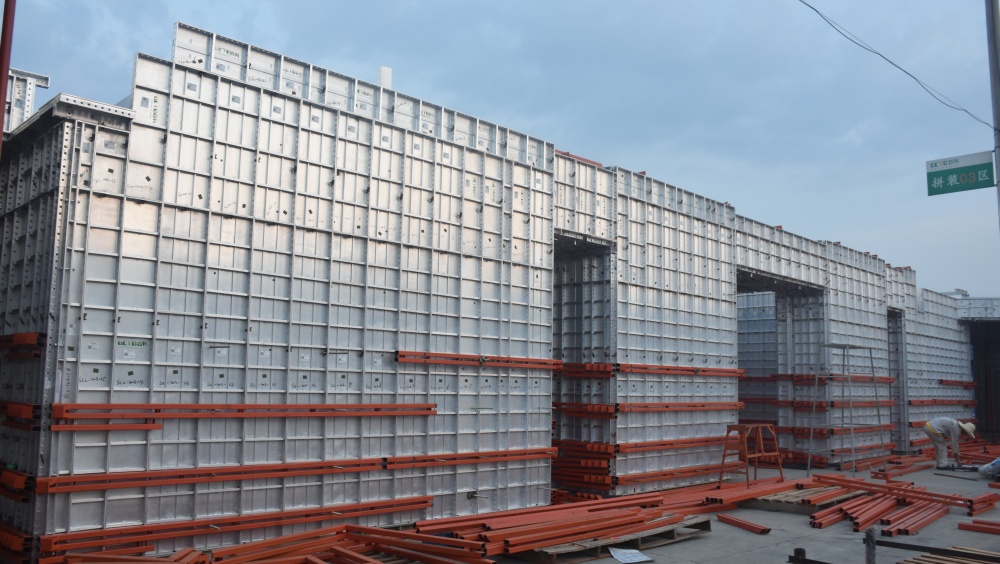
A glossy catalogue with thousands of SKUs looks impressive until you need a specific part on a Tuesday afternoon. On-site service flips the model: instead of you scrolling through endless pages, someone who actually knows your equipment shows up with the right items already in the van. That kind of immediate, contextual help doesn’t come from a PDF or a warehouse that’s three states away.
There’s also the matter of mistakes. Order from a catalogue and you might get a close-enough substitute that fails in a week. An on-site rep can check the worn component, measure it, and hand you the exact replacement before lunch. Over time, that reduces downtime and the drawer full of “almost right” parts that never get used.
The Concrete Pressure Test Your Supplier Should Welcome
A supplier that truly stands behind its product will never shy away from a concrete pressure test. This isn't just a box-ticking exercise; it's a direct, measurable proof of compressive strength and long-term durability. When a supplier welcomes this test, they're saying the mix design, curing methods, and raw material selection have all been executed with enough precision to withstand scrutiny under load. You should take that as a strong signal of confidence rather than a routine offer.
Pressure testing exposes weak spots that visual inspection alone can miss—air voids, improper consolidation, or subtle variations in aggregate moisture. A willing supplier understands that these tests protect both parties. Instead of waiting for a structural issue to emerge months after the pour, they'd rather verify performance now. That mindset doesn't just reduce your project risk; it reflects a production culture built on transparency and repeatability.
When you ask for a concrete pressure test and the supplier responds without hesitation, you're not just getting a piece of data. You're getting a partner who values accountability over shortcuts. The numbers from a cylinder break or a core sample tell you whether the concrete will actually do what the spec sheet promises. So if your supplier welcomes the test, consider that a green flag worth acting on.
How Panel Consistency Changes Your Pour Schedule
A pour schedule built around panel consistency rarely survives contact with the actual mix. When the slump drifts even slightly between loads, the window for bull floating and edging shifts by twenty to forty minutes. That might not sound like much until you realize the finishers were planning to move to the next slab by noon. A wetter batch holds bleed water longer, so running a power trowel too early tears the surface. A drier batch skins over fast, forcing you to drop everything and hit it before the cream disappears. The schedule stops being a timeline and becomes a series of judgment calls.
Contractors who track consistency from the first truck learn to adjust the day in real time instead of clinging to a fixed sequence. If the second load comes in two inches stiffer than the first, you might pull a finisher off the edge work to help close the surface sooner. If it comes in wetter, you delay the saw cutting and shift manpower to a different task. Small changes in panel consistency ripple through the crew's movements, the equipment rotations, and even the timing of the next concrete order. Once you accept that the pour schedule is a living document, you stop fighting the material and start working with it.
Some crews go a step further and use the first panel as a field test. They pour it, watch how it behaves for half an hour, then recalibrate the rest of the day around that observed set time. That single adjustment often saves more time than any amount of pre-planning. The key is keeping the mix consistent enough that the recalibration is minor, not a full reset. When panel consistency swings wildly, every pour becomes an emergency. When it stays within a predictable range, the schedule bends but never breaks.
The Real Cost of Spares and Repairs After Handover
Many buyers fixate on the initial price tag and overlook what happens once ownership transfers. Manufacturers often sell equipment at thin margins, only to recover profit through proprietary spare parts. A modest-looking seal or sensor can carry a markup that feels absurd, and generic alternatives may void the warranty or simply not exist. This turns a minor fault into a recurring expense that quietly erodes the original saving.
Labour charges add another layer rarely discussed at handover. Authorized technicians may charge call-out fees, travel time, and inflated hourly rates, especially for systems with restricted access to technical documentation. Waiting for a back-ordered part can leave a machine idle for weeks, and for property owners, a failed component inside a finished wall or floor turns a simple swap into invasive, costly work.
A sharper approach is to ask for a realistic spares price list and typical repair scenarios before signing. Compare not just the purchase cost but the five-year running expense, including parts, labour, and downtime. That comparison often reveals that a slightly higher upfront price with cheaper, readily available spares is far less painful than a low offer that locks you into an expensive after-sales ecosystem.
When Their Engineering Team Becomes Your Site Team
When a contractor's engineering team first walks onto your site, they bring more than their drawings and laptops. They bring their own rhythms, their own assumptions about how work gets done, and often a quiet skepticism about whether your site team will treat them as partners or just extra hands. The shift from 'their team' to 'our team' rarely happens on day one. It starts when their engineers stop asking for permission and start flagging risks before you do.
That shift deepens when access badges stop feeling like visitor passes. Their engineers attend your morning standups not as observers but as contributors. They argue about crane scheduling, reroute ductwork to avoid a clash, and take phone calls from your foreman without checking with their project manager first. None of that works if your site team still treats them like outsiders with a different logo on their vest. It works when both sides realize they are accountable to the same pour schedule, the same safety record, and the same owner deadline.
The real test comes when something goes wrong. If their engineer can walk into your site trailer, admit a mistake, and help figure out a fix without a formal RFI and a week of finger-pointing, then the integration is real. That's when you know their engineering team has become your site team, not just a group of visitors wearing borrowed hard hats.
FAQ
Go beyond the glossy brochure and ask how they manage slab cycle times on projects similar to yours. A supplier who genuinely understands formwork will probe your floor heights, wall layouts, and any unusual corners before giving a number. If they quote without asking about the pour sequence or site access, I would keep looking.
Check the alloy grade and the welding quality at joints, but also ask about their panel treatment after fabrication. Some suppliers skip proper straightening or anodising, which leads to warping within a few projects. Ask for a sample panel and look at the corner rigidity, not just the surface finish.
A useful quote separates material supply, engineering design, and on-site supervision instead of bundling everything into one lump sum. You also want to see how they charge for design revisions, lost or damaged panels, and extra props. If those numbers are vague, your final invoice probably won't match the initial offer.
Look for a supplier who sends a supervisor for the first slab cycle, not just a delivery driver. The real value is in someone who can adjust panel sequencing on site when your pouring schedule shifts or a wall is out of tolerance. A phone helpline is fine, but hands-on support during the first lift is what prevents costly delays.
Ask the supplier how many design revisions are included and what the turnaround time is for a typical wall or beam change. A good partner will freeze the design only after your structural drawings are final, then keep a small buffer of standard panels for late adjustments. If they say every change triggers a full reorder, that is a red flag.
It matters, but not in the way many think. I would rather see three mid-rise residential towers they completed in the last two years than thirty projects from a decade ago. Ask if you can visit a current site where their formwork is in use, and watch how the crew handles the panels. That tells you more than any case study.
Be wary of contracts that push most risk onto the buyer, like penalties for any site delay but no commitment from the supplier on delivery dates. Also check the payment schedule: a large upfront deposit with no staged delivery milestones usually signals cash-flow problems. You want terms linked to actual milestones, such as design approval and panel dispatch.
Ideally, bring them in during the structural design stage, not after the drawings are issued for tender. Early involvement lets them suggest panel sizes that reduce waste and speed up the floor cycle. If you wait until the last minute, you will be stuck with standard configurations that may not suit your building geometry.
Conclusion
A good aluminium formwork partner reveals itself long before the first pour. Walk the extrusion lines before you sign anything. Watch how the profiles come off the press, how they're aged and straightened, and whether the plant tolerances hold shift after shift. If a supplier won't let you see that, their glossy catalogue means little. Then consider the service side. A big product range doesn't help when a corner panel jams on day three and your crew is standing around. On-site support from people who know the system beats a thick catalogue every time.
Ask your supplier to welcome a concrete pressure test, not just a static load check. Panels that flex or bow under a realistic pour put both safety and finish quality at risk. Consistency across panels matters just as much. When dimensions drift by a millimetre here and there, your pour schedule absorbs the cost through shimming, re-drilling, and lost hours. After handover, the real cost shows up in spares and repairs. Cheap panels that need constant replacement erase any initial saving. The best suppliers treat their engineering team as an extension of your site crew, adjusting layouts and solving clashes before they become delays. That's the difference between a vendor and a partner.
Contact Us
Contact Person: Quanhui Nian
Email: [email protected]
Tel/WhatsApp: 8618070545691
Website: https://www.getoglobal.com/