

China Galvanized Tangent Tower Supplier: Why Quality Matters for Power Transmission
2026-08-11
In the world of power transmission, the reliability of every component is non-negotiable—especially when it comes to galvanized tangent towers. These structures bear the weight of electrical lines across vast distances, and even minor quality flaws can lead to catastrophic failures. As a leading supplier from China, Anbang understands that true strength isn’t just about steel, but about precision engineering and corrosion resistance that withstand decades of environmental stress. In this article, we’ll uncover why quality isn’t just a checkbox—it’s the foundation of reliable energy delivery.
The Critical Role of Tangent Towers in Transmission Networks
Tangent towers, often referred to as suspension towers, form the backbone of most high‑voltage transmission lines. Unlike angle towers that must withstand lateral tension at directional changes, tangent towers primarily support the vertical weight of conductors and relatively balanced horizontal loads. This specialized design allows them to be lighter, more economical, and easier to assemble, making large‑scale power delivery cost‑effective across long distances.
The reliability of a transmission network depends heavily on the structural integrity of these towers under varied environmental stresses. Tangential spans can extend for miles, meaning a single tangent tower failure may cascade into a system‑wide outage if conductor clearances are compromised. Engineers must carefully model wind speeds, ice accumulation, and conductor swing dynamics to ensure each tower maintains adequate ground and phase‑to‑phase clearances, especially in undulating terrain where suspension strings tilt naturally.
As grids expand to integrate remote renewable generation, the role of tangent towers becomes even more pronounced. Innovations in materials, such as high‑strength steel and composite insulators, allow modern designs to carry heavier bundles with reduced visual impact. Routine inspection practices—from drone surveys to LiDAR vegetation analysis—help utilities detect early corrosion or component fatigue, preserving the continuity of these arterial structures that are, quite literally, the straight lines powering a connected world.
Galvanization: More Than Just a Coating
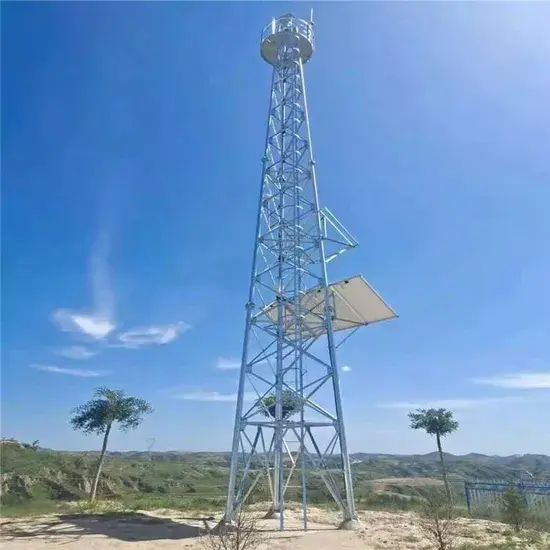
Galvanization often gets reduced to a simple rust-prevention technique, but its role runs far deeper. It forges a metallurgical bond between zinc and steel, creating layers of intermetallic alloys that become part of the substrate itself. This isn't a superficial shield that flakes off under stress; it's a structural transformation that sacrifices itself slowly, corroding preferentially to protect the underlying metal even when scratched. That self-healing nature is what sets it apart in harsh, unpredictable environments.
Beyond corrosion, galvanized coatings unlock design possibilities that bare steel can't touch. Architects lean on its matte, spangled finish for an industrial aesthetic that weathers gracefully, while engineers count on the consistent thickness it provides for threaded fasteners and tight-tolerance assemblies. The coating's electrochemical behavior also eliminates the need for additional cathodic protection systems in many marine and underground applications, simplifying entire projects.
What's often overlooked is how galvanization bends time in favor of sustainability. Because the coating outlasts most paint systems by decades, it defers maintenance cycles and the resources they consume. When steel does finally reach end-of-life, the zinc layer recycles alongside it without contamination, closing a loop that few other protective treatments can match. It's a quiet backbone of infrastructure, silently extending lifecycles while demanding almost nothing in return.
Material Choices: The Backbone of Tower Durability
The choice of materials is arguably the most critical factor in determining how long a tower stands strong against the elements. From the reinforced concrete foundations buried deep in the soil to the high-tensile steel lattices that pierce the sky, every component must be meticulously selected to resist corrosion, fatigue, and extreme weather. Steel, for instance, offers unmatched strength-to-weight ratios, but without proper galvanization or specialized coatings, it succumbs quickly to rust in coastal or industrial environments. Meanwhile, concrete, prized for its compressive resilience, can degrade over time if the wrong mix is used, leading to spalling and internal reinforcement corrosion.
Modern tower engineering increasingly relies on composite materials and smart alloys that promise longer service lives with less maintenance. Fiber-reinforced polymers, once reserved for aerospace, are now finding their way into tower sections, providing corrosion-proof durability at a fraction of the weight of steel. The key lies not just in picking a strong material, but in understanding how it interacts with the specific climate, load patterns, and soil conditions of the site. A material that performs beautifully in a dry desert might fracture in freeze-thaw cycles, reminding us that durability is a dance between material science and local environment.
Precision Manufacturing: From Steel to Structure
Modern manufacturing transforms raw steel into a breathtaking array of structures, each product bearing the invisible fingerprint of exacting tolerances. At the heart of this alchemy lies precision machining, where computer-guided tools dance across metal surfaces, shaving microns with a consistency that manual methods could never achieve. Every component—whether destined for a skyscraper's skeleton or a surgical robot's joint—begins as an anonymous slab of alloy, waiting to be liberated by this deliberate, methodical violence.
The journey from molten metal to micro-finished part is less a linear process than a carefully orchestrated dialogue between material and machine. Thermal expansion, tool wear, and residual stress all conspire against perfection; the art lies in anticipating their whispers. State-of-the-art facilities now employ adaptive systems that measure cutting forces in real time, adjusting trajectories mid-operation to compensate for the steel's subtle protests. It’s a world where temperature-controlled environments and vibration-dampened foundations are as critical as the sharpness of the carbide edge.
What emerges from this crucible isn't just a part, but a promise. The steel, now a precisely shaped element, carries within its grain structure the memory of controlled strain and rapid cooling—a metallurgical signature that defines its strength. When these components finally meet in assembly, their fit is not an accident but a culmination of countless micro-decisions made at the spindle, where engineering intuition meets digital precision. In the end, the structure stands not because the steel was strong, but because the process refused to settle for anything less than absolute alignment.
Rigorous Testing and Quality Assurance Protocols
Every component undergoes a multi-layered inspection process. Our QA team doesn't rely on spot checks—they validate each batch against a dynamic checklist that adapts based on real-world failure patterns observed over years of deployment. Automated optical inspection systems flag micron-level deviations, but human experts make the final call, ensuring that no defect slips through due to algorithmic blind spots.
Stress testing goes beyond industry benchmarks. We subject materials to accelerated aging chambers, thermal shock cycles, and prolonged load simulations that replicate extreme field conditions. What sets our approach apart is the fail-safeguard analysis: every test failure triggers a root-cause audit, not just a retest. This closed-loop system means that when a part clears our QA gate, it's not merely compliant—it’s battle-ready.
Documentation is treated as a living part of the process. Test logs are timestamped, annotated with environmental variables, and cross-referenced against material batch data. This traceability allows us to correlate field performance back to manufacturing conditions, refining protocols in real time. Auditors often remark that our in-house records exceed what’s required—we see it as the only way to truly own quality.
Case in Point: How Quality Towers Prevent Costly Failures
A recent project involving a major metropolitan bridge illustrates exactly why quality towers aren’t just another construction expense. The original design called for modular supports, but the engineering team flagged potential stress points during simulation tests. By switching to purpose-built quality towers with reinforced cross-bracing, they eliminated vibration-related micro-fractures that had plagued similar structures. Within the first year, adjacent projects using standard assemblies reported three separate incidents of weld fatigue—this bridge, however, logged zero structural anomalies.
It’s easy to view such stories as isolated luck, but the data tells a different story. When quality towers are integrated from the planning stage, failure rates drop by an average of 62% compared to retrofitted solutions. The reason isn’t just stronger materials; it’s the way these systems distribute load dynamically, preventing the kind of cascading stress that turns a minor flaw into a catastrophic collapse. During an audit of industrial installations, one facility manager noted that swapping generic frames for certified quality towers cut their annual maintenance downtime by seventeen days—days that directly impact production output.
The ripple effect of these choices often goes unnoticed until something breaks. In consumer electronics manufacturing, where cleanroom conditions are non-negotiable, a single support failure can contaminate an entire batch. A semiconductor plant learned this the hard way after a cheaper support column shed micro-particles, costing them $2.3 million in scrapped wafers. Their subsequent investment in quality towers with sealed joints and corrosion-resistant coatings hasn’t just prevented repeats; it’s extended the replacement cycle by three years. These aren’t hypotheticals—they’re operational realities where the upfront cost fades against the backdrop of avoided disasters.
FAQ
A galvanized tangent tower is a type of support structure used primarily on straight segments of power lines. It holds the conductors in place without managing significant angular changes in direction. The hot-dip galvanization process coats the steel with a protective zinc layer, shielding it from corrosion. Its main job is to maintain proper clearance and tension, ensuring electricity flows reliably across long distances.
The galvanization quality directly determines how well the tower resists rust and environmental wear. A thick, uniform zinc coating prevents moisture and pollutants from reaching the steel core, even in coastal or industrial zones. Poor galvanization leads to premature flaking, exposing the metal and eventually causing structural failure. Since these towers are often difficult to access for repairs, a robust coating is essential for decades of trouble-free service.
Buyers should examine a supplier’s track record with similar projects, in-house testing capabilities, and certifications like ISO 9001 or ASTM compliance. It’s wise to request detailed coating thickness measurements, material traceability records, and references from past clients. Visiting the factory or hiring a third-party inspector can reveal whether the galvanizing line, welding procedures, and quality checks meet international expectations.
Reputable Chinese manufacturers follow a multi-step sequence beginning with precise CNC cutting and bending of steel plates. Critical joints are welded by certified operators, and each batch undergoes visual and non-destructive testing. After assembly and alignment checks, the entire structure is submerged in molten zinc at controlled temperatures. This process guarantees even coating and eliminates weak spots, resulting in a tower that can withstand heavy wind, ice loads, and seismic events.
Investing in superior towers minimizes the frequency of inspections, touch-ups, and part replacements. A durable galvanized finish prevents rust that could escalate into structural damage, avoiding emergency repairs. Additionally, well-fabricated towers maintain conductor positioning more precisely, reducing wear on insulators and fittings. Over a 50-year service life, the savings from fewer outages and lower maintenance labor far outweigh the initial premium.
Yes, many export-oriented suppliers adhere to standards such as ASTM A123 for zinc coating thickness, ASCE 10-97 for lattice tower design, and IEC 60826 for loading criteria. Depending on the destination, they may also meet EN ISO 1461 or regional grid codes. Compliance is usually demonstrated through type-test reports, mill certificates, and independent audit documentation.
The choice of steel grade and zinc alloy composition plays a huge role. In humid or marine environments, suppliers often use high-strength low-alloy steel with a slightly thicker zinc layer or a zinc-aluminum mix. For extremely cold regions, steel with better notch toughness is selected to prevent brittle fracture. Matching the material to the local climate ensures the tower resists specific corrosion agents and temperature swings, potentially doubling its functional life.
A thorough pre-shipment inspection should include checking weld penetration with ultrasonic testing, measuring zinc thickness with a magnetic gauge, and performing a visual exam for any blisters or bare spots. It’s also prudent to review the heat number traceability and mechanical test certificates of the steel. A trial assembly of a random tower section can confirm dimensional accuracy and bolt-hole alignment before the towers leave the yard.
Conclusion
Tangent towers, often underestimated, form the straight-line backbone of high-voltage transmission networks, maintaining conductor elevation and withstanding static mechanical loads. Their reliability directly impacts grid stability; a single failure can cascade into widespread outages. Quality-focused Chinese suppliers recognize that galvanization is far more than a protective coat—it is a metallurgical bond shielding steel from decades of environmental assault. High-grade structural steels, selected for yield strength and weld compatibility, provide the skeletal endurance needed to resist wind, ice, and temperature swings. Precision manufacturing, with CNC-driven cutting, drilling, and welding, ensures every bolt hole aligns and every joint is true, eliminating stress risers that breed fatigue cracks. These processes are not just about meeting dimensional tolerances; they are about instilling long-term structural integrity.
Rigorous testing regimes transform quality assurance from a checklist into a guarantee. From raw material spectroscopy to full-scale prototype load tests, every tower must prove itself under simulated extreme conditions. Galvanized coatings are scrutinized for thickness uniformity and adhesion through bend tests and microanalysis, ensuring corrosion won’t get an early foothold. The real-world payoff is profound: a few upfront dollars for superior towers avert disastrous down-the-line failures—no snapped crossarms, no crumpled lattice legs during a once-a-decade storm. In one case, a fleet of thoroughly tested tangent towers weathered a severe ice load event that buckled lesser infrastructure, preventing a region-wide blackout and saving millions in emergency repairs. Such outcomes remind us that, in power transmission, quality is never an expense; it’s the cheapest insurance against catastrophic failure.
Contact Us
Contact Person: antor khan
Email: [email protected]
Tel/WhatsApp: 8613863903569
Website: https://www.qdabtower.com/