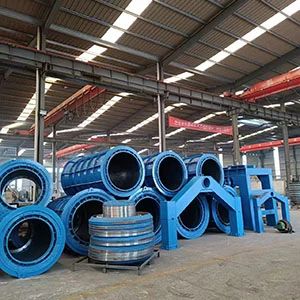

China Modular Housing Construction Equipment Company Powers Efficient Prefabricated Building Solutions
2026-09-05
Modular housing isn’t just about stacking boxes—it’s about rethinking how we build. In China, where speed, quality, and cost control decide a project’s fate, the right construction equipment can mean the difference between profit and delay. That’s where Qianfeng Electromechanical Equipment comes in. Specializing in machinery for prefabricated building production, this China-based company is quietly powering the shift toward faster, cleaner, and more reliable modular construction. If you’ve ever wondered how prefab walls get their perfect edges or why some factories outperform others, the answer often sits in the equipment behind the scenes.
The Equipment Backbone of China’s Modular Housing Boom
China's modular housing sector has moved well beyond simple prefab panels. The real driver now is a network of automated production lines: robotic welding cells, laser-guided cutting tables, and computer-controlled concrete casting systems. These machines turn out wall modules, floor cassettes, and bathroom pods with tolerances measured in millimeters. The equipment is not just faster; it is precise enough to make on-site correction obsolete, which changes how construction schedules are planned.
Instead of relying on imported machinery, many manufacturers have started sourcing from domestic equipment builders in Shandong, Jiangsu, and Guangdong. This shift has cut lead times from over a year to a few months and allows for rapid customization of module dimensions. The backbone is less about any single flagship machine and more about the integration of conveyors, curing chambers, and automated guided vehicles that move partially finished units from station to station without forklift bottlenecks.
Maintenance and data feedback loops have become as important as the hardware itself. Sensors embedded in the casting and welding equipment monitor vibration, temperature, and alignment, flagging drift before it affects output. That capability lets factories run continuous shifts, pushing annual output into the tens of thousands of modules. The result is an equipment ecosystem that scales up in weeks, not years, and keeps unit costs low enough to support the country's push for high-rise modular projects.
Prefabrication Lines Built for Speed and Precision
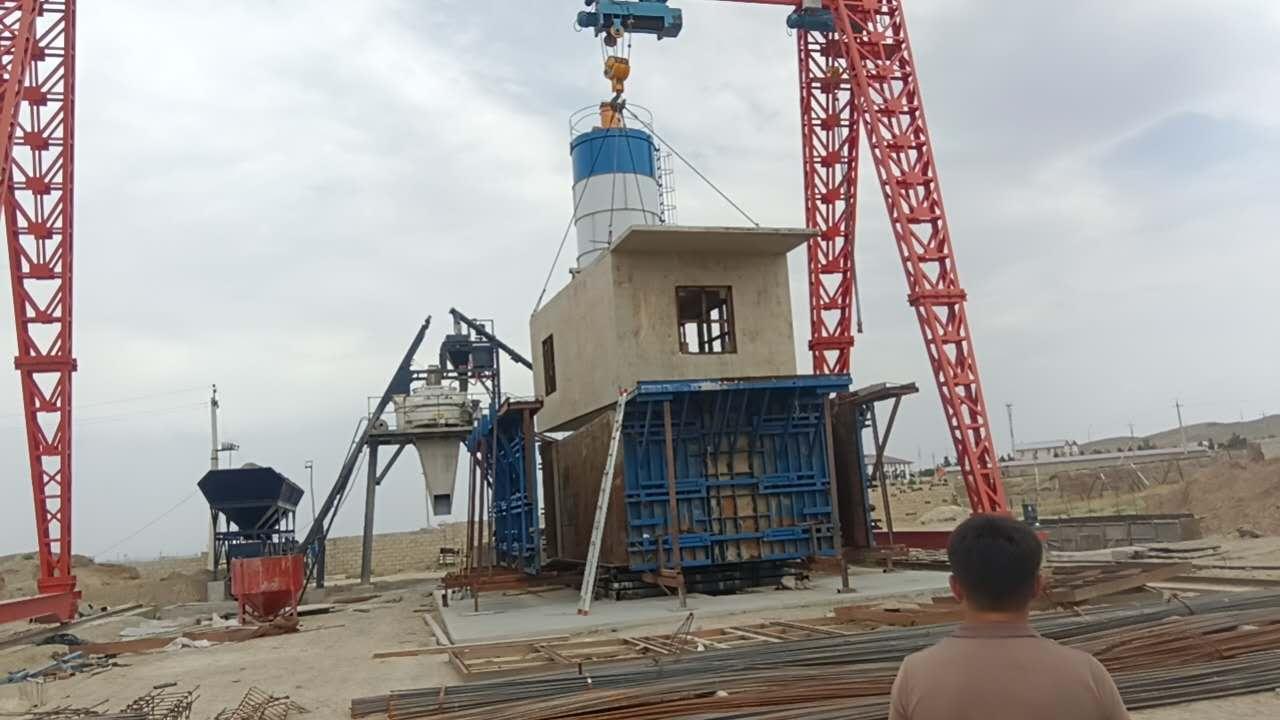
On these lines, material movement is synchronized with station cycles so that cutting, fitting, and welding happen in parallel rather than one after another. Automated conveyors and sensor-triggered buffers keep components flowing without wait times, which pushes daily throughput well beyond what manual batch handling can achieve.
Precision comes from laser-guided alignment and CNC-controlled trimming at each critical joint. Instead of relying on tape measures and chalk lines, operators use digital position feedback to hold tolerances within a millimeter, so every subassembly matches the next without forcing or shimming.
The combined effect is a line that can run multiple product variants back-to-back while keeping dimensional drift near zero. That reduces rework on site and compresses delivery schedules, which matters most when a project has repeated modules or tight installation windows.
Why Modular Builders Are Switching to Integrated Equipment
The push toward integrated equipment isn't about trendiness; it's about eliminating the recurring mess of on-site coordination. When a modular plant orders HVAC, plumbing, and electrical components from separate vendors, every connection point becomes a potential argument. Integrated packages arrive with flanges, brackets, and controls already matched, so the crew spends less time improvising and more time assembling.
There's also a hard cost argument. Fewer shipments mean lower freight and less staging area on the factory floor. Since a single supplier takes responsibility for the entire mechanical or electrical system, warranty claims no longer bounce between manufacturers. For builders running multiple lines, that one-call accountability shortens downtime and frees up project managers to focus on production flow.
Quality consistency improves when systems are tested as a unit before leaving the supplier. Instead of discovering a mismatched valve or a control wiring error during final inspection, problems surface at the integration bench where they're cheaper to fix. Over time, standardizing on integrated equipment lets modular facilities train installers on one configuration, which reduces both assembly time and callbacks.
Inside a Factory Floor That Ships Finished Rooms
The first thing you notice is the noise, not the roar of heavy equipment but a steady percussion of nail guns, impact drivers, and the occasional thud of a pre-hung door being test-swung. Along the line, steel-framed boxes sit in various stages of undress: one has only its subfloor and a tangle of PEX tubing, three stations later the same footprint already shows taped drywall and a window with the manufacturer's sticker still in the corner. Workers move between these rooms like stagehands, wheeling carts of door hardware past stacks of factory-cut crown molding.
Unlike a traditional job site, the sequence here runs backwards from what most builders know. Electricians pull wire through open studs before the insulation crew rolls in, and plumbers set a toilet flange while the wall behind it is still just a chalk outline on plywood. A laser level casts a green line across the entire floor, checked against steel pins set in the concrete. Crews use torque-controlled screw guns for every cabinet mount, not because it is faster, but because a drawer front that sits one-sixteenth of an inch proud in a showroom will drive a hotel guest crazy at midnight.
At the far end, finished rooms wait under a gantry crane, each one wrapped in white shrink film with a barcode the size of a paperback. Light fixtures already hang, switch plates are snapped on, and a small bag of touch-up paint dangles from the bathroom door handle. A forklift slides its forks under the steel floor frame, lifts, and carries the whole thing toward an open bay where a flatbed idles. When the truck pulls away, it isn't hauling materials or even a prefab shell. It's shipping a room that someone will sleep in three days from now.
Cutting Construction Timelines with Containerized Production
Traditional construction ties progress to weather, site access, and sequential trades. Containerized production flips that logic: modules are assembled in parallel inside weathertight factories while site crews handle foundations and utilities. This overlap compresses the critical path dramatically, often turning months of on-site work into weeks of controlled factory output.
Because most of the building is already complete when modules arrive, on-site activity focuses on connection and commissioning rather than raw construction. Inspections happen earlier and more predictably, since factory lines allow repeated quality checks before modules ship. The result is fewer weather delays, reduced rework, and a schedule that owners can actually plan around.
Teams adopting this approach often find that the real time savings come from removing idle periods between trades. Electrical, plumbing, and finishes are completed inside the module before it leaves the factory, so the usual stop-start rhythm of a construction site disappears. What remains is a fast, repeatable sequence that compresses timelines without sacrificing build quality.
From Raw Steel to Ready-to-Live Modules in Days
Steel framing moves from coil to complete module on a single production line, with robotic welding cutting fabrication time by more than half. Once the chassis and walls are locked into place, interior finishes follow within the same shift rather than weeks later on a muddy site.
A typical two-bedroom module leaves the factory floor three days after the first steel sheet enters the press. Plumbing, wiring, and insulation are installed while the paint is still curing, turning what used to be a six-month site build into a sequence of parallel tasks that finish before the foundation even settles.
The result is a building that arrives on a truck as a weathertight, furnished unit, ready for stacking and final utility hookups. Time on site shrinks to a handful of days, and the steel skeleton gives each module the rigidity to survive transport without a single crack in the drywall.
FAQ
It supplies heavy-duty equipment such as steel frame forming machines, concrete casting beds, and automated lifting systems that let builders produce complete housing modules indoors, cutting out weather delays and on-site guesswork.
The equipment automates repetitive tasks like measuring, cutting, and welding, so a single production line can output several finished modules per day instead of taking weeks on a traditional job site.
Their main lineup includes adjustable molds for wall panels, robotic welding arms for steel frames, concrete pouring and vibrating tables, and transport trolleys that move heavy modules without extra cranes.
Rapid urban growth and labor shortages push builders toward factory-made modules because they can be assembled on site in days rather than months, and quality stays consistent even with fewer skilled workers.
Yes, most machines have adjustable parameters for different wall thicknesses, room sizes, and layout changes, so builders can produce varied apartment types or even single-family homes from the same line.
Instead of selling generic machines, they often configure the whole production line to match local building codes and common Chinese module dimensions, and they provide on-site training for operators to avoid downtime.
Factory-based production uses exact material quantities, reuses steel offcuts, and keeps concrete pours controlled, which typically cuts site waste by more than half compared to conventional building methods.
They target issues like inconsistent weld quality, slow panel casting, and damage during module lifting by offering equipment with built-in sensors and fail-safe clamps, so builders spend less time on repairs and rework.
Conclusion
Across China's modular housing sector, the real competitive edge has shifted from design software to the physical equipment running the production floor. A single manufacturer now supplies the backbone for much of this boom—integrated prefabrication lines that handle raw steel framing, panel pressing, electrical rough-in, and bathroom pod assembly without breaking the production rhythm. Instead of stitching together machines from different vendors, modular builders are turning to these purpose-built systems because they eliminate the usual bottlenecks such as material transfers, recalibration between stations, and quality checks that slow down traditional factory setups. The result is a continuous line where wall, floor, and ceiling modules move through welding, insulation, and finishing stages at a pace that manual or semi-automated plants cannot match.
What makes this approach stand out is the shift to containerized, room-sized production cells. Each cell operates as a self-contained workstation—think of a finished bathroom or kitchen being assembled, tested, and wrapped inside the same frame that will later be shipped. By the time a module leaves the factory floor, it is no longer a raw shell but a habitable room with wiring, plumbing, cabinetry, and even fixtures already installed. From cutting the first steel stud to handing over ready-to-live modules, the entire sequence can now be compressed into a matter of days. That kind of speed has real consequences for developers who cut site labor, reduce weather delays, and move projects from foundation to occupancy in a fraction of the time once required.
Contact Us
Contact Person: Bill
Email: [email protected]
Tel/WhatsApp: 8615063653526
Website: https://www.qianfengjd.com