

China Puff Snack Food Production Line Delivers Consistent High-Quality Puffs
2026-09-12
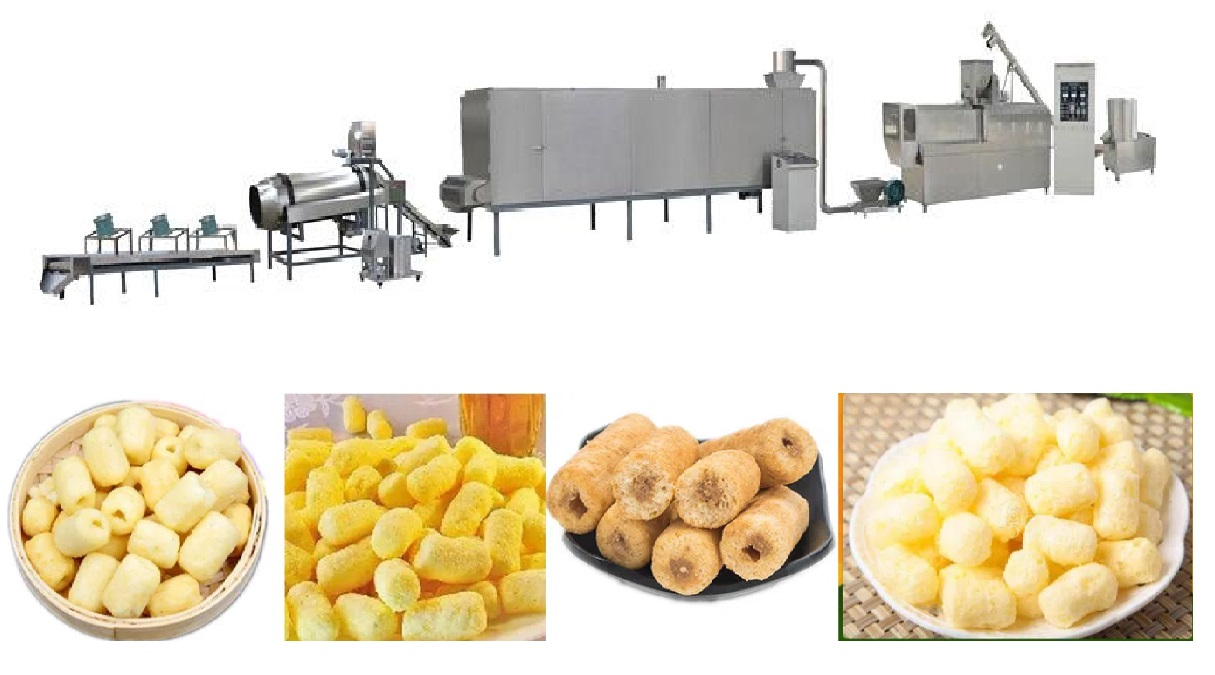
Ask any snack manufacturer what keeps them up at night, and consistency will top the list. For puffed snacks, that means every piece should have the same crunch, size, and mouthfeel—batch after batch. China’s puff snack food production lines are increasingly meeting this challenge head-on, and MINGDE is one name that keeps surfacing in conversations about reliable, high-output equipment. So what exactly goes into delivering puffs that never miss a beat?
Precision Extrusion That Keeps Every Puff Uniform
The extrusion process runs on tolerances measured in microns, not millimeters. Melt pressure, barrel temperature, and die gap all get watched in real time, with small corrections made the moment anything drifts. That obsessive attention is what keeps every puff identical, from the first gram to the last.
You notice the difference in the texture and how evenly each portion behaves. No dense spots, no airy gaps, just a consistent experience that builds trust with every use. The bulk sorting step gets skipped because the line itself already refuses to let variation through.
Temperature Profiling for Consistent Crunch
Crunch isn’t the product of a single temperature reading—it’s a byproduct of the entire heat journey. The rate at which the core warms, the length of time it lingers just below the browning threshold, and the speed of the final spike all shape how the structure fractures. Rushing the early phase traps moisture under a prematurely hardened surface, leaving you with a brittle exterior and a chewy center. Dragging it out too long, on the other hand, invites oil absorption or starch breakdown that turns crisp into cardboard.
Think of the curve as part of the recipe, not a background setting. Logging real-time temperatures across each batch reveals the window where a fine, glassy crust forms without collapsing the air pockets underneath. Sometimes the best move is a deliberate dip mid-process—holding the product a few degrees lower lets residual water redistribute before the final blast drives it off. That pause can mean the difference between a shatter that’s clean and one that’s patchy.
For repeatable results, chase the shape of the curve rather than a solitary set point. A poorly preheated chamber or a draft near the line can shift the entire profile sideways, even if the display says you’re on target. Calibrating probes regularly and watching how closely consecutive runs overlap will tell you more than any fixed number ever could. Consistency lives in the overlap, not in the absolute value.
Managing Ingredient Flow from Grits to Golden Puffs
Getting grits to turn into golden puffs without clumping or starving the line starts well before the extruder. The receiving pit has to handle a range of grit sizes, and if the fines percentage drifts above 8%, air conveyance starts separating material mid-pipe. We rotate fill sensors on the day bins instead of relying on single-point readings, because grits bridge easily when humidity swings. A simple diverter valve with a slow-position feedback keeps the surge hopper from overfilling while the mill grinds to order.
Moisture is the quiet variable that breaks most schedules. Grits stored below 11% moisture feed faster but produce more shear, which can scorch the outer layer before the center puffs. Running a two-stage conditioning screw—first steam, then a light water mist—lets the line hold moisture within a half percent without wet clumps forming at the transfer points. Every bin discharge uses a variable-frequency rotary valve tied to the conditioner load cell, so the flow rate follows actual demand rather than a fixed recipe timer.
When the line switches from a fine grit to a coarser one, the changeover is where ingredient flow falls apart. Instead of purging with air alone, we run a 30-second pulse of ground rice through the sifter and bucket elevator, which scours the dead corners and confirms the next batch isn't contaminated. Lockout tags on the diverter panel force the operator to verify the correct destination before the fill auger starts, cutting cross-contamination and keeping each golden puff consistent from first piece to last.
Automated Cutting Systems That Standardize Puff Size
Achieving uniform puff size used to rely heavily on the skill of individual operators, but automated cutting systems now handle this with remarkable consistency. These machines use servo-driven blades or rotary cutters that adjust in real time based on dough density and feed rate, so every piece leaving the line matches the target dimensions within a fraction of a millimeter.
The real advantage shows up downstream. When raw puffs enter the oven or fryer at identical sizes and weights, they expand at the same rate, reducing waste from over- or under-baked product. Some systems even incorporate vision sensors that flag any piece drifting out of spec before it reaches packaging, letting operators correct the process without stopping production.
Beyond consistency, automated cutters simplify changeovers between product sizes. Instead of swapping dies and re-calibrating by hand, a technician can load a recipe file and the machine positions its blades automatically. This cuts downtime and keeps the line flexible enough to run multiple puff formats in a single shift.
Humidity Control During Drying Prevents Soggy Centers
A drying cycle that strips moisture too quickly can leave the outer layers stiff while the interior remains damp—a classic recipe for that disappointing, gummy center. By carefully adjusting humidity levels as moisture exits the material, you force water to migrate outward at a steady pace. This prevents the surface from sealing off prematurely and gives the inside enough time to dry fully.
The trick is not to eliminate humidity entirely but to taper it in stages. Early on, moderate humidity keeps pores open and encourages even evaporation. Later, as the core approaches its target moisture content, lowering the humidity pulls the last stubborn bits of trapped water without overheating or shrinking the outer shell. The result is a uniform texture from edge to center.
Small swings in moisture control often matter more than total drying time. Monitoring the air’s moisture load—rather than relying on a fixed timer—lets you adapt to variations in batch size or starting wetness. That kind of feedback is what turns a merely dry product into one with no soggy surprises left in the middle.
Final Inspection Stations Reject Subpar Puffs Before Packaging
At the end of the production line, each batch of puffs passes through a dedicated inspection station where trained operators and automated sensors work side by side. Any puff that falls short on size, texture, moisture level, or visual uniformity is pulled from the conveyor before it ever reaches the packaging area.
This rejection step isn’t just about catching obvious defects—it also monitors subtle variations like irregular air pockets or inconsistent coating. By removing subpar pieces early, the final packs stay consistent in quality, and the risk of customer complaints drops sharply.
The inspection process runs continuously, with real-time feedback sent back to the forming and baking stages. That loop helps the team adjust settings on the fly, so fewer off-spec puffs are produced in the first place rather than relying solely on end-of-line sorting.
FAQ
It pairs twin-screw extrusion with a closed-loop moisture and temperature control, so the dough expansion stays uniform from the first run to the last. The barrel segments are also independently heated, which cuts down on cold spots that often ruin batch consistency.
It runs well on corn grits, rice flour, wheat blends, and potato starch. Changeover mostly involves swapping the die plate and adjusting feeder profiles, not rebuilding the entire barrel.
Inline sensors monitor melt pressure and moisture every few seconds, and the PLC adjusts screw speed and water injection automatically. That feedback loop prevents drift, so the crunch and mouthfeel don't change by hour six or seven.
You can make classic cheese curls, rings, balls, sticks, and even multigrain pillow puffs. The die heads are quick-release, and the cutting unit can be tuned for different lengths and shapes without stopping the line.
The extrusion barrel and die assembly are designed for fast teardown, and the conveying section uses open-frame construction. Most plants can complete a full washdown and restart within 30 to 40 minutes with a small crew.
It includes a vision inspection station near the dryer exit that flags broken or misshapen pieces, plus a bulk density meter that samples every few minutes. Operators get real-time alerts if the expansion ratio drifts outside the set band.
The frame is modular, so throughput can start around 150 kg per hour and expand past 500 kg per hour by adding barrel sections and upgrading the dryer. This keeps the same core controls, just with longer runtime capacity.
Conclusion
Achieving uniform, high-quality puffs on a snack production line is less about a single breakthrough and more about controlling every detail from raw grits to final golden crunch. Precision extrusion lies at the heart of consistency, with screw geometry and die design tuned so that each puff emerges with identical shape, density, and cell structure. Temperature profiling then takes over, adjusting heat zones along the barrel and oven to guarantee that every piece develops the same crispy bite without burnt edges or undercooked cores. Managing ingredient flow adds another layer: feeders, preconditioners, and moisture sensors work together to keep the corn grits moving at a steady rate, preventing surges or starvation that would otherwise create batch-to-batch variation.
Downstream, automated cutting systems standardize puff size by synchronizing blade speed with extrusion output, eliminating the slight length differences that human operators sometimes miss. Humidity control during drying plays a quiet but critical role, pulling moisture evenly from the interior so no puff hides a soggy center behind a dry shell. Finally, inline inspection stations use optical sorting and weight checks to reject subpar pieces before packaging, ensuring that only puffs meeting strict size, color, and texture thresholds reach the bag. Together, these integrated steps turn a complex process into a repeatable one, letting Chinese production lines deliver the same consistent crunch batch after batch.
Contact Us
Contact Person: LILY SUN
Email: [email protected]
Tel/WhatsApp: 0086-13969103791
Website: https://www.snackfoodmachinery.com/