Choosing the Right Contact Plate Freezer Company for Your Operational Needs
2026-10-06
Buying a contact plate freezer is easy; choosing the right company to stand behind it is where most operations get stuck. A plate that freezes unevenly or a supplier that disappears after installation can quietly drain your throughput and margin. Before you shortlist another catalog, consider what actually drives long-term performance. Worldbase approaches this differently—engineering systems around your product, your space, and your production rhythm. In this post, we’ll walk through the key signals of a dependable partner, from thermal consistency to real after-sales support. Stay with us to make a decision your operation won’t outgrow.
Match freezer capacity to actual production peaks instead of relying on brochure numbers
Rated capacity on a spec sheet rarely survives contact with an actual production shift. It assumes steady loading, sealed doors, and a product that enters already cold. If your line dumps 400 kg of warm product into the freezer at 2 p.m. and then again at 9 p.m., the unit has to pull that heat down fast, not spread it across a full day. Track the busiest 60 minutes of your week, including door openings during shift change and the defrost cycle, and size around that spike.
Pay attention to what actually goes in. Warm or uncovered trays, tightly stacked racks that block airflow, and a condenser wedged into a hot corner all raise the real load beyond the brochure figures. A freezer that works on paper can struggle if defrost runs at the same time as your peak pull-down. Match the capacity to your worst hour, then add a modest buffer—not the reverse.
Ask for references from plants running similar product types and batch sizes
Seeking out colleagues at facilities that handle comparable product lines and production volumes can reveal insights that brochures and sales pitches simply can't match. A quick phone call or site visit often uncovers the real story behind equipment reliability, changeover times, and the quirks of maintaining consistency when scaling up or down. Ask for the names of operators, maintenance leads, and even the plant manager who lived through the same growing pains you're anticipating.
Don't limit the conversation to success stories. Find out what broke, which suppliers were slow to respond, and where the hidden costs crept in after the first six months. References from plants with a similar batch rhythm—whether that means small, frequent runs or large, continuous ones—will help you predict whether a proposed system can actually keep pace with your schedule instead of just performing well in a demo.
When you reach out, be specific about your own parameters: product viscosity or particulate load, target batch size range, and the number of changeovers per shift. A plant that runs the same SKU for three days straight will have a very different perspective than one that switches products every few hours. Hearing those firsthand accounts will give you the confidence to skip the generic assurances and focus on what matters for your floor.
Request a trial freeze with your own products before signing anything
Don't take a vendor's word that their service will work with your stack. Request a trial freeze where they commit to a specific version of their product, and you integrate it with your own live or near-live products for at least two weeks. This isn't a sandbox demo—it's a controlled experiment using your actual data flows, error patterns, and peak load shapes.
Push for the freeze to include a written scope: which APIs will be touched, what data retention applies, and how rollback works if things break. Most vendors will resist because it exposes their weak spots early, but that's exactly the point. You want the failure to happen before the contract is signed, not after.
If they refuse a trial freeze or offer only a limited read-only preview, treat that as a red flag. A legitimate partner will welcome the chance to prove their product in your environment. Walking away from a deal that won't survive a freeze is cheaper than untangling a bad integration later.
Understand how the company handles installation, training, and after-sales support
Installation is not treated as an afterthought. The company sends a dedicated technician to walk the site before any equipment arrives, checking power, space, and ventilation so there are no surprises on delivery day. Once the system lands, the same team handles unpacking, positioning, and calibration, then runs a full test cycle while your staff watches. That hands-on approach means the machine is already producing before the install crew leaves.
Training goes beyond a quick demo. Operators get time on the actual equipment with real workpieces, not just slides. The trainer stays until your team can handle daily start-up, tool changes, and basic troubleshooting without hovering. For supervisors, there is a shorter session focused on maintenance schedules and error-code interpretation, so small issues do not turn into downtime. Additional refresher visits can be scheduled at no cost during the first six months.
After-sales support is built around a local response network rather than a distant call center. Spare parts for common wear items are stocked in-country, and a service engineer can usually reach your site within 48 hours. Remote diagnostics are available, but the company prefers phone or video calls with someone who knows your machine's history. Annual maintenance contracts include priority scheduling and one full inspection per year, which helps catch problems before they affect production.
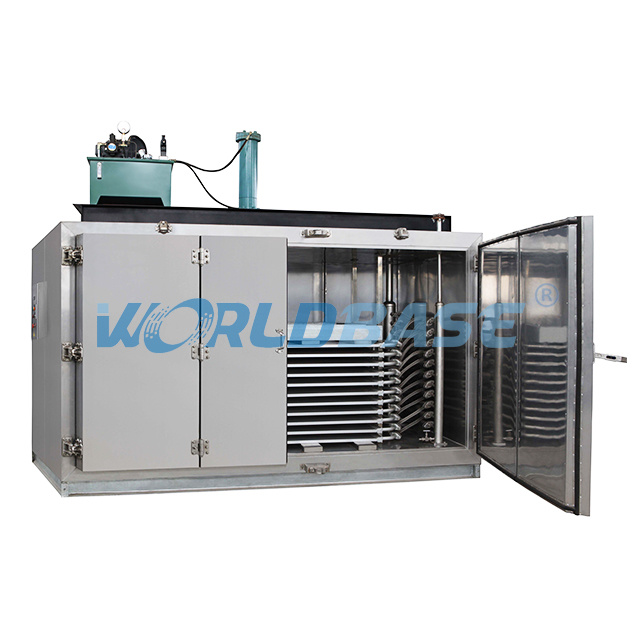
Examine frame, door, and seal construction for long-term use in wet, cold environments
Frames built from powder-coated aluminum or galvanized steel hold up far better than untreated wood or thin sheet metal when frost, standing water, and road salt are part of the daily routine. Look for welded corners rather than screwed joints, since expansion and contraction from repeated freeze-thaw cycles will work screws loose over time. A thermal break between the inner and outer frame faces stops cold from transferring straight through the metal, which otherwise invites condensation and ice buildup right where the gasket sits.
Doors should close with enough compression to keep out wind-driven rain but not so much that the seal crushes and loses its shape by the second winter. Hollow-core doors with foam insulation are common, but the edge construction matters more than the middle — a reinforced stile around the latch and hinge points prevents warping when one side of the door faces a heated room and the other faces sub-zero air. Check that hinges, latch plates, and handles are made from stainless steel or coated with a thick, chip-resistant finish, because cheap hardware rusts fast once moisture gets trapped in the mechanism.
Seals deserve a close look, especially the bottom sweep and the corners where two gaskets meet. EPDM rubber stays flexible down to about -40°F, while PVC stiffens and cracks, so material choice is not a minor detail. A seal with a hollow bulb or a fin design sheds water more effectively than a flat strip, and it should sit in a channel that allows replacement without pulling the whole door off. Weep holes at the base of the frame, sloped slightly outward, give any water that does get past the first line of defense a way to drain instead of pooling and freezing against the threshold.
Compare total cost of ownership, including energy, parts, and downtime risks
Most buyers focus on the sticker price, but that number rarely reflects what a machine will actually cost over a decade of daily use. A model that seems cheap upfront might burn thirty percent more electricity per cycle, and that difference shows up on every utility bill. Look at the motor efficiency ratings and the standby power draw—not just the peak wattage listed in the brochure. Over five or ten years, energy can easily overtake the initial purchase price, especially in facilities running multiple shifts.
Parts availability is another silent budget line. Some manufacturers use proprietary sensors, belts, or drive units that only they sell, which means waiting weeks for a replacement while production halts. Others rely on standard industrial components you can source locally within a day. Check the mean time between failures for critical subassemblies and ask for a copy of the recommended spare parts list with real lead times. A machine built around off-the-shelf parts usually carries a lower long-term cost, even if the upfront price is slightly higher.
Downtime risk is the hardest number to pin down but often the most expensive. An unplanned stop in a packaging line or CNC cell can cost thousands per hour in lost output, rushed orders, and overtime labor. Compare not just the published reliability figures, but the design philosophy: is the machine easy to diagnose and repair on-site, or does it require a factory-trained technician for every fault code? A slightly higher purchase price that buys redundant drives, accessible wiring, and modular components may pay for itself the first time you avoid a two-day shutdown.
FAQ
Start by mapping your daily throughput, product thickness, and freezing time targets. If your facility processes irregular batches or seasonal peaks, look for suppliers who can match that variability without forcing you into oversized equipment. Cooling load calculations and available floor space also matter more than brochure specs.
Ask them about washdown procedures, floor drainage, and component access for sanitation. A company that builds for food plants will mention sloped surfaces, sealed joints, and corrosion-resistant materials as standard—not as optional extras. If they can't discuss HACCP implications or hygienic design, keep looking.
Request examples of non-standard layouts, plate spacing adjustments, or integration with existing conveyor systems. A capable partner will walk you through recent modifications they've made for products like sauces, seafood, or ready meals. Beware of vendors who only offer fixed configurations and expect your process to change.
It's not just about the compressor label. Look at the full system: pump sizing, hot gas defrost cycles, insulation thickness, and how the control logic manages partial loads. Ask for projected annual energy use per ton of product frozen at your specific conditions. Realistic numbers come from detailed load profiles, not generic charts.
Down time in a freezing line costs more than the initial equipment price in many cases. Check where spare parts are stocked, average response time for service calls, and whether the company offers remote diagnostics. Also ask about training for your maintenance crew—if they rely on third-party technicians for every minor issue, that's a red flag.
Ask for references from facilities with similar product types and production volumes. Visit an operating site if possible, and observe how the equipment runs after several years of service. A provider that hesitates to share references or only shows brand-new installations may not stand behind long-term reliability.
Create a comparison that includes energy draw, expected component life, ease of cleaning, and flexibility for future product lines. A cheaper freezer that requires more manual labor or has higher defrost downtime can quickly erase the upfront savings. Focus on cost per kilogram frozen over a five- to seven-year horizon.
Conclusion
When you are sizing up a contact plate freezer supplier, it pays to look beyond glossy datasheets and ask how the machine behaves on your actual busiest day. A freezer that matches your true peak loads will save you from either under-freezing product or paying for capacity you never use. I have seen plants skip this step and end up with bottlenecks that no amount of scheduling can fix. Along the same lines, ask the vendor to connect you with facilities that run products and batch sizes close to yours—not just any customer reference. Even better, bring your own product in for a trial freeze before committing. That single run tells you more about freeze time, texture, and yield than any technical presentation.
It is also worth digging into what happens after the sale. Installation, operator training, and how quickly they respond when a compressor fails in the middle of a production week matter more than a low sticker price. Look closely at the frame, door, and seal design; these are the parts that take a beating in wet, cold rooms day after day. A door that warps or a seal that leaks will quietly drive up energy costs and put product quality at risk. Finally, do not buy on purchase price alone. Work out total cost of ownership with realistic assumptions about energy use, spare parts availability, and downtime. A slightly more expensive freezer with better local support and robust construction often ends up cheaper over five or seven years.
Contact Us
Contact Person: Mr Yang
Email: [email protected]
Tel/WhatsApp: +8613809083091
Website: https://en.worldbase.cn