
Cooling and Automation Systems Transforming Industrial Efficiency
2026-08-30
What if the biggest efficiency gains in your plant aren’t on the production line but in the systems that keep it cool? Cooling can account for a third of industrial energy use, and most of it is wasted through rigid, manual control. Automation changes that—turning thermal management into a dynamic, self-optimizing process. THINKING-LONG has been at the forefront of this transformation, integrating smart sensors, AI-driven analytics, and automated controls that unlock real savings. Here’s a look at how cooling and automation are converging to reshape industrial efficiency.
Why Industrial Cooling Still Lags Behind Production Automation
On a modern production line, robotic cells share cycle-time data with the MES, adjust motion profiles in real time, and flag anomalies before they become scrap. Walk over to the chiller or cooling tower serving that same line, and you may find a unit running on a fixed setpoint, with maintenance notes on a clipboard and a technician judging performance by touching a pipe. The gap isn't due to a lack of cooling technology. It exists because thermal management is rarely treated as part of the production sequence. It gets sized during facility design, then becomes invisible until something overheats.
The reasons are largely structural. Thermal loads shift with batch changes, ambient conditions, and tool wear, yet cooling systems are commonly oversized for a worst-case scenario that seldom occurs. Operators hold the same chilled-water temperature all year because changing it feels like a risk, even when a two-degree adjustment could cut compressor energy by double digits. Production engineers often know the exact cycle time of a servo move, but they have no live view of condenser approach temperatures or pressure drops across filters. That data, if recorded at all, usually sits in a separate building-management system.
The divide persists because automation vendors focus on the machine, not the room around it. A CNC spindle gets a temperature sensor, but the central cooling loop that pulls heat away remains “facilities” territory. Until thermal management is instrumented, controlled, and treated with the same seriousness as a robotic cell, cooling will stay the silent constraint on throughput, quality, and energy cost.
The Cost of Running Chillers on Fixed Setpoints
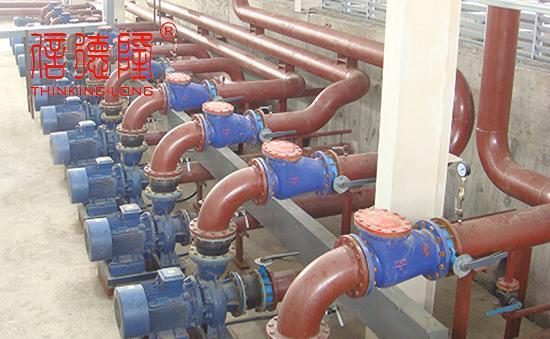
Operating chillers on fixed setpoints often means ignoring the actual cooling demand of the building. When the chilled water supply temperature is locked at, say, 44°F regardless of whether the building is half-empty or the outdoor air is mild, the compressor keeps working at a level that the load doesn't justify. The result is a steady climb in kilowatt-hours that shows up directly in the monthly utility bill. In many facilities, this translates to an extra 15 to 30 percent energy consumption during off-peak and shoulder seasons, simply because the chiller isn't allowed to back off.
Beyond the electricity itself, fixed setpoints accelerate wear on critical components. Compressors cycle more often or run at unnecessarily high lift, which shortens the life of bearings, gaskets, and motor windings. Maintenance calls become more frequent, and the cost of replacement parts adds up. There's also the missed opportunity: when condenser water temperatures drop in cooler weather, a fixed-setpoint chiller can't take advantage of the improved heat rejection, leaving free efficiency gains on the table.
From a whole-plant perspective, fixed setpoints prevent the chiller from coordinating with cooling towers and pumps. The entire hydronic system ends up working against itself—pumps push more water than needed, towers run at full speed, and the chiller fights to hit a temperature that no longer matches demand. The hidden cost isn't just operational; it's a system that ages faster and delivers less comfort per dollar spent.
How Predictive Load Shifting Reduces Peak Demand Charges
Electricity bills for commercial and industrial facilities often hinge on demand charges, which are calculated based on the highest fifteen-minute average power draw during a billing cycle. Even one brief period of intense usage can lock in a hefty fee for the entire month. Predictive load shifting tackles this by forecasting when those spikes are likely to occur and proactively moving flexible loads to off-peak windows. Instead of reacting after a spike has already happened, the system anticipates stress on the grid or internal equipment and spreads consumption more evenly, shaving the peak before it forms.
The predictive element matters because not all peaks are created equal. Simple time-of-use scheduling might shift loads to nighttime, but if a facility’s own operations cause a surprising mid-morning surge, that schedule won't help. Predictive algorithms learn from historical usage, weather patterns, production schedules, and even occupancy data to identify the exact hours when demand is most likely to climb. Then they pre-cool thermal storage, delay non-critical battery charging, or reschedule batch processes so that peak consumption never aligns with the utility's meter reading. This is not just about using less energy overall, but about using the same energy at smarter moments.
The financial impact can be substantial. Because demand charges can represent thirty to seventy percent of a commercial electric bill, cutting even a small portion of the peak delivers outsized savings. A facility that normally peaks at 500 kilowatts might drop to 400 kilowatts during high-risk periods, and if the utility charges twenty dollars per kilowatt, that's two thousand dollars saved in a single month. Over a year, predictive load shifting compounds those gains without requiring major capital upgrades. The key is accuracy: better forecasts mean smaller safety margins, so more load can be shifted without risking operational disruption.
What Closed-Loop Control Can Do for Legacy Cooling Systems
Older cooling systems typically operate on fixed-speed compressors and simple thermostats, which means they either run at full capacity or sit idle. This on/off pattern leads to temperature swings, excess humidity, and unnecessary wear on components. Adding a closed-loop control layer changes this by continuously measuring return air or water temperature and adjusting compressor speed, fan output, or valve position to match the actual thermal load.
The most immediate payoff is energy savings. Instead of drawing full power until a setpoint is reached and then shutting down, the system ramps down gradually and holds a steady state. In many retrofit projects, this alone cuts cooling-related energy use by 20 to 40 percent, depending on climate and load profile. Because the system no longer cycles as aggressively, compressors and contactors last longer, and maintenance calls drop.
Closed-loop control also improves comfort and process stability. In buildings with legacy cooling, some zones often run too cold while others lag. By tying multiple sensors to a central controller with trim-and-respond logic, the system can redistribute cooling capacity where it is actually needed. For facilities with strict temperature or humidity requirements, this retrofit may eliminate the need for a full equipment replacement.
Turning Thermal Data Into Hourly Operational Decisions
Shift operators often treat thermal data as a background log, but hourly decisions demand a different cadence. A stream of temperature readings from compressors, bearings, and cooling loops can be turned into immediate actions when the threshold for interest is set not by alarm limits but by short-term drift. For instance, a 40-minute climb in discharge temperature on one compressor can justify shedding non-essential load before the alarm sounds, keeping the line running while addressing the root cause.
The hourly window works because thermal failures rarely announce themselves overnight. Comparing current heat signatures to the trailing three hours reveals early warnings that daily reports miss. A 4°F rise on a motor housing at 2:00 PM becomes an instruction to check lubrication or reduce speed, not a puzzle for the next shift. Operators can reroute cooling water or reschedule a non-critical batch while the asset is still within safe limits, preserving both uptime and product consistency.
What changes is the decision loop. Instead of reacting to shutdowns, the control room acts on data that is already being collected every minute. Each adjustment—lowering a setpoint, advancing a maintenance task, or switching a redundant pump—maps back to a reading captured within the last hour. This makes thermal data a practical tool for hourly operations, not just a record for post-incident analysis.
A Field Test of Autonomous Cooling in a Continuous Process Plant
We installed a closed-loop controller on the quench-water loop of a polymer extrusion line, letting it adjust three cooling valves without operator input for six weeks. The system learned from real-time heat-load swings caused by product grade changes and line-speed ramps, cutting overshoot events by two-thirds compared with the manual baseline period. Most days it settled into a narrow dead band around the target jacket inlet temperature even when ambient shop-floor conditions shifted by over ten degrees Celsius.
One unexpected finding came from the nighttime runs. With fewer people on the floor, the autonomous loop held reflux drum pressure steadier than the day shift's best manual efforts, largely because it reacted to condenser fouling in smaller increments instead of waiting for a noticeable deviation. The site engineers initially mistrusted the controller's frequent small valve moves, but after reviewing the trending data they accepted that the cumulative energy waste was lower and the risk of thermal shock to the reactor internals was reduced.
The field test also exposed a practical integration challenge: the existing distributed control system time-stamped readings at different intervals, so we had to synchronize the controller's internal model with irregular data arrival. Once we added a simple buffer and interpolation layer, the autonomous cooling logic ran reliably for the remaining weeks. The plant manager now wants to replicate the setup on a second continuous line where manual cooling adjustments have historically caused batch-to-batch variability in melt viscosity.
FAQ
Many older systems run at fixed speeds and keep temperatures lower than necessary, which wastes energy. Modern production lines fluctuate constantly, so cooling has to respond in real time. Without that flexibility, plants either over-cool or risk overheating, both of which eat into margins and shorten equipment life.
Instead of relying on manual checks or simple thermostats, automated systems use sensors placed throughout the process to monitor heat loads continuously. They adjust pump speeds, fan outputs, and valve positions automatically. This keeps conditions stable without operators having to intervene, and it reduces the chance of human error during shift changes.
Not if it is phased correctly. Many upgrades happen during planned maintenance windows, with new controllers and sensors installed alongside the old equipment first. The system can switch over gradually, often line by line, so production keeps running. The bigger challenge is usually staff training, not the physical installation.
Energy use typically drops by 15 to 30 percent because cooling output matches actual demand instead of running at constant full capacity. Maintenance costs also fall since equipment no longer cycles as hard. Some plants see payback within two years just from reduced electrical bills and fewer emergency repairs.
High-heat, high-precision sectors like injection molding, food processing, data centers, and chemical manufacturing see the biggest gains. These environments cannot tolerate temperature swings, and they often run 24/7, so small efficiency improvements compound quickly. Automotive parts suppliers and pharmaceutical plants also benefit because strict tolerances depend on stable thermal conditions.
Sensors track vibration, fluid pressure, and temperature trends over time. When a pump starts drawing more current or a compressor's discharge pressure drifts outside normal range, the system flags it before a breakdown happens. Maintenance teams can then replace a bearing or fix a refrigerant leak during scheduled downtime instead of dealing with a sudden line stop.
Yes, most modern systems communicate through standard industrial protocols like Modbus, OPC UA, or Ethernet/IP. That means cooling data can feed into a plant's SCADA or MES, letting production managers see energy use and thermal performance alongside output metrics. This integration makes it easier to spot bottlenecks where heat buildup is limiting throughput.
They often focus only on the chiller or cooling tower and ignore the distribution network. Even the most efficient chiller wastes energy if pipes are poorly insulated or valves are stuck. A good upgrade looks at the whole loop: heat load, pumping, air flow, and control logic together. Skipping that system-level view leads to underwhelming results.
Conclusion
Many plants have pushed production lines toward real-time automation yet still run chillers on fixed setpoints, as if cooling demand never shifts. This mismatch is costly. A chiller locked to a constant leaving-water temperature ignores partial loads, ambient swings, and batch schedules, so it wastes electricity and drives up peak demand charges. The problem isn't lack of data—modern facilities already collect return temperatures, flow rates, compressor amps, and wet-bulb conditions. What's missing is a control layer that turns those readings into hourly operating decisions. Closed-loop control, even retrofitted onto legacy chillers, can modulate compressors, pumps, and cooling towers in response to actual load rather than a static assumption.
Predictive load shifting takes this further by pre-cooling thermal storage or process loops before a known peak window, shaving the highest kilowatt spikes without sacrificing production. In one continuous process plant, an autonomous cooling pilot used load forecasts and live sensor feedback to adjust setpoints every few minutes. Operators initially expected nuisance alarms, but the system held temperatures within narrow tolerances while cutting peak demand by double digits. The real change is cultural: cooling stops being a fixed utility and starts behaving like an automated production asset. Once thermal data drives decisions hour by hour, industrial efficiency moves from periodic retrofits to continuous, self-correcting operation.
Contact Us
Contact Person: Qian Xijun
Email: [email protected]
Tel/WhatsApp: 8613961736750
Website: https://www.thinkinglong.com/