

Crafting Custom OEM Aluminum Cups: Inside a Modern Factory
2026-07-02
Step inside a world where raw aluminum transforms into sleek, custom drinkware—welcome to the modern factory behind APEXAL. From initial design to final polish, every OEM cup tells a story of precision engineering and bold creativity. But what really happens on the factory floor? Let’s lift the curtain on a process that blends innovation with craftsmanship, and discover why brands trust APEXAL to bring their visions to life.
How Raw Aluminum Transforms into Your Brand's Signature Cup
The journey begins with raw bauxite ore, refined into alumina and smelted into pure aluminum— a material prized for its lightweight strength and endless recyclability. From there, we roll it into sheets, drawing and stretching the metal through a series of precise press operations that gradually shape a flat disc into a seamless cup body. This deep drawing process is tuned to your exact specifications, creating a vessel that feels substantial yet comfortable in the hand, with uniform wall thickness that enhances both durability and insulation performance.
Next comes the personality. Through high-definition anodizing or premium powder coating, the aluminum surface becomes a canvas for your brand’s colors and textures— from soft-touch matte finishes to brilliant metallic hues that refuse to fade or chip. Advanced laser engraving then etches your logo and design elements directly into the metal, achieving a crisp, permanent mark that won’t peel like stickers or screen prints. The result is a cup that doesn’t just carry your artwork, but becomes a tactile extension of your brand identity.
Finally, every cup passes through a rigorous quality checkpoint where human eyes and precision sensors verify dimensions, finish consistency, and logo placement before it earns the right to leave our factory. This obsessive attention to detail means the cup that lands in your customer’s hands is not just a product— it’s a statement. It tells a story of craftsmanship and intentionality, silently reinforcing why your brand deserves their loyalty every time they take a sip.
Precision Engineering for Flawless Custom Imprints
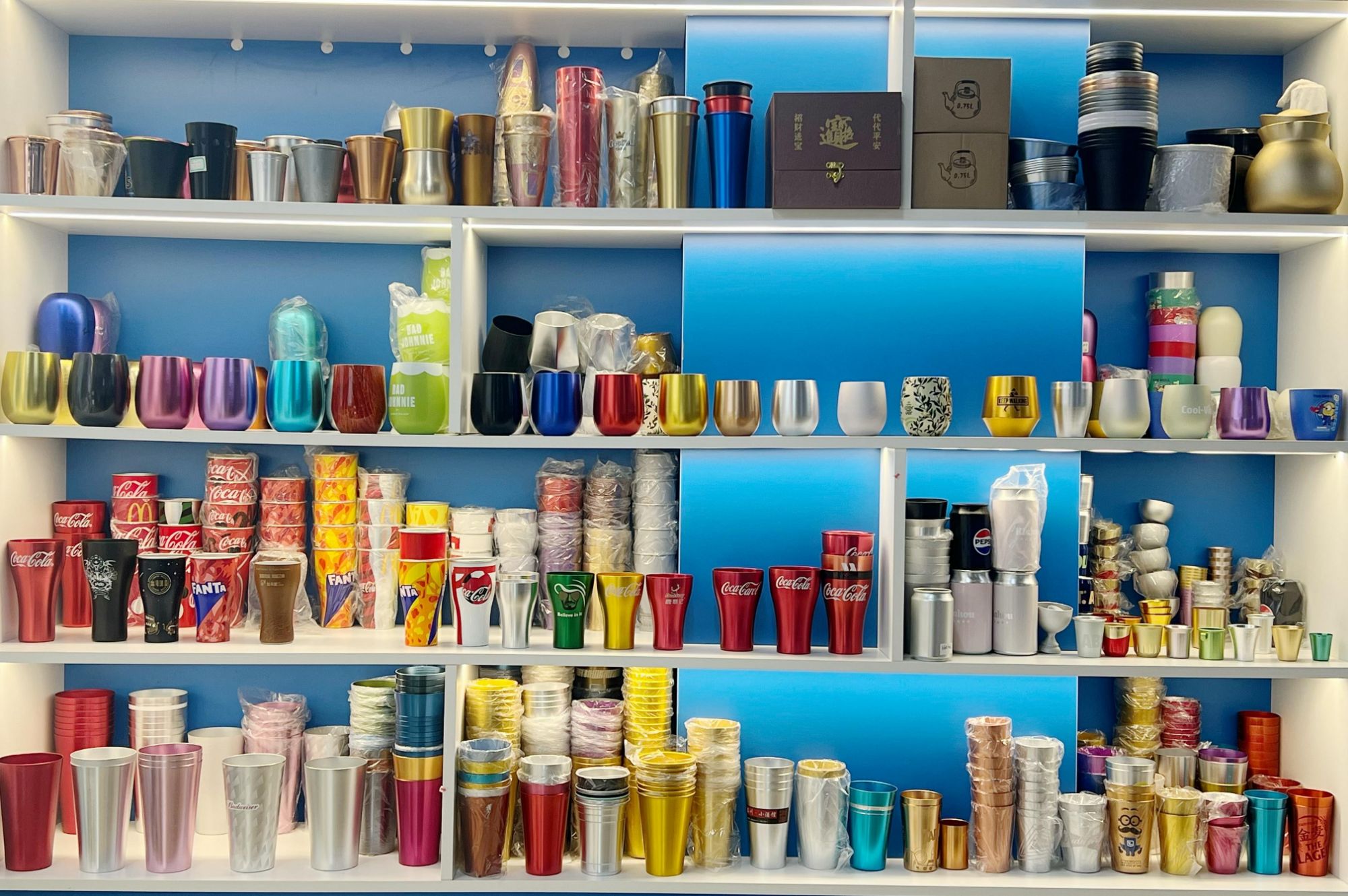
Every line, curve, and contour is translated into a physical mark with absolute fidelity. Our approach treats each surface as a unique canvas, calibrating pressure, depth, and alignment against the specific grain, texture, or finish of the material. No two imprints are ever identical because no two substrates behave the same way under tooling—so we refine the process on the fly, eliminating blowouts, smears, and uneven edges before they can compromise the final result.
Behind that consistency is a blend of high-tolerance machinery and intuitive material sense that doesn’t come from a manual. Our engineers read the subtle cues—a faint vibration in the spindle, a micro-shift in registration—and adjust in real time, the way a jeweler sets a stone. This hands-on vigilance means what you see in the proof is exactly what lands on the product, whether it’s fragile paper stock, matte-coated metal, or textured leather.
The outcome is more than accuracy—it’s a tactile signature that feels intentional. When you run a fingertip across an impression made this way, the crispness registers as quality, not just decoration. It’s the difference between something manufactured and something crafted, where the imprint becomes part of the material’s own story rather than a surface-level afterthought.
The Design Phase: Turning Ideas into Drinkware Reality
Every great drinkware piece begins as a rough sketch on a designer's pad. That initial burst of creativity is where wild concepts meet practical constraints—like ergonomics, material behavior, and manufacturing feasibility. It’s not just about aesthetics; it’s about envisioning how a cup feels in hand, how liquid flows from its rim, and how it withstands daily use. The design phase transforms abstract ideas into something tangible, bridging the gap between imagination and the first physical prototype.
Collaboration fuels this stage. Industrial designers, engineers, and marketing teams huddle around mood boards and CAD models, challenging each other to push boundaries. A curve that looks elegant might shatter during molding, so they iterate relentlessly. They explore double-wall insulation tricks, unconventional textures, and even hidden compartments—all while keeping sustainability in mind. Every decision, from handle angle to lip shape, is debated and refined until the design feels both innovative and unmistakably functional.
Prototyping then brings the vision to life. Rapid 3D printing allows quick validation of ergonomics, while silicone molds test real-world pouring and cleaning. Failures are expected—a lid that leaks or a grip that slips—but each misstep sharpens the final product. By the end of this phase, what started as a fleeting idea stands as a detailed production blueprint, ready to become the next favorite tumbler or mug on someone's shelf.
Quality Checks That Guarantee Every Sip is Perfect
From the moment raw ingredients arrive at our facility, our rigorous inspection process begins. We scrutinize every batch of botanicals, grains, and water sources for purity and consistency, rejecting anything that doesn't meet our exacting standards. This initial gatekeeping ensures that only the finest components make it into your glass.
During production, our master distillers monitor each stage with a blend of time-honored techniques and modern analytical tools. They taste, smell, and measure, adjusting the process in real time to capture the desired flavor profile. Every vat is sampled multiple times, and any deviation from the ideal triggers an immediate recalibration—because a single imperfect batch is one too many.
Finally, before bottling, each lot undergoes a blind tasting panel and a series of chemical tests to confirm balance, clarity, and character. Only when every sip leaves a flawless impression do we deem it ready to share. It’s this obsessive attention to detail that turns a good drink into an unforgettable experience, sip after sip.
Eco-Friendly Production: Recycled Materials and Waste Reduction
By weaving recycled fibers into fresh fabrics, we cut down on the need for virgin resources while keeping textile waste out of landfills. Each garment starts with materials like post-consumer plastic bottles or reclaimed cotton, transformed through a low-water, low-energy process into soft, durable textiles that don't compromise on quality or feel.
Our production line is designed to minimize waste at every stage. Pattern cutting uses advanced nesting software to squeeze maximum yield from each roll of fabric, and offcuts are collected and spun back into new yarn. Even the water from dye baths is filtered and recirculated, slashing consumption by nearly half compared with conventional methods.
Packaging tells the same story: we ship in boxes made from 100% post-consumer cardboard, with plant-based inks and no plastic tape. Inside, garments rest in compostable bags that break down in home compost. It's a loop that starts with what others discard and ends with a product that leaves behind almost nothing.
Behind the Scenes: A Day in the Life of Our Factory Floor
The morning shift kicks off with a quiet hum—machines warming up, tools laid out in neat rows, and the scent of freshly cut metal lingering in the air. Our team gathers for a brief huddle, not a scripted meeting, but a quick check-in where the floor supervisor shares a hand-drawn diagram of the day’s custom order. There’s a shared nod of understanding, a few light-hearted jokes about yesterday’s quirky assembly challenge, and then everyone disperses to their stations. It’s these unscripted moments that set the tone, blending skill with a genuine sense of ownership.
By midday, the floor is a choreography of motion. You’ll spot a veteran machinist pausing mid-task to mentor an apprentice on a tricky alignment—hands guiding hands, voices low and patient. Over in the assembly section, a small team huddles around a prototype, debating the best way to shave a fraction of a millimeter for a smoother fit. It’s not rushed; precision matters more than pace. The air is filled with the rhythmic clatter of tools and the occasional burst of laughter when someone improvises a clever fix. Every person here knows their work might end up in a home or a workshop, and that quiet pride is palpable.
As the afternoon winds down, quality checks take center stage. Each piece is handled with an almost obsessive care—calloused fingers running over surfaces to feel for imperfections that instruments might miss. The final inspection isn’t just a checklist; it’s a ritual. A senior craftsman holds a finished component up to the light, squinting, before scribbling his initials on a tag. No fanfare, no rushed sign-offs. Then the floor is swept, tools are returned to their shadowed outlines on the wall, and the lights dim. Tomorrow, it starts again—not as a routine, but as a fresh chance to make something that lasts.
FAQ
We use food-grade 1060 aluminum alloy, valued for its lightweight strength and excellent thermal conductivity. It’s also free of harmful coatings, so drinks taste pure and the cups remain recyclable at end of life.
It starts with a conversation about your vision—shape, capacity, finish, and branding. We then create digital mockups and a physical sample loop until the design matches your expectation. This avoids costly misunderstandings later.
First, aluminum discs are cut from coiled sheets. These are deep-drawn through a series of progressive dies to form the cup body. Wall thickness is carefully controlled at each draw, then the rim is curled and the bottom profiled for stability.
We mainly use laser engraving and anodized printing. Laser engraving etches the logo directly into the metal for a tactile, permanent mark. Anodized printing embeds dye into the porous oxide layer, making it fade-resistant and safe for dishwashers.
Every batch undergoes visual inspection for surface defects, dimensional checks with calipers, and a leak test under vacuum. We also randomly sample cups for colorfastness and coating adhesion. Only those passing all stages move to packaging.
Anodizing grows a hard oxide layer from the aluminum itself, so it won’t chip or peel like paint. It’s food-safe, UV-stable, and allows vibrant colors. The process also increases corrosion resistance, making the cups suitable for outdoor use.
For standard shapes, we can start at 500 pieces per design. Complex shapes or multi-step finishes may need 1,000 or more. We keep these thresholds reasonable because we want emerging brands to access custom drinkware without huge inventory risk.
We maintain controlled tooling wear logs and use real-time press force monitoring. Anodizing baths are constantly chemically titrated, and automated spray lines ensure even coating. Every 1,000 pieces a full set of measurements is taken to adjust parameters proactively.
Conclusion
Walking through the factory floor, you immediately sense the transformation happening—raw aluminum sheets arriving as coiled metal, then being cut, shaped, and spun into sleek cup bodies. But long before any machine hums, the design team sits with clients, turning rough sketches and brand logos into precise digital blueprints. These ideas become reality through a blend of artisan insight and high-tech engineering: every curve is calculated for ergonomics, every surface prepped for flawless printing. What really sets this process apart is the attention to custom imprints. Using advanced laser engraving and silk-screening, the factory achieves crisp, durable branding that won't fade or peel. Even the choice of aluminum matters; much of it is sourced from recycled materials, and scrap from production is captured and re-melted, drastically reducing waste. It's a cycle that feels responsible without compromising the premium finish each cup demands.
Quality doesn't wait until the end. At multiple stations along the line, inspectors check wall thickness, rim smoothness, and coating uniformity. They fill sample cups with hot liquids, run them through dishwashers, and even drop them to test durability—ensuring every sip from a finished product is safe and satisfying. Behind the scenes, the factory hums with an orchestrated rhythm: some workers oversee automated polishing robots, while others hand-assemble packaging that communicates the brand's story. The day ends with a final audit, where a randomly selected cup must pass a 20-point check before the entire batch ships. This marriage of craftsmanship and conscientious production is what makes custom OEM aluminum cups not just functional, but a true extension of a brand's identity.
Contact Us
Contact Person: Milo
Email: [email protected]
Tel/WhatsApp: +86 18621923991
Website: https://www.dgbaide.com