

Cylinder Head Manufacturer Expertise: Crafting High-Performance Engine Components
2026-06-28
Every horsepower chaser knows: the cylinder head makes or breaks an engine's potential. While most manufacturers treat it as a routine casting, DDR approaches each head as a precision instrument—hand-ported, flow-tested, and crafted for those who demand more than stock performance. In this blog, we pull back the curtain on the techniques that turn raw aluminum into a competitive edge.
The Art and Science of Cylinder Head Casting
Casting a cylinder head is where raw engineering meets the fluid chaos of molten metal. It’s a process that demands equal parts precision and instinct—calculating the thermal dynamics of aluminum or iron as it fills a mold, yet knowing that how a sprue is tapered or a riser is placed can make or break the final component. A foundry technician doesn't just pour; they read the metal’s glow, the way it swirls, sensing whether the fill is laminar enough to avoid air pockets that become silent killers inside an engine. Every mold is a narrative of risk and reward, shaped by sand that must crumble just enough to free the intricate water jacket cores but hold firm against washout during the turbulent flood.
Beyond the foundry floor, the art lives in the design compromises that no simulation fully captures. Port shape, wall thickness, and deck flattening all war with each other—too thin for weight savings, and you invite cracking under heat cycling; too generous, and the combustion chamber never sheds heat fast enough. There’s a quiet romance in the way classic heads like the Cleveland or the Hemi were developed, often through brutal trial-and-error on skunkworks dynos late into the night. Those designs weren’t just fluid; they were sculpted by human hands correcting for casting shift, core deflection, and the slow cooling that can pull a head out of spec. That’s the science whispering to the art: a good casting is never just a part—it’s the heartbeat of an engine, born from fire and sand.
Material Innovations: Beyond Standard Alloys
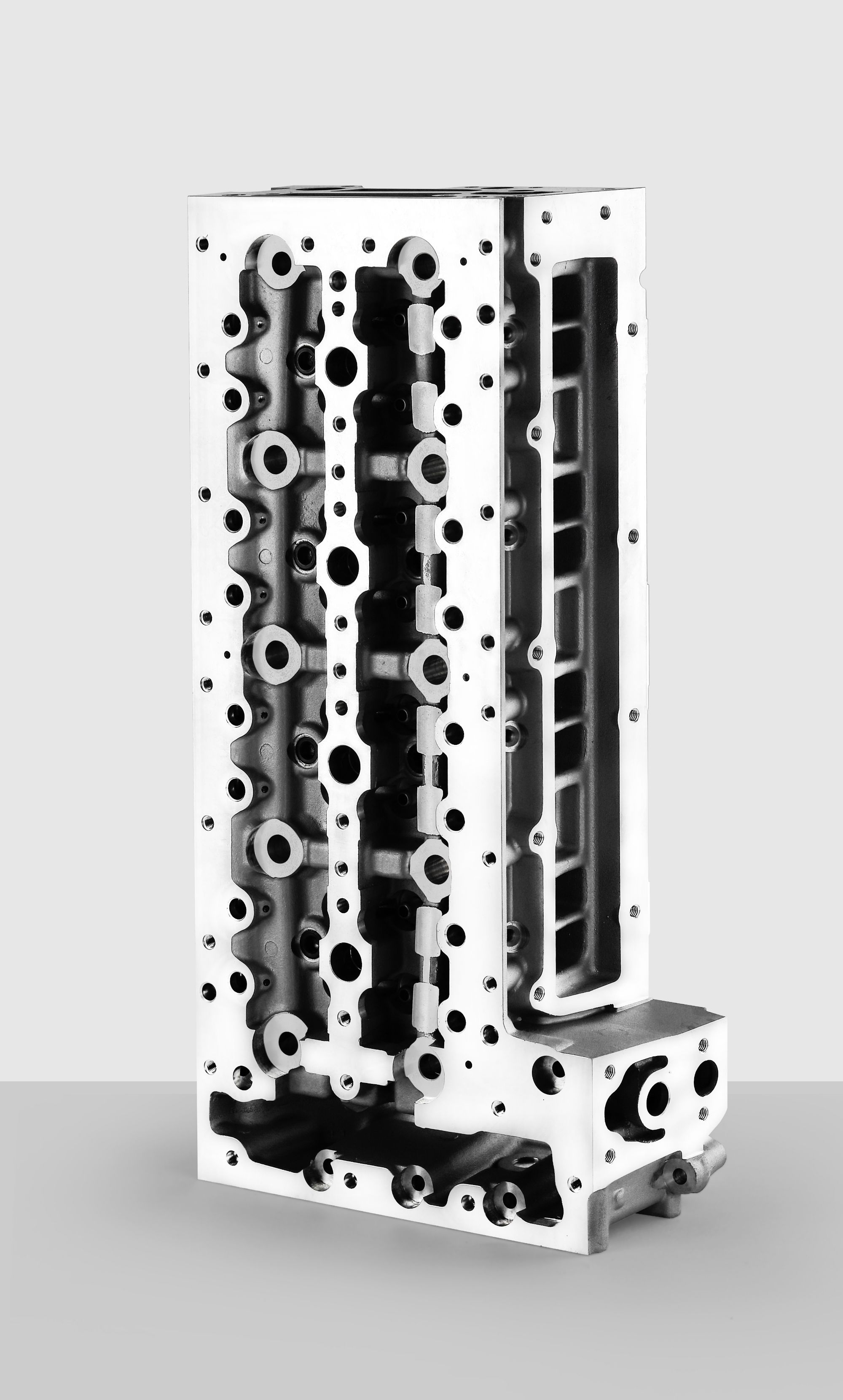
Traditional alloys have served as the backbone of industrial manufacturing, but their limitations in extreme environments have sparked a quiet revolution in materials science. Engineers are now looking past conventional combinations of iron, aluminum, and titanium, venturing into compositions that defy phase diagrams we once considered immutable. These emergent materials are not simply incremental improvements—they represent fundamental reimaginings of atomic architectures, where entropy itself is harnessed to stabilize crystal structures that outperform their predecessors by orders of magnitude.
One striking departure comes in the form of high-entropy alloys, which blend five or more principal elements in near-equal ratios. Unlike traditional alloys that rely on a single dominant metal, these mixtures form simple solid-solution phases with remarkable strength and ductility, especially at cryogenic temperatures. They resist corrosion, wear, and radiation damage in ways that single-phase alloys cannot. Meanwhile, researchers are pushing further with compositionally complex ceramics and metallic glasses that reshape what we consider possible for lightweight armor, biomedical implants, and next-generation turbine blades.
The shift extends beyond new formulas to entirely new processing techniques. Additive manufacturing now allows gradient structures and functionally graded materials to be built layer by layer, placing the right property exactly where it's needed. Combined with computational alloy design, which screens millions of virtual compositions before a single gram is ever cast, we're entering an era where materials are not just selected but engineered from the electron level up. This convergence of simulation, synthesis, and smart processing is quietly redrawing the boundaries of performance, moving us definitively beyond the age of standard alloys.
Airflow Tuning: Port Design That Breathes Performance
Getting air to move efficiently through an engine isn’t just about brute force—it’s about finesse in the port geometry. Subtle changes to the cross-sectional area, the radius of the short-turn, and the valve seat angles can drastically alter how the intake charge tumbles and swirls. A well-tuned port avoids the pitfalls of flow separation and turbulence that choke off power at high RPM, instead guiding the mixture in a smooth, controlled motion that fills the cylinder more completely.
On the exhaust side, the challenge shifts to scavenging. The port shape and sizing need to balance velocity against volume; too large and you lose the pulse energy that helps pull spent gases out during valve overlap, too small and you create a restriction that hampers high-rpm breathing. Careful attention to the bowl area and the exhaust flange transition can make a measurable difference in how quickly and cleanly combustion leftovers exit, which directly affects the next intake cycle.
What really separates a tuned port from a generic one is the iterative work on the flow bench and the willingness to measure beyond peak flow numbers. Evaluating port performance at various valve lifts and accounting for the pressure waves that resonate in the manifold turns port design into a dynamic puzzle. The result is a setup that not only posts impressive flow-bench figures but also delivers a responsive, broad powerband in the real world, where the engine actually breathes under rapidly changing conditions.
Precision Machining: Where Microns Make Horsepower
In the world of high-performance engines, the difference between a podium finish and an also-ran often comes down to tolerances measured in thousandths of a millimeter. Every combustion chamber, every bearing journal, every valve seat must align with an almost obsessive level of accuracy. When fuel and air mix under extreme pressure, even the slightest deviation in surface finish or dimensional precision can disrupt burn patterns, cause hot spots, or bleed away precious compression. This is the realm where a micron isn't just a unit of measurement—it’s a unit of competitive advantage. Machinists working at this level don't simply remove metal; they sculpt pathways for energy to flow with minimal resistance, transforming raw power into controllable, repeatable force.
The machinery required to sustain such precision rarely allows for shortcuts. CNC grinding and honing equipment, when maintained with religious consistency, can hold geometries to a stability that human hands alone could never replicate. But even the smartest machine is only as good as the environment it operates in. Temperature fluctuations, vibration, and tool wear all conspire to push a part out of spec. Shops that consistently hit single-digit micron tolerances treat their climate control systems and metrology tools with the same gravity as the cutting tools themselves. A laser micrometer or a coordinate measuring machine isn’t just for final inspection; it’s the ongoing conversation between the machinist and the process, ensuring that what was intended on the CAD screen translates faithfully into aluminum, steel, or titanium.
That microscopic precision doesn't just live in the abstract—it shows up on the dyno and the track. When piston rings seal perfectly against a cylinder wall finished to a near-mirror surface, the gains appear as a crisper throttle response and a fatter torque curve. Valvetrain components that are mass-matched to within milligrams and balanced to sub-gram precision allow the engine to rev higher and faster without valve float or destructive harmonics. The irony is that none of this is visible to the naked eye. A casual observer might see a collection of shiny parts; the builder sees a stack of micron-level decisions that collectively free up double-digit horsepower. In this discipline, chasing the last micron isn’t a sign of insanity—it’s just good engineering.
From CAD Model to Track Test: Our End-to-End Process
Creating a race-ready component starts long before the first weld is laid. Our process kicks off in the digital domain, where the initial concept is shaped into a fully defined 3D model. Every surface, rib, and mounting point is scrutinized against the harsh realities of on-track demands. The goal isn't just a part that fits—it's one that survives lap after lap of extreme heat, vibration, and load. Once the design locks, we move straight into CAM programming, translating idealized geometry into real toolpaths. Nothing is lost in translation because the same team owns both the model and the machine code.
From there, raw materials hit our in-house CNC equipment, and the first physical prototype takes form. Assembly happens immediately after machining, often with subcomponents arriving directly from our 3D printing bay or sheet metal station. The real test comes once the system is mounted to the car. We don't wait for perfect conditions—shakedown runs happen early, sometimes on a rough proving loop, sometimes straight into a race weekend test session. Data loggers capture every movement and temperature spike, feeding information back into the CAD model for rapid refinements. This tight loop of design, build, and validation eliminates the lag that can hold a program back, letting us react in hours rather than weeks.
Quality That Goes Deeper Than Surface Finish
True quality isn’t just about a flawless exterior; it’s about integrity that runs through every layer. A surface finish can mask shortcuts, but what matters is the craftsmanship beneath—the precise tolerances, the durable materials, and the careful assembly that ensure longevity. When you look beyond the shine, you find the real story of a product’s value.
We believe in building from the inside out. Every component is chosen not just for how it looks, but for how it performs under stress, over time, and in the real world. This means rigorous testing, meticulous engineering, and a refusal to compromise on the details that most people never see. Because when quality goes deeper, it doesn’t just meet expectations—it outlasts them.
FAQ
It's about merging metallurgical knowledge with precision engineering to create components that endure extreme temperatures and pressures. Mastery comes from decades of refining casting techniques, machining tolerances down to microns, and understanding how air and fuel flow behave inside a combustion chamber.
Quality is built through rigorous process control—from selecting raw materials with tight grain structures to employing multi-axis CNC machines that hold tolerances beyond standard specs. Every head is pressure-tested, scanned for internal porosity, and sometimes even CT-scanned to verify internal passages.
The right alloy resists thermal cracking, dissipates heat efficiently, and maintains strength under cyclic loading. For street engines, aluminum with high silicon content offers lightness and durability, while race applications might use specialized aluminum or even titanium for extreme weight savings without sacrificing integrity.
It's the intangible blend of R&D dedication and hands-on experience. Exceptional makers invest in flow bench testing not just for peak numbers but for area under the curve, meaning power delivery across the rev range. They also collaborate with engine builders to tailor port shapes and valve angles to specific performance goals.
Techniques like 5-axis CNC porting replicate ideal flow characteristics that were once only achievable through artisan hand-finishing. Additive manufacturing, though still emerging, allows complex internal geometries—like conformal cooling passages—that traditional casting can't produce, reducing hot spots and enabling higher compression ratios safely.
Prototyping turns computer models into physical parts for real-world validation. A manufacturer might cast a limited run, then test on an engine dyno under loaded conditions to check power gains, temperature distribution, and durability. Iterations based on this data lead to a design that performs reliably in the intended application.
Absolutely. Streetable heads focus on enhancing low- and mid-range torque where everyday driving lives, not just top-end horsepower. Careful port sizing, velocity-focused designs, and combustion chamber efficiency make power accessible without sacrificing idle quality or fuel economy. It's about balancing aggression with daily drivability.
Conclusion
At the heart of any high-output engine lies the cylinder head, where the fusion of art and science transforms raw castings into precision powerhouses. Our expertise begins with advanced casting techniques that balance core strength with complex internal geometries, ensuring every head starts with a flawless foundation. By moving beyond conventional alloys, we leverage next-generation materials—like high-copper-content aluminum blends and compacted graphite iron—that endure extreme thermal cycles without sacrificing weight savings. But material selection is only the beginning: our port designs are shaped through relentless airflow testing on proprietary flow benches, sculpting each runner to maximize velocity and tumble. This obsessive attention to the invisible path of intake and exhaust charge pays off where it matters most—on the dyno and the track.
The final horsepower numbers emerge in our machining centers, where tolerances as tight as a few microns dictate the difference between victory and disappointment. CNC operations guided by in-house CAD models ensure that valve seats, guide bores, and deck surfaces align perfectly, eliminating any parasitic losses. Every head then undergoes a validation ritual that goes beyond surface inspection: dye penetrant checks, pressure testing, and coordinate measurement confirm integrity down to the crystal structure. Our end-to-end process—from concept modeling to full-throttle validation—captures decades of manufacturing knowledge, delivering components that breathe deep, stay sealed, and withstand the relentless punishment of racing. It’s not just about hitting specs; it’s about crafting a competitive edge that lives in every cubic inch of airflow.
Contact Us
Contact Person: Shelly
Email: [email protected]
Tel/WhatsApp: 8613967667688
Website: https://www.yongyu.com/