

Distillation Equipment Factory Innovations Transforming Industrial Processes
2026-05-08
In the ever-evolving landscape of industrial processing, distillation remains a cornerstone technique—but it's the equipment behind it that's quietly revolutionizing efficiency and output. From cutting-edge modular designs to AI-driven control systems, today's distillation equipment factories are not just building machinery; they're reshaping entire production paradigms. At the forefront of this transformation is DYE, where engineering ingenuity meets real-world demands, turning complex separations into seamless, sustainable operations. Step inside the innovations redefining what's possible, and discover how the right technology can distill not just liquids, but also costs, energy, and time from your process.
Revolutionizing Energy Efficiency in Distillation Through Advanced Heat Integration
Distillation remains one of the most energy-intensive separation processes in the chemical and petrochemical industries, often accounting for a significant portion of a plant's total energy consumption. Traditional distillation columns operate with low thermodynamic efficiency, dissipating large amounts of heat at the reboiler while rejecting it at the condenser. This inherent inefficiency has driven the search for transformative solutions that can drastically cut energy use without compromising separation performance.
Advanced heat integration techniques are reshaping the distillation landscape by creatively reusing thermal energy within the process. Methods such as vapor recompression, multi-effect distillation, and internal heat-integrated columns recover and repurpose heat that would otherwise be wasted. By strategically coupling heat sources and sinks, these approaches can reduce net energy demand by up to 50% or more, while also shrinking the carbon footprint and slashing operating costs. The result is a leaner, more sustainable operation that aligns with modern environmental and economic goals.
The impact extends beyond simple energy savings. Integrating heat pumps or heat exchangers into distillation schemes often enables compact column designs, lower capital expenditure over the plant lifecycle, and greater flexibility in process control. As industry moves toward decarbonization, these innovations are not merely incremental improvements—they represent a fundamental shift in how thermal separation is conceived and executed, turning distillation from an energy liability into a model of efficiency.
Modular Distillation Units: Redefining Flexibility and Scalability in Production
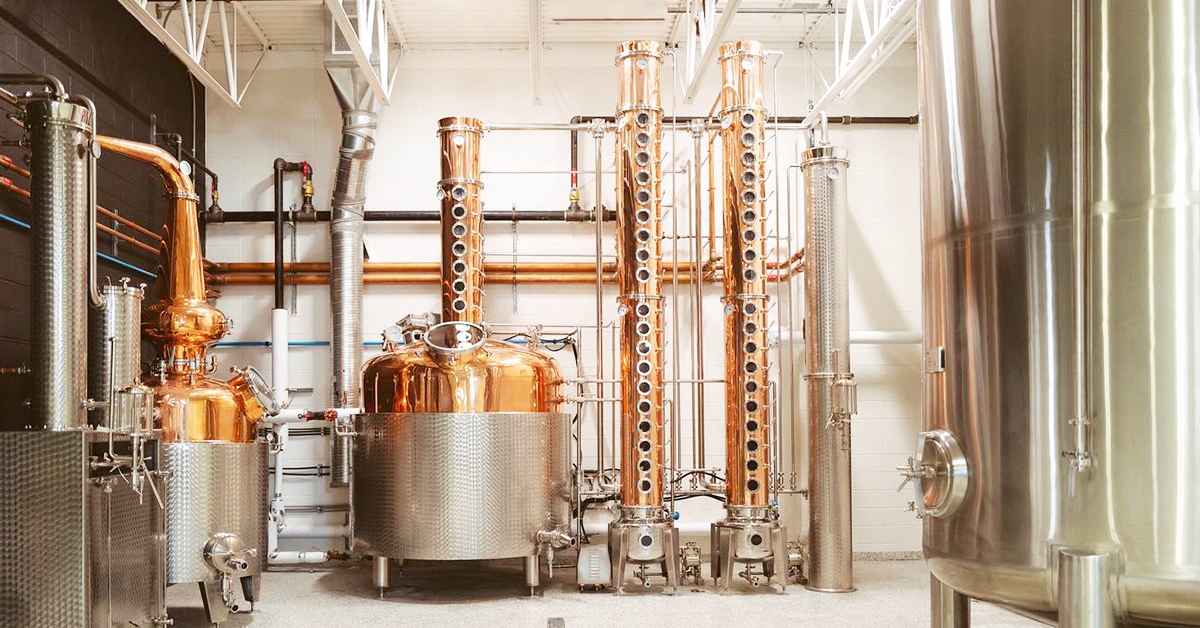
The shift towards modular distillation systems marks a quiet revolution in industrial thinking. Instead of committing to monolithic, custom-built columns that demand months of engineering and on-site construction, plants can now assemble capacity like building blocks. This approach untethers producers from rigid scale-up paths, allowing them to respond to feedstock variability or market fluctuations with a speed that traditional installations simply cannot match.
True flexibility comes from how these units handle multiple separations in parallel, often within a single skid. A producer might fractionate a mixed solvent stream one week and switch to purifying a specialty chemical the next, all while maintaining precise temperature and pressure profiles. The ability to reconfigure sequences without welding new pipework or redesigning internals slashes downtime and lets engineers experiment with process conditions that would be risky in a fixed plant.
Scalability, too, takes on a different meaning when capacity is additive. A pilot line can evolve into full production by simply adding more modules, each pre-commissioned and tested before arrival. This phasing eliminates the gamble of building for a demand forecast that may never materialize. It also decentralizes risk—if one module requires maintenance, the rest keep running, a stark contrast to the all-or-nothing vulnerability of conventional distillation trains.
Smart Distillation Systems: The Role of AI and IoT in Real-Time Process Optimization
Modern distillation is shedding its static, manual past. With sensors streaming temperature, pressure, and composition data every second, IoT has turned columns into living data ecosystems. But raw data alone isn’t enough—AI steps in to spot the subtle patterns operators might miss. For example, machine learning models can predict flooding or weeping minutes before they occur, nudging the system to adjust reflux or feed rates automatically. It’s not about waiting for a fault to trigger an alarm; it’s about preempting it entirely while keeping energy use in check.
What sets these systems apart is their ability to learn from shifting feedstock quality or ambient conditions without constant reprogramming. A distillation unit running a heavy crude today might handle a lighter blend tomorrow—AI-driven controllers reconfigure setpoints on the fly, balancing yield and purity targets in real time. Combined with IoT-enabled remote monitoring, an engineer can oversee multiple columns from a single dashboard, intervening only when the system flags an anomaly it can’t resolve. The result is quieter operation, less waste, and a throughput that feels almost intuitive.
Next-Generation Materials Elevating Corrosion Resistance and Purity Standards
The shift toward advanced alloys and engineered polymers is quietly reshaping how industries approach material longevity. Rather than simply tweaking existing formulas, these next-generation solutions integrate nano-scale reinforcements and hybrid composites that actively resist degradation. The focus isn't just on preventing surface rust; it's about maintaining structural integrity in environments where traditional stainless steels or coatings would rapidly fail—think high-temperature chemical reactors or offshore installations battered by salt spray and pressure cycles.
Purity control has taken a similar leap forward. Instead of relying on post-processing purification steps that add cost and complexity, material scientists are designing substrates that inherently limit contamination. For semiconductor manufacturing or pharmaceutical processing, this means vessels and piping that don't leach trace metals or organic residues, even after thousands of hours in service. The clever part is how these materials passivate themselves—forming an almost imperceptible oxide layer that seals the surface without the brittleness seen in older high-chromium options.
What really sets these materials apart is their adaptability across scales. A valve component can now exhibit the same clean-room compatibility as a large storage tank, thanks to techniques like additive manufacturing with pre-alloyed powders. This consistency erases the old trade-off between corrosion resistance and workability, allowing engineers to specify lightweight, high-purity parts without the risk of weld-zone decay or micro-fissures that harbor contaminants. The result is a quiet revolution in sectors where failure isn't an option.
Sustainable Distillation: Eco-Friendly Innovations Slashing Carbon Footprints
Distillation has long been an energy-intensive process, but a wave of eco-friendly innovations is reshaping the industry. By integrating heat pump technology and advanced heat recovery systems, modern distilleries are dramatically lowering their energy consumption. These upgrades capture waste heat and reuse it within the process, cutting both operational costs and carbon emissions without sacrificing product quality.
Another transformative shift is the adoption of renewable energy sources to power distillation columns. Solar thermal arrays and biogas from organic waste streams are replacing fossil fuels, creating a closed-loop system that shrinks the overall carbon footprint. Some facilities are even experimenting with hybrid solutions, combining solar power with battery storage to maintain round-the-clock operations while staying off the grid.
Beyond equipment, smarter process controls are fine-tuning efficiency. Real-time monitoring and AI-driven adjustments minimize steam and cooling water usage, while novel membrane separation techniques promise to replace traditional heat-driven methods altogether. These breakthroughs not only slash emissions but also inspire a new generation of sustainable distilleries that prove environmental stewardship and industrial output can go hand in hand.
Compact and High-Throughput Designs: Pushing the Boundaries of Process Intensification
Process intensification has moved from a niche concept to a cornerstone of modern chemical engineering, driven largely by the pursuit of compact and high-throughput designs. Traditional unit operations often suffer from bulky footprints and sluggish transport rates, but the new wave of intensification tackles these issues head-on. By shrinking equipment dimensions while simultaneously boosting throughput, engineers unlock dramatic improvements in energy efficiency, safety, and capital costs. Microreactors, for instance, replace massive stirred tanks with channels narrower than a human hair, achieving mixing and heat transfer rates orders of magnitude faster. This shift isn’t just about making things smaller—it’s about rethinking reaction and separation processes to work at fundamentally different scales and speeds.
The practical implementation of these designs relies on clever geometries and advanced manufacturing. Rotating packed beds use centrifugal force to create thin films and intense turbulence, enabling distillation or absorption columns that stand a fraction of the height of conventional towers while handling similar throughput. Oscillatory baffled reactors exploit pulsating flow to keep particles suspended and enhance mixing, even in long, narrow channels that would otherwise strangle throughput. Additive manufacturing plays a quiet but essential role here: complex internal structures once impossible to machine are now printed directly, allowing for tailored flow paths and embedded heat exchange. These innovations transform theoretical gains into deployable hardware, making compact installations viable in industries from pharmaceuticals to petrochemicals.
Yet pushing the boundaries isn’t without hurdles. Maintaining precise control over multiphase flows in miniaturized systems can be finicky, and fouling or clogging becomes a critical threat when dimensions shrink. Despite these challenges, the economic pull remains strong. A compact, high-throughput unit often means less material inventory, lower solvent usage, and the ability to operate economically at smaller production scales. This opens the door to distributed manufacturing, where production sites sit closer to consumers, cutting logistics costs and carbon footprints. The next frontier likely lies in embedding these intensified units into fully modular, plug-and-play setups, further blurring the line between lab-scale innovation and industrial reality.
FAQ
Advanced heat integration and multi-column setups are cutting energy use by up to 40%, while real-time process optimization adjusts parameters on the fly to keep throughput steady without operator intervention.
Factories are now using self-regulating control systems that monitor temperature, pressure, and composition continuously, making micro-adjustments that prevent off-spec batches and reduce downtime significantly.
By recovering and reusing heat from vapor streams and employing low-pressure drop internals, plants see a sharp drop in utility bills and less wear on auxiliary equipment, which slashes maintenance expenses over time.
Modular units let companies scale capacity quickly by adding pre-built sections rather than overhauling entire columns, drastically cutting installation time and making retrofits feasible in constrained spaces.
High-performance structured packings and precise reflux control now achieve separation levels once thought impossible, enabling producers to hit ultra-high purity standards for pharmaceuticals and specialty chemicals without extra finishing steps.
Sensors embedded in trays and reboilers feed data to predictive algorithms that flag fouling or mechanical issues weeks before failure, shifting maintenance from reactive to planned and keeping uptime above 99%.
Manufacturers are turning to closed-loop cooling systems, bio-based solvents for cleaning, and recyclable alloys that reduce waste and emissions, helping users meet stricter environmental mandates without performance trade-offs.
For sectors like cannabis extraction or fine fragrance, factories now engineer columns with specialized materials and ultra-narrow cut points, delivering bespoke performance that off-the-shelf units simply cannot match.
Conclusion
The landscape of industrial distillation is undergoing a profound shift as equipment factories embrace integrated innovations that go far beyond incremental tweaks. Advanced heat integration techniques are now slashing energy consumption by weaving together process streams in ways once deemed impractical, while modular unit designs let plants scale capacity up or down with minimal downtime, breaking free from the rigid footprints of the past. This blend of thermal ingenuity and physical flexibility is reshaping how refineries and chemical plants plan their core separations, turning capital-intensive expansions into agile, cost-effective upgrades.
At the same time, the infusion of AI and IoT turns distillation columns into self-optimizing assets, continuously adjusting to feedstock variability and ambient conditions without operator intervention. Paired with novel alloys and composite internals that resist even the most aggressive chemistries, systems maintain ultra-high purity levels over extended cycles. Sustainability is no longer a bolt-on ambition either—closed-loop water reuse, bio-based solvents, and electrified reboilers are cutting carbon footprints dramatically. Compact, high-throughput column designs further amplify these gains, packing more separation power into smaller vessels and redefining what process intensification can achieve. Together, these advancements are forging a new era where distillation is cleaner, smarter, and intrinsically adaptable.
Contact Us
Contact Person: Ada Xu
Email: [email protected]
Tel/WhatsApp: 0577-86806088
Website: https://www.dayuwz.com/