

Fresh-Air Dehumidification All-in-One Unit Wholesale: A Comprehensive Guide for Buyers
2026-11-16
Wholesale buyers often learn the hard way that a dehumidifier alone won't fix a fresh-air ventilation problem—and that stacking separate systems eats into both budget and ceiling space. Fresh-air dehumidification all-in-one units solve that tension, but only if you know what separates a dependable unit from a maintenance headache. This guide cuts through the spec-sheet noise to help you evaluate capacity, controls, filtration, and long-term serviceability before you commit. Along the way, we’ll show why ROTER has become a name worth shortlisting for bulk projects that can’t afford callbacks.
Fresh-Air Dehumidification Units Without the Marketing Fluff
Most product pages for fresh-air dehumidifiers read like they were written by a committee that never actually installed one. You'll see the same tired phrases—"whisper-quiet operation," "energy-efficient design," "superior moisture control"—as if every unit is a miracle. But step back from the glossy brochures, and the real question is simpler: does this machine reliably pull moisture out of incoming fresh air without turning your utility room into a wind tunnel or a condensate drip pan nightmare?
A fresh-air dehumidification unit isn't just a dehumidifier with a duct flange bolted on. It has to handle outdoor air that swings from 90% humidity in July to 10% in January, often while your indoor air conditioner or heat pump is doing its own thing. The blunt truth is that many units struggle with low-temperature operation—their coils freeze, their compressors short-cycle, or their controls get confused by mixed air streams. If a spec sheet brags about pint capacity but doesn't mention the minimum entering air temperature or defrost behavior, that's a red flag. You want a unit that can run at 50°F outdoor air without icing up, and that means looking at hot gas bypass, EVI compressors, or at least a decent defrost logic, not just a pretty touchscreen.
Then there's the install reality. Fresh-air units get tucked into crawlspaces, attics, or mechanical closets where nobody checks the filter for six months. A good design uses a MERV 8 or better filter that's actually reachable, a drain pan that slopes the right way, and wiring terminals that don't require a contortionist. Skip the marketing fluff about "smart home integration" and ask the installer how long it takes to change the filter and clean the coil. If they hesitate, you've found your answer.
Matching Capacity and Airflow to Real Commercial Spaces
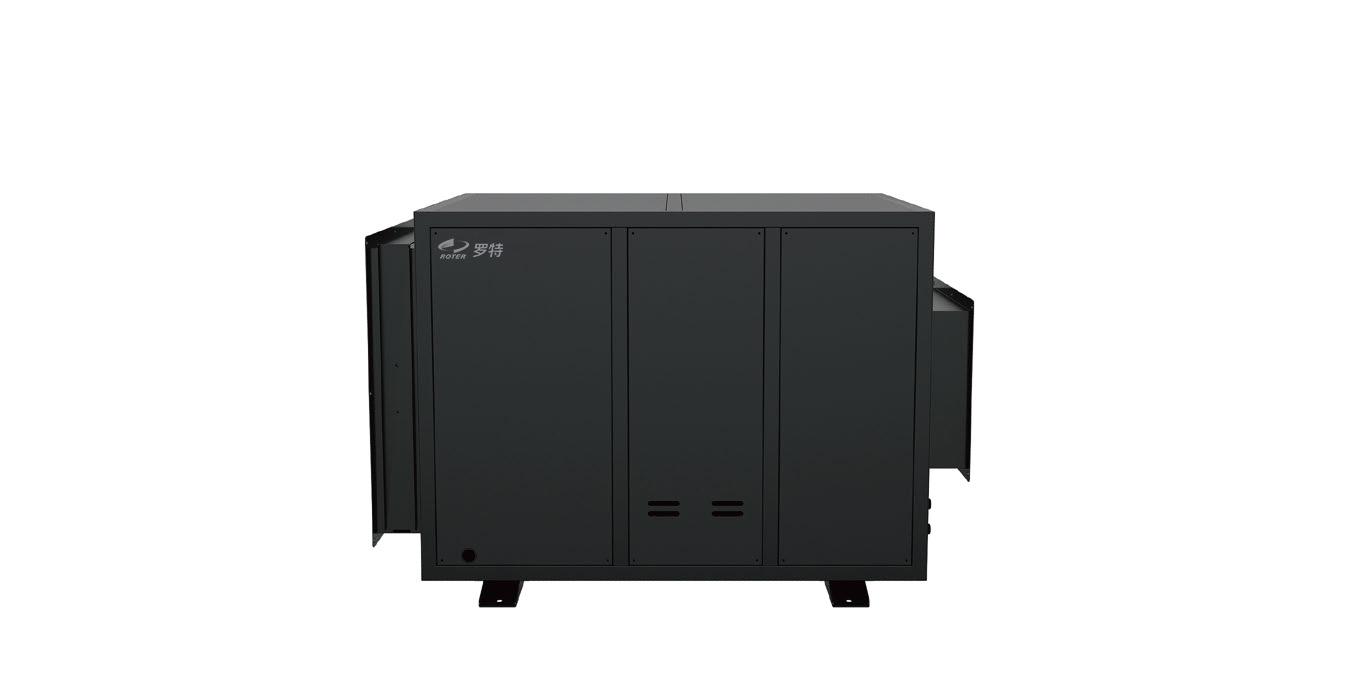
Most rooftop units get sized on paper, not on site. A restaurant with a busy kitchen and a dining room that seats eighty rarely matches the load calculation from a decade-old blueprint. The result is either a system that short cycles and leaves humidity hanging in the air, or one that blasts cold air so hard the front door won't stay shut. The fix starts with walking the space during peak use, not just measuring square footage.
Air distribution matters just as much as total tonnage. Supply registers placed above a bar area might cool the liquor bottles but do little for patrons at low tables. In a retail space, high ceilings and display shelving change how air actually moves—often trapping heat near the ceiling while the sales floor feels stuffy. Balancing dampers and replacing fixed registers with adjustable ones can shift airflow to where people actually spend time.
Variable speed equipment gives a real advantage here. Instead of running at full blast until the thermostat satisfies and then shutting off, a system that modulates can hold a tighter temperature band and remove more moisture over a longer run cycle. For spaces that shift from empty to packed—a gym, a cafe, a conference room—this means capacity follows the load instead of reacting to it late.
Energy Use and Ventilation Trade-offs Buyers Miss
Most buyers fixate on a home's insulation or HVAC efficiency rating, yet few stop to consider how those tightly sealed envelopes can quietly strangle indoor air. When walls and windows are engineered to hold every conditioned breath inside, moisture, cooking fumes, and off-gassing from new cabinetry often have nowhere to go. The result is not just stale air but a hidden humidity buildup that can warp floors, feed mold behind drywall, and trigger respiratory flare-ups long before any visible warning appears.
Mechanical ventilation sounds like the obvious fix, but the trade-off lives in the details. A heat recovery ventilator can temper incoming fresh air and ease the heating or cooling load, yet its effectiveness hinges on consistent maintenance, something resale buyers rarely verify. Cheaper exhaust-only systems pull air out but rely on incidental leaks for makeup air, which in a modern sealed home may mean drawing from the garage or crawlspace instead of outside. That exchange quietly trades one air quality problem for another.
The real gap shows up in operating costs and comfort during shoulder seasons. A system that runs continuously for healthy air exchange adds a constant electrical draw and may overcool a home in spring or fall, pushing the thermostat into action against the ventilation itself. Buyers who only compare the purchase price of a house miss this ongoing tug-of-war between keeping the air fresh and keeping the energy bill flat.
What Separates a Solid Wholesale Supplier from a Middleman
A real wholesale supplier typically owns or controls inventory, so they can fulfill orders from stock and handle returns or defects directly. They know the product line because they bought it, store it, and stand behind it. A middleman, by contrast, takes your order and then buys from someone else, which means longer lead times, less consistent availability, and extra markup that you pay for no added value.
Another tell is how they handle problems. A solid supplier will have a clear process for damaged goods, wrong counts, or warranty claims, often with a dedicated account manager. They also tend to offer stable pricing over time because they buy in volume and manage their own logistics. A middleman often disappears when something goes wrong, or they pass your complaint along and wait, leaving you stuck between the actual source and a vague promise.
You can often spot the difference by asking a few direct questions: Do you stock this item? Can I visit your warehouse? Who handles returns? A legitimate wholesale supplier answers quickly and with specifics. A middleman gets vague or defensive because they don't physically touch the product. Choosing the right one matters more than the per-unit price, because the hidden costs of a middleman usually show up later in delays, quality issues, and poor communication.
Bulk Pricing Structures That Hide the True Cost
Many businesses assume buying in bulk always saves money, but the math isn't always straightforward. A pallet of 5,000 widgets might have a lower sticker price per unit, yet hidden costs like storage, spoilage, or tied-up capital can quietly eat into the savings. When vendors bundle multiple SKUs into a single 'value pack,' it's even harder to tell what you're actually paying for each item.
The real problem is opacity. Per-unit pricing gets buried under layers of volume discounts, tiered rebates, and conditional promotions that only apply after hitting thresholds. You might need to buy 10,000 units before the advertised rate kicks in—and by then, you've already overcommitted. Small print like 'price applies to mixed pallets' or 'minimum order value required' turns a simple purchase into a guessing game.
Smart buyers reverse the equation. Instead of asking 'What's the discount?', ask 'What's my total cost per usable unit after waste, handling, and expiry?' Sometimes a smaller order at a slightly higher nominal price is cheaper in reality. Bulk pricing structures don't hide costs by accident—they're designed to make comparison difficult. The only defense is to do your own math.
Maintenance and Support After the Pallets Arrive
Once the pallets are unloaded and placed in your warehouse, don't treat them as static inventory. A quick inspection of each unit helps catch damage from transit—look for cracked deck boards, exposed nails, or twisted runners. Mark any suspect pallets with colored tape so they don't accidentally enter rotation.
For long-term storage, wooden pallets should be kept off concrete floors using cheap timber dunnage to prevent moisture wicking. Plastic pallets, while resistant to rot, can become brittle if left in direct sunlight for weeks; a simple tarp or shaded area solves this. Metal pallets rarely need more than a wipe-down, but welds at the corners deserve a monthly glance for hairline cracks.
Support after delivery often means knowing who to call when a pallet fails under load. Keep the supplier's contact and batch numbers on file, and photograph any structural failures before disposing of the pallet. This speeds up warranty claims and gives your team a better sense of which designs hold up in your specific handling environment.
FAQ
Look at the moisture removal rate at your typical operating temperature, not just the rated capacity at standard conditions. Many units lose efficiency in cooler basements or coastal climates, so ask for performance curves across 15°C to 30°C.
Check whether the control system allows separate setpoints for humidity and fan speed. A good unit should let you run ventilation continuously while the compressor cycles only when needed, instead of tying both functions to the same trigger.
Yes. Confirm whether filters, drain kits, and remote sensors are included or sold separately. Also ask about freight class and packaging — some suppliers ship units without pallet protection, which leads to damage claims that eat into your margin.
Plan for filter changes every 2-3 months in dusty environments, plus coil cleaning at least twice a year. Look for units with tool-free filter access and a removable drain pan, because those small design choices cut service time significantly.
Undersized ductwork and missing P-traps on the drain line. If the duct static pressure is too high, the unit runs louder and the compressor may overheat. Always follow the manufacturer’s duct sizing chart and install a trap even if the drain looks like it will gravity-flow.
For most wholesale buyers, built-in controls are simpler and reduce callbacks, but external controllers offer more flexibility for BAS integration. If your clients have building automation systems, prioritize units with dry-contact or Modbus connectivity.
In many cases yes, but only if the fresh-air intake volume matches the space’s ventilation requirement. Check the CFM rating at the static pressure you expect, and verify that the unit can temper incoming air when outdoor humidity is high.
Start with the space volume and typical occupancy, then add the latent load from outside air. A rough rule is 10-15 pints per day per 1,000 square feet for a standard basement, but if you are bringing in 50 CFM of outdoor air in a humid climate, you may need double that. Always calculate the outdoor air latent load separately.
Conclusion
Most fresh-air dehumidification all-in-one units are sold with glossy spec sheets, but the real buying decision starts when you ignore the marketing and look at how the machine behaves in an actual restaurant kitchen, gym, or indoor grow room. You need to match latent capacity and airflow to the room's occupancy, moisture load, and existing ductwork—not just pick the biggest tonnage. Oversized units cycle poorly, drive up energy costs, and still leave humidity spikes during peak hours. The ventilation trade-off matters too: bringing in outdoor air raises the latent load, so a unit that dries well on paper can struggle once you factor in code-required fresh air rates. Testing part-load performance and looking at sensible heat ratio gives you a clearer picture than any brochure.
The wholesale side is where money gets lost or saved. A genuine supplier will share compressor details, coil construction, filter options, and service parts availability before you commit; a middleman just forwards a price list. Bulk pricing often masks the true cost—watch for pallet quotes that exclude freight, startup support, or warranty registration. After the crates arrive, the difference shows in how fast a supplier responds with wiring guidance, spare blowers, or troubleshooting help. Ask for the names of two or three facilities running the same unit for at least a year, and speak to them directly. That kind of reference check matters more than any marketing claim.
Contact Us
Contact Person: Rhea
Email: [email protected]
Tel/WhatsApp: +8618800560886
Website: https://www.rotorairtech.com