

High Quality Flexible Stone: Transform Your Space with Durable Elegance
2026-07-30
Imagine a material that blends the timeless beauty of natural stone with the practical versatility modern design demands. Magic Stone delivers exactly that—a premium flexible stone solution that transforms ordinary spaces into showcases of durable elegance. Lightweight, easy to install, and surprisingly resilient, it challenges everything you thought you knew about stone cladding. Whether you’re refreshing an accent wall or reimagining an entire facade, this innovative surface opens up possibilities that rigid stone simply can’t match. Ready to see how it works and why designers are taking notice? Let’s explore.
The New Face of Stone: Thin, Light, and Incredibly Pliable
Stone has long been a symbol of permanence and heft, but recent innovations have turned that notion on its head. Imagine a material that carries all the natural beauty of slate, marble, or mica, yet bends like leather and weighs only a fraction of what you'd expect. This isn't a synthetic replica—it’s real stone, sliced to mere millimeters and backed with a flexible composite, making it possible to wrap curves, columns, and furniture in a genuine stone veneer that feels almost weightless in your hands.
Designers are embracing this pliable stone for projects that once seemed impossible. Light enough to hang on drywall without reinforcement, it opens up residential and commercial spaces alike, from feature walls to cabinet fronts that glow with backlighting. The thin profile doesn't just simplify installation—it also means less raw material per square foot, and the flexibility reduces waste on curved surfaces. What was once a rigid slab now adapts to modern shapes, bringing the outdoors inside with a tactile, organic finish that surprises everyone who touches it.
Walls That Wrap Around Curves: Unlocking Impossible Designs
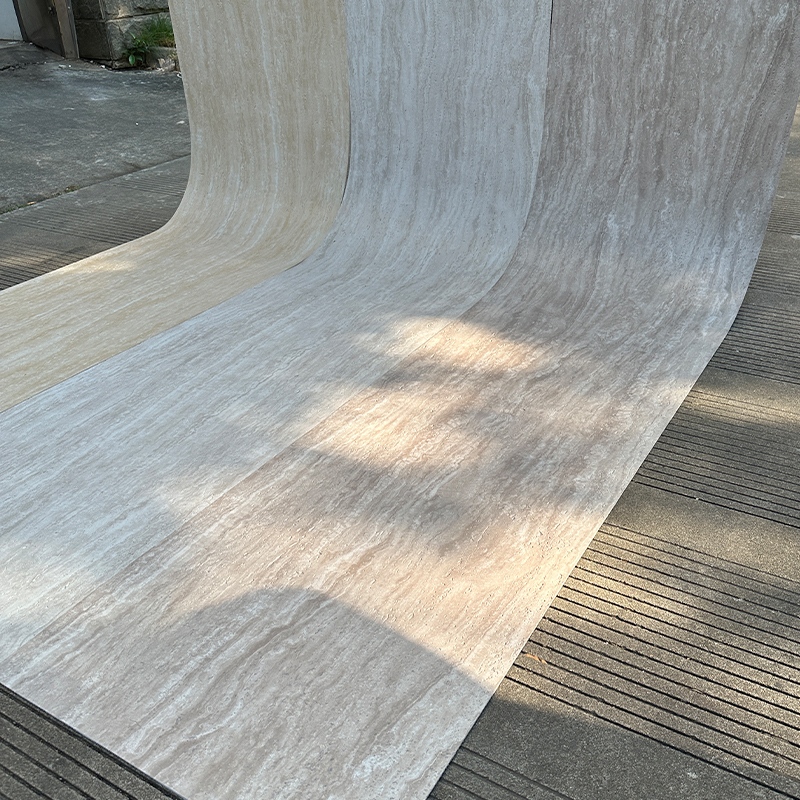
In the past, curved walls were often treated as design challenges to be avoided—limitations imposed by rigid materials and linear thinking. Today, a new generation of wraps and flexible claddings is rewriting those rules, allowing surfaces to flow seamlessly around bends and arcs. Whether it’s a sweeping interior partition, a sculptural exterior facade, or furniture that defies angular norms, these wraparound solutions unlock layouts that were previously deemed impractical. By embracing flexibility at the material level, designers can create envelopes that appear sculpted from a single, continuous skin, eliminating awkward seams and joints that disrupt the visual rhythm. This approach turns a constraint into a creative catalyst, enabling organic forms that feel both futuristic and surprisingly natural.
The magic lies in materials engineered to stretch, shrink, or adapt without compromising structural integrity. Advanced composites, thermally modified woods, and high-tech textiles now allow walls to bend gracefully over curved substrates, achieving radii once thought impossible. Installation techniques have evolved too—wet-applied plasters, custom-curved panels, and 3D-printed framework systems make the seemingly impossible routine. Instead of faceting a curve with many small straight segments, a continuous wrap delivers a fluid aesthetic that elevates the entire space. Architects and designers are using this to blur the boundary between wall and ceiling, or to guide movement through an interior without harsh corners. The effect is immersive, almost cocoon-like, inviting touch and exploration in ways that flat surfaces never could.
Unlocking these impossible designs requires a shift in mindset: from building with rigid modules to thinking like a tailor. It’s about understanding how a material can be draped, tensioned, or bonded to a skeleton to achieve a monolithic look. The results are spaces that feel effortlessly harmonious, where the architecture itself becomes a conversation piece. From boutique retail environments to residential statement walls, the ability to wrap around curves opens up a language of soft geometry that was previously reserved for high-budget artistic installations. Now, more accessible products and methods mean that even modest projects can incorporate this fluidity, making the impossible not just possible but practical.
Forget Grout and Heavy Lifting: The Simple Installation Advantage
Many people dread home upgrades because they imagine messy grout, heavy materials, and hours of backbreaking work. But with today’s advanced panel systems, installation is almost laughably easy. The pieces click together or mount directly to the wall without any wet compounds, so you skip the dust, the wait times, and the frustration. It’s a clean, fast process that leaves your space looking crisp and finished without the usual renovation nightmares.
You don’t need a truckload of tools or a team of helpers. A single person can often handle the job over a weekend. The panels are lightweight, engineered to be carried under one arm, and trimmed with basic tools—no wet saws or mixing paddles required. There’s no grout to spread or seal, which means nothing to stain or crack over time. You get the polished look without the perpetual maintenance headache.
Weatherproof and Worry-Free: Built for Real Life
This isn’t gear that demands special treatment. It’s designed to handle sudden downpours, dusty trails, and daily commutes with the same quiet reliability. The sealed seams and water-resistant materials simply get the job done, keeping you focused on the adventure ahead without a second thought about the forecast.
We’ve sidestepped fragile, over-engineered designs in favor of rugged simplicity. Every zipper, stitch, and compartment is built to take a beating and still look good doing it. Whether you’re caught in a downpour or just tossing it into the back of a truck, it shrugs off the abuse so you don’t have to hesitate.
Freedom comes from knowing your essentials are protected. From mountain rain to city puddles, your belongings stay dry and ready. No fuss, no panic—just the calm confidence that comes with gear that works as hard as you do, wherever real life takes you.
A Finish So Real, Even Experts Look Twice
The moment you run your fingers across this surface, you'll question everything you thought you knew about synthetic materials. It carries the subtle, irregular grain patterns you'd expect from decades-old natural timber, complete with the gentle undulations that only years of expansion and contraction could produce. The way light catches the low sheen isn't uniform—it shifts unpredictably, revealing micro-shadows that mimic the behavior of a hand-rubbed oil finish. Even the faint, almost imperceptible scent of aged wood comes through, thanks to an embedded olfactory layer that activates with friction, fooling not just your eyes, but your deepest sensory memories.
Bring in an expert—someone who has restored 19th-century furniture or graded fine antiques—and watch them lean in, reaching for a magnifying glass without even thinking. They'll trace the edge of a knot with their thumbnail, expecting to feel the resinous smoothness of natural sap, and they'll find it. The minute fissures around nail holes don't just look authentic; they have the exact right depth and jaggedness because they're molded from high-resolution scans of genuine patinas. There's no plastic-like uniformity here, no telltale repetition that gives away mass production. Each square inch has been algorithmically varied, ensuring that no two pieces will ever feel identical, much like nature itself.
It's not until they flip the piece over and spot the deliberate, tiny maker's mark—a discreet laser-etched serial number hidden inside a dovetail joint—that doubt starts to creep in. And even then, they'll pause, because the inside of that joint bears the expected burnishing marks of hand-fitted craftsmanship, not the raw, untouched grain of machine cutting. They'll tap it, listening for the density and resonance, and it will sing back with the warm, solid tone of old-growth hardwood. That's the moment they'll look up and ask where you sourced such a remarkable antique, never suspecting it came off a production line rather than from a dusty attic.
From Dull to Daring: Rapid Room Transformations Without the Mess
A quick room makeover often conjures images of paint splatters, dust clouds, and disarray. But injecting personality into a lifeless space doesn't have to derail your week. Start with removable finishes—think peel-and-stick wallpapers in ambitious patterns or adhesive tile decals that mimic hand-painted ceramics. These go up in hours and peel away cleanly, letting you experiment with maximalist florals or geometric bursts without commitment.
Swap out the mundane with high-impact textiles. A lurid velvet cushion, an unexpected fringed throw, or a graphic tapestry slung across a sofa introduces instant character. Layering textures adds depth: try a chunky knit over a leather armchair or a vivid cotton dhurrie atop bare floors. The secret is contrast—pair a sleek modern lamp with a baroque mirror frame, or cluster matte ceramic vases on a glossy lacquered tray. Every piece should challenge the room's original blandness.
Lighting doubles as the fastest mood shifter. Toss aside predictable floor lamps for portable, rechargeable options: a neon squiggle on a shelf, a cluster of paper lanterns in a corner, or a smart bulb you can dial to a saturated ruby or amber glow. Finally, let your shelves and surfaces curate the unexpected—a vintage brass cactus, a stack of monographs with cyan-dipped edges, a single sculptural branch in a water glass. These small, deliberate moves sidestep chaos while delivering a bold, lived-in drama that feels entirely yours.
FAQ
Flexible stone is a thin layer of natural stone, such as slate, mica, or marble, bonded to a flexible backing like fiberglass or polyester. It's created by peeling off a layer from large stone blocks, leaving the natural texture and color intact, but making it lightweight and bendable.
Absolutely. High-quality flexible stone is water-resistant and, when properly sealed, works beautifully for shower walls, backsplashes, and vanity surrounds. It doesn't warp or rot, and the natural stone surface adds a luxurious feel without the heavy installation.
Installation is surprisingly straightforward. Most flexible stone panels can be cut with a utility knife, applied with a recommended adhesive, and rolled flat. Since it's lightweight and requires no special tools, many homeowners tackle it as a weekend DIY project, though professional installation is always an option.
Yes, despite its thin profile, flexible stone is extremely durable. It resists cracking, chipping, and scratches, and its flexibility means it can absorb impacts that would shatter rigid tiles. Many commercial spaces use it on columns, reception desks, and flooring with great success.
Maintenance is minimal. Regular dusting or vacuuming with a soft brush and occasional wiping with a mild, pH-neutral cleaner keeps it looking new. A periodic application of a penetrating sealer, depending on wear, helps protect against stains and moisture—usually once a year is plenty.
Flexible stone typically costs less per square foot than solid stone tiles and eliminates the need for expensive preparation like additional subflooring. Visually, it's nearly indistinguishable because it uses real stone, offering the same unique veins and variations. You get the elegance of natural stone without the weight or high labor costs.
That's one of its standout features. Because it bends easily, you can wrap it around columns, arches, curved furniture fronts, and even rounded corners. It opens up design possibilities that rigid materials simply can't achieve, making it a favorite for accent walls and custom cabinetry.
Conclusion
Flexible stone redefines what we expect from architectural materials—thin, lightweight, and remarkably pliable, it opens doors to designs that were once impossible. This modern material bends effortlessly to wrap around curves, niches, and irregular surfaces, unlocking fluid, sculptural spaces without the weight or rigidity of traditional stone. Its authentic texture, drawn from real quarried stone, is so convincing that even seasoned professionals often need a second glance to tell the difference. With a face that feels and looks like solid rock yet behaves like a versatile veneer, it merges the impossible with the practical, giving architects and homeowners a creative tool that doesn't compromise on aesthetics or ambition.
Installation turns from a messy, labor-intensive chore into a clean, swift process—no grout, no heavy machinery, just peel-and-stick simplicity that transforms any room with minimal downtime. The material stands up to real life with ease: it's weatherproof, UV-resistant, and built to shrug off moisture and wear without fading or warping. From dull, outdated interiors to daring, design-forward statements, the change is dramatic yet refreshingly uncomplicated. There's no dust, no demolition, just a rapid, elegant upgrade that adapts to your pace. Whether refreshing a feature wall or reimagining an entire space, this stone brings durable elegance that endures as beautifully as it looks, proving that high-quality design can be both stunning and smart.
Contact Us
Contact Person: Vito
Email: [email protected]
Tel/WhatsApp: 86 13088879266
Website: https://www.magicstonemcm.com