

High Quality Oil Flow Switch Selection and Maintenance Best Practices
2026-11-16
Most operators don’t think about their oil flow switch until a warning light comes on. By then, the damage may already be done. A high-quality switch, chosen for the right flow range and maintained with a few simple routines, can prevent those costly surprises. Here, we share the selection and maintenance best practices we’ve learned from real-world installations. For reliable performance from day one, look to HONGSEN.
Matching Flow Switch Specs to Actual Oil Viscosity and Pipe Size
Getting a flow switch to trip reliably in an oil line isn't just about picking the right pipe diameter—it's about understanding how viscosity changes the switch's response. Oil at 40 cSt behaves very differently from oil at 400 cSt, and a switch calibrated for water or thin hydraulic fluid will often fail to actuate at all when the fluid is thick and sluggish. The paddle or shuttle inside the switch relies on fluid momentum to move it, so heavier, slower-moving oil needs a larger paddle area or a lower trip point setting. If you skip this step, you end up with false alarms during cold startups or no alarm when flow actually stops.
Pipe size matters just as much, but not in the way most people assume. A switch rated for 2-inch pipe can sometimes be installed into a 3-inch line using a threaded or flanged adapter, but the internal paddle won't reach the center of the flow stream where velocity is highest. This leads to erratic switching at low flow rates. The better approach is to match the switch's paddle length and insertion depth to the actual internal diameter of the pipe, taking into account any scale or buildup that narrows the bore. For viscous oil, you may also need to derate the switch's maximum flow rating because the paddle sees higher drag forces than it would in water.
A practical way to avoid mismatch is to measure the oil viscosity at its lowest expected operating temperature, then compare that value against the switch manufacturer's viscosity correction chart. Many charts only go up to 100 cSt, so don't assume performance holds beyond that. If the oil is too viscous for the standard paddle, consider using a thermal dispersion flow switch instead, which doesn't rely on moving parts and works well in thick oil regardless of pipe size. In the end, the right match comes from field testing at actual flow conditions—not from a datasheet that assumes water-like behavior.
Installation Pitfalls That Cause False Alarms and How to Avoid Them
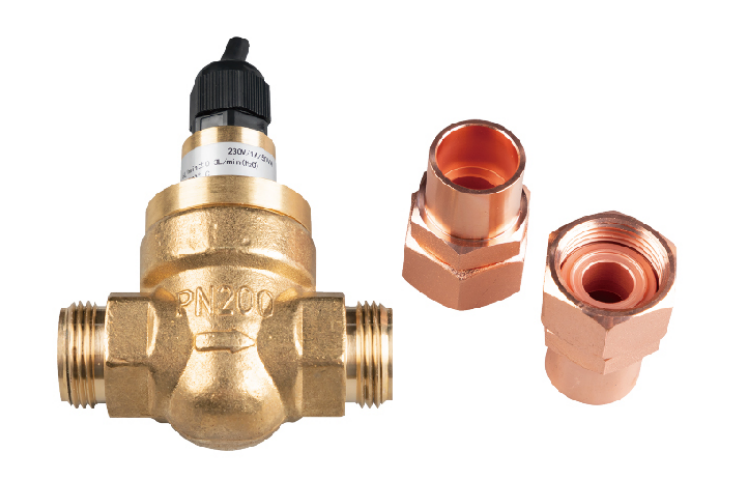
A surprising number of false alarms trace back to sloppy sensor placement. Mounting a motion detector above a radiator, directly in line with an air vent, or on a wall that flexes when a door slams will almost guarantee phantom triggers. The fix is not always obvious during installation, but walking the space with a thermal gun or a piece of tissue paper to map drafts before drilling can save hours of troubleshooting later.
Loose wiring and marginal power supplies create their own headaches. A connector that barely grips the terminal, or a power adapter running at the edge of its rated load, can cause voltage dips that the control panel interprets as an open zone or a tamper event. Instead of assuming the device is faulty after the first false alarm, reseat every screw terminal, use ferrule crimps on stranded wire, and measure actual voltage at the sensor while the system is under load.
Another overlooked pitfall is failing to test under real-world conditions. Installers often verify a sensor in bright, quiet conditions, but the same device may behave differently at night with HVAC running or with a pet moving through the room. After mounting, simulate the conditions that will exist during normal operation—close doors, turn on heat, mimic motion patterns—and adjust sensitivity or masking until the system stays quiet when it should and detects when it needs to.
A Practical Maintenance Schedule for Oil Flow Switches in Harsh Environments
Harsh environments punish any maintenance plan that relies on fixed calendar dates alone. Dust, salt spray, extreme temperature swings, and constant vibration all work against the mechanical and electrical parts of an oil flow switch. Instead of waiting for a failure, build the schedule around operating hours and visible contamination levels. For most sites, a baseline of 40 to 50 operating hours per week means certain tasks land weekly, while others can stretch to monthly or quarterly without losing reliability.
Start with a ten-minute walkaround every week: check for oil weeping at the switch body, look for corrosion on the housing, and confirm the cable gland is still tight. Every month, remove the switch from the line if the design allows, clean the paddle or vane with a solvent that won't damage seals, and inspect the magnetic or mechanical linkage for sticky movement. Quarterly, run a functional test by reducing flow or bypassing the line to confirm the switch trips at the correct setpoint. Twice a year, open the terminal box, check for moisture ingress, retorque connections, and replace any desiccant packs. Annually, replace O-rings, gaskets, and any bellows or diaphragms, then recalibrate the switch against a known flow reference.
Keep a short log of every inspection, noting the amount of sludge or varnish found and any drift in the trip point. That record will tell you when to shorten or lengthen intervals. If the switch sits downstream of a filter that clogs often, move the filter changes upstream and add a differential pressure gauge across the switch inlet to catch vane erosion early. Stock the two or three parts that fail most in your specific environment—usually seals and microswitches—so a routine maintenance day never turns into a week of downtime.
Troubleshooting Sticky or Sluggish Switch Response Before It Fails
When a switch starts to feel sticky or sluggish, your first move should be a careful wipe-down of the surrounding plate and keycaps. Dust, skin oils, and crumbs work their way into the slider rails and stem, creating extra friction that mimics a dying switch. Remove the keycap and use a soft brush or compressed air to clear loose debris, then swab the exposed stem with a cotton swab lightly dampened with isopropyl alcohol. Let it dry completely before testing—a lot of 'sticky' switches are just gunked up, not worn out.
If cleaning doesn't restore the crispness, inspect the switch housing for hairline cracks or a loose top cover. A wobbling top can cause the stem to bind mid-travel, especially on hot-swap boards where repeated pulling loosens the clips. Gently press the top housing down from all four corners; if it clicks back into place, that may fix the sluggish return. On soldered boards, check for cold joints on the switch legs—a weak connection can cause intermittent actuation that feels like lag, even if the key still registers. Reflowing those two joints with a fine tip iron often brings the switch back to life.
For switches that remain mushy after cleaning and reseating, consider a light application of a plastic-safe lubricant to the slider rails, but only if you're comfortable disassembling the switch. A tiny dab of Krytox 205g0 or a similar thin grease can work wonders on scratchy or binding stems. Avoid spray lubricants—they attract dust and can ruin the leaf spring. If the switch still feels sluggish after lubing, the internal spring may have lost tension from overheating during soldering, or the contact leaf has bent. At that point, replacing the single switch is cheaper and faster than chasing a ghost fault that could fail mid-game.
Choosing Between Mechanical and Electronic Oil Flow Switches: What Actually Matters
When it comes to oil flow switches, the mechanical versus electronic debate usually starts with accuracy, but what actually matters is how each type behaves under real operating conditions. A mechanical switch, with its paddle or vane actuating a reed contact, is simple and robust. It tolerates voltage spikes, high inrush currents, and dirty power without complaint. But that simplicity comes with a trade-off: a fixed setpoint, limited sensitivity at low flow rates, and mechanical wear that inevitably shifts the trip point over time. If your system runs at a relatively constant flow and you just need a hard stop when oil stops moving, a mechanical switch often is the more forgiving choice.
Electronic oil flow switches offer a different value that rarely shows up on a specification sheet: adaptability. A thermal dispersion sensor has no moving parts, so there is nothing to stick or fatigue. You can adjust the setpoint in the field, often with a simple potentiometer or digital interface, and many models provide an analog output proportional to flow velocity, not just an on/off signal. That extra data stream can tell you whether flow is trending downward before it trips an alarm. The catch is that electronic switches demand cleaner power, are more sensitive to electromagnetic noise, and can false-trigger if the oil viscosity changes enough to alter the heat transfer characteristics the sensor relies on.
So the question is not which technology is better in a lab, but which failure mode you can live with. If a mechanical switch drifts, you might not notice until it fails to actuate during a low-flow condition. If an electronic switch is misconfigured or exposed to electrical noise, it may trip spuriously and shut down a perfectly healthy system. The best approach is to match the switch to the unpredictability of your application: steady flow, dirty power, and minimal maintenance favor mechanical; fluctuating flow, need for early warning, and remote monitoring favor electronic. In either case, install the switch where it can see representative flow, and verify its trip point under actual operating viscosity and temperature, not just the factory default.
Extending Switch Lifespan Through Oil Cleanliness and Temperature Control
Oil in a load-breaking switch does more than lubricate; it quenches arcs and carries away conductive debris. When the oil picks up moisture, fibers, or fine metal particles from contact wear, those contaminants turn into an abrasive slurry that accelerates mechanical wear on sliding surfaces and can bridge insulation gaps during switching. Keeping the oil clean through regular filtration and maintaining water content below 20 ppm prevents sludge formation and preserves the dielectric strength needed for safe internal clearances. Clean oil also reduces carbon tracking on insulating components, a common precursor to flashover that shortens switch life.
Temperature control is just as critical. Every sustained 10°C rise above the rated contact or winding temperature roughly halves the life of oil-paper insulation, following the well-known Arrhenius aging principle. In oil-immersed switches, hot spots often develop at pivot joints and arcing contacts, where poor heat transfer can cause localized coking of the oil and the formation of varnish deposits that interfere with mechanism movement. Holding top-oil temperature below the manufacturer's specified limit—commonly around 85°C in continuous duty—and using forced cooling or temporary load reduction during peaks slows oxidation, keeps viscosity stable, and prevents the oil from degrading into a sticky residue.
The biggest lifespan gains come from treating oil cleanliness and temperature as one integrated monitoring effort. Operators who track dissolved gas trends, particle counts, and thermal scans can schedule maintenance based on actual condition rather than a fixed calendar or operation count. This data-driven approach avoids unnecessary shutdowns and catches degradation early, often extending the interval between major overhauls by 30 to 50 percent. Simple measures like replacing breather desiccant, cleaning radiator fins, and checking that oil pumps run without cavitation work together to keep both contaminants and heat in check, allowing the switch to operate reliably well beyond its nominal design life.
FAQ
Focus on oil viscosity range, operating pressure and temperature, pipe diameter, and the switch's response time. Match the wetted materials to the oil type to prevent corrosion or swelling, and verify the electrical rating matches your control circuit.
Most inline flow switches need a straight pipe run upstream and downstream to avoid turbulence. For paddle-type switches, the paddle must align with the flow direction and have enough clearance from pipe walls. Mounting in a vertical pipe with upward flow often gives more consistent results than horizontal mounting.
Inspect every three to six months for buildup of varnish or sludge on the sensing element. Clean the paddle or piston with a solvent compatible with your oil. Check electrical connections for tightness and signs of heat. Replace O-rings or seals annually if the switch is opened frequently.
The usual culprits are incorrect switch point calibration, excessive cycling from frequent start-stop operation, or contamination that causes the mechanism to stick. Using a switch with a snap-action microswitch rated for millions of cycles can extend life, but the root cause is often a mismatch between the switch's minimum flow sensitivity and the actual low-flow conditions.
Start the oil pump and use a calibrated flow meter to establish the target flow rate. Adjust the set screw or dial on the switch while watching the output contact change state. For high-temperature oil, perform calibration at operating temperature because viscosity changes shift the trip point. Repeat the test three times to confirm repeatability.
It depends on the switch design. A dual-setpoint switch with two independent microswitches can provide both low and high alarms, but they must be adjusted carefully to avoid overlap. For wide flow ranges, using two separate switches—one for minimum flow and one for maximum—often gives better reliability.
Contaminants like metal particles or sludge can jam a mechanical paddle or erode a thermal dispersion sensor. Absolute filtration of 10 microns or better is recommended for hydraulic and lubrication systems. Regular oil sampling helps detect abrasive wear before it damages the switch.
If the switch has a test port or manual override, use it to simulate flow and verify the output changes state. For inline units without a test feature, install a bypass loop with isolation valves so the switch can be removed and bench-tested while the main line stays active. Always follow lockout/tagout procedures when working on energized equipment.
Conclusion
Selecting a high-quality oil flow switch goes far beyond comparing catalog specs. The first step is to match the switch's flow range and port size to the actual oil viscosity and pipe diameter under operating conditions—viscosity shifts with temperature can dramatically alter the switch's trip point. Avoid common installation pitfalls by ensuring straight pipe runs upstream and downstream, orienting the switch correctly, and bleeding trapped air, because even a small bubble or misalignment can trigger false alarms that erode trust in the system. When choosing between mechanical and electronic switches, what actually matters is not the technology itself but the response time needed, the presence of vibration or shock, and how easily the unit can be tested in place. Electronic switches offer tighter setpoints and no moving parts, but mechanical paddles or pistons often survive harsh, dirty oil better if properly maintained.
A practical maintenance schedule for harsh environments should include monthly visual checks for leaks and debris, quarterly electrical connection tightening, and semi-annual functional tests by simulating flow blockage. If you notice a sticky or sluggish switch response—such as delayed actuation or chatter—address it immediately by cleaning the sensing element and verifying that oil viscosity has not drifted out of range, rather than waiting for a complete failure. Extending switch lifespan relies heavily on oil cleanliness and temperature control: use filtration to keep particulates below the switch's tolerance and maintain oil temperature within the recommended band, because overheated oil thins out and cold oil thickens, both of which stress the mechanism and lead to premature wear. Ultimately, the best practice combines a properly sized, correctly installed switch with proactive maintenance that respects the actual operating environment.
Contact Us
Contact Person: KOPASS HO
Email: [email protected]
Tel/WhatsApp: 8613606566112
Website: https://www.hongsenref.com/