

High Quality Plate Compactor Recommendations for Reliable Soil Compaction
2026-08-27
Ask any site supervisor about the most common cause of failed compaction, and they’ll point to the tool, not the technique. A plate compactor that can’t deliver consistent force leaves soft spots, settlement, and callbacks. That’s why we’ve put together this list of high quality plate compactor recommendations for reliable soil compaction—machines that actually hold their spec from the first pass to the last. We’re also highlighting what makes Dynamic a brand worth watching in this space. Read on for the models that earn their place on the trailer.
What Actually Makes a Plate Compactor Reliable on Clay?
Clay soil presents a unique challenge for plate compactors because it holds moisture and resists vibration differently than granular soils. A reliable machine on clay needs a high centrifugal force combined with a lower frequency, allowing the energy to penetrate deeper instead of just bouncing off the surface. Look for models with an exciter system that can maintain consistent amplitude even as the clay packs down, otherwise you'll end up with a machine that vibrates hard but achieves little actual compaction.
Beyond raw force, the base plate design matters more on clay than most operators realize. A plate with a tapered or curved leading edge helps the compactor climb over sticky material instead of digging in and getting stuck. Water tank systems also become critical, because clay tends to bond to the plate surface and reduce efficiency. A reliable compactor for clay will have a well-designed sprinkler system that keeps the plate clean without flooding the work area, plus a heavy-duty engine that can maintain power under continuous load when the soil gets dense.
Finally, reliability on clay comes down to how the compactor handles variable moisture. Clay transitions quickly from too wet to too dry, and a machine that only performs in ideal conditions will frustrate any crew. The best options feature adjustable vibration frequency or an automatic load-sensing throttle, so the operator can adapt on the fly without stopping. Reinforced side panels and sealed bearings also help, because clay dust and moisture work their way into every gap and wear out unprotected components fast.
Matching Plate Size and Force to Your Soil Type
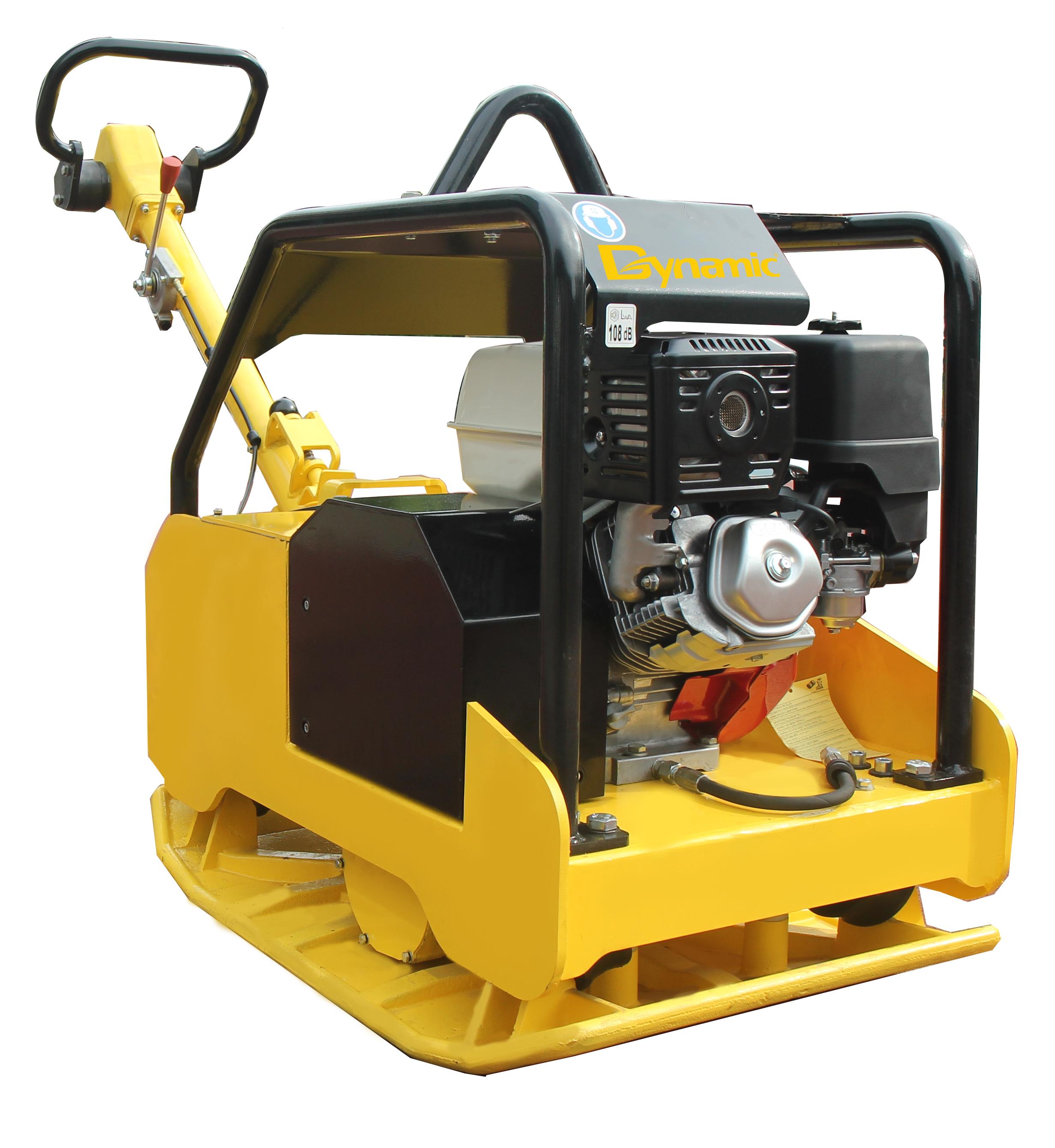
Sandy or gravelly ground usually locks together with modest effort, so a wider plate can cover more area per pass without sacrificing density. Clay and silt are a different story—they store energy and resist compaction unless the machine delivers a sharper, more concentrated blow. Matching the plate width to the soil's willingness to rearrange is the first step toward an even lift.
Compact machines with smaller plates tend to work wonders on cohesive soils because they focus vibration into a tighter footprint. On granular material, that same setup just burns extra fuel and time. Checking how the soil reacts under a test pass tells you more than any chart: if the plate bounces or the ground barely moves, you either need more force or a different contact area.
Don't assume one plate handles every job. A middle-ground approach is to start with a narrower plate on unknown ground, then move up if the material compacts quickly and the machine feels stable. The goal is to keep the plate in good contact with the surface while the energy penetrates deep enough to remove air pockets—not so wide that it skims, not so narrow that it punches through.
Vibration Frequency vs. Plate Weight: Which Matters More?
When comparing vibration plates, it's easy to assume a heavier unit is automatically better. But that extra steel only pays off if the motor can still deliver consistent amplitude and frequency under load. A lightweight plate with a strong motor and a wide frequency range often outperforms a heavy model that shakes weakly once you stand on it.
Frequency dictates the type of response your body produces. Lower settings around 5–15 Hz tend to challenge balance and relaxation, while 20–30 Hz is the sweet spot for muscle recruitment and circulation. Above 35 Hz, you shift into power and reflex training. Plate weight, meanwhile, mainly influences stability and how much vibration gets absorbed by the frame instead of your legs. A plate that's too light may skid or flex, scrubbing off intensity before it reaches you.
So the answer isn't a simple either-or. If you're choosing between a modest 18 kg plate with adjustable frequency and a 35 kg plate locked at one speed, go with the first one. The ideal setup is a mid-weight plate—enough to stay planted—paired with a motor that holds its frequency under your body weight. Without that, extra kilograms are just dead weight.
Diesel, Gas, or Electric: Choosing Without the Hype
Most buying guides start with a horsepower spec or a 0-60 time. That misses the point for anyone who drives to work, hauls kids, and occasionally tows a small trailer. Start instead with your weekly mileage and access to charging. If you can plug in at home and rarely exceed 200 miles in a day, an EV stops being a statement and starts being the cheap, quiet option. If your rental has no outlet and the nearest fast charger is a twenty-minute detour, a hybrid or efficient gas car will save you real hours every month.
Diesel only earns its premium when you tow heavy loads often or cover long highway miles with a full bed. For stop-and-go city driving, modern diesel emissions systems clog and burn extra fuel during regen, eroding the mileage advantage. Gas engines have gotten so good that the old “diesel lasts forever” argument matters less for a five-year lease than the upfront cost difference. Look at the door sticker, not the brochure: payload and towing numbers vary more by trim than by fuel type.
Finally, do the unglamorous math on depreciation and insurance. Some EVs lose value faster than their gas siblings, while a diesel truck may hold value in rural markets but cost more to insure. Don’t pick a powertrain to impress the internet. Pick the one that fits your parking spot, your commute, and the stuff you actually carry.
Pre-Compaction Checks That Prevent Costly Rework
Before a roller ever touches fresh fill, a handful of quick checks can save a crew from tearing out half a day’s work. Walk the subgrade and look for soft spots, standing water, or rubber-tire ruts that didn’t rebound. Check the moisture with a quick hand test or a nuclear gauge—if it’s more than a couple points off optimum, stop and adjust. Also verify the lift thickness. Loose lifts that exceed what your compactor is rated for will never reach density, no matter how many passes you make.
Grade stakes get bumped, string lines sag, and a wheel rut can hide a low spot. Running a quick level check across the lift before compaction means you catch a 2-inch dip now instead of after the asphalt goes down. Confirm that buried conduits, pipes, and drain lines have enough cover to survive the compactor’s weight. If a utility is too shallow, add soil or switch to a lighter machine for that area. Also make sure the compactor you’re using matches the soil type—smooth drum for granular, padfoot for clay—and that the vibration setting isn’t too high for the lift.
A five-minute proof roll with a loaded truck or the actual compactor reveals spongy areas that look fine on the surface. Mark them, dig them out, and replace with proper material before you put down the next lift. Don’t skip the test strip on large fills; it locks in the pass count and speed that actually hit spec, so the operator isn’t guessing later. Finally, snap a few photos of the prepared surface before rolling. If a dispute comes up about whether the base was acceptable, those pictures are worth more than a logbook full of numbers.
Operator Habits That Quietly Undermine Compaction
Most operators don't set out to weaken the subgrade or the lift they're working on, but a few everyday routines do exactly that. One common slip is running the roller at a speed that feels productive but actually lets the drum skip over soft spots instead of sinking into them. When passes are rushed, the vibratory energy doesn't have time to travel through the full depth, so the top few inches firm up while the lower material stays loose. The result looks solid from the cab, but cores taken later tell a different story.
Another quiet habit is following the same wheel track pass after pass without shifting the overlap. It's easy to fall into a rhythm and steer by the last visible mark, but that leaves narrow bands of uncompacted material between the drum paths. These hidden strips become weak seams that open up after a few wet-dry cycles or under early traffic loads. Operators who glance at the pass count but ignore the actual contact pattern are usually the ones surprised by soft spots during proof rolling.
Water application can also undermine the work when it becomes automatic. A quick mist at the start and then nothing for the rest of the shift leads to inconsistent moisture, which changes how the material responds to vibration. Dry spots shatter under the drum instead of consolidating, while overly wet areas pump and move sideways. Good compaction depends on reading the surface every few passes, but many operators treat water as a one-time setup task rather than an ongoing adjustment.
FAQ
A single-direction vibratory plate with a 14–18 inch base and around 3,000–4,000 pounds of compaction force usually works. You'll want a model that can hit 5,500 blows per minute so the gravel interlocks properly, but not so much force that it shatters the stone.
Yes, if you are compacting in a narrow trench or along a foundation. Reversible plates can move backward without you wrestling the machine, which prevents uneven lifts and saves your back. For trenches wider than 18 inches, a forward-only plate may be sufficient.
Wait until the soil is moist but not sticky. If the plate starts pulling up mud, stop and let the area dry for a day. You can also lay a thin layer of crushed rock down first; the plate will push it into the clay and create a stable crust instead of churning the surface.
Check the exciter oil level before each day, tighten any loose bolts on the base plate, and clean the air filter if it's a petrol model. Most breakdowns come from low oil or a clogged filter, not from the compaction itself.
You can, but you need a plate with a water tank or a spray system. Dry soil plates will tear the hot asphalt surface. Also run the plate at a slower forward speed and make overlapping passes to avoid leaving a ridged finish.
For a 12-inch lift, skip the small 60 kg plates. You need a reversible plate in the 200–300 kg range with at least 20 kN of centrifugal force. Compact in 4-inch layers anyway; even a heavy plate can't properly consolidate a full 12 inches in one pass.
Bouncing on sand usually means the vibration frequency is too high or the plate is too light. Switch to a heavier plate with a lower frequency setting, or dampen the sand slightly. Dry sand needs a slower, heavier pulse to settle; otherwise the energy stays at the surface.
Conclusion
For reliable compaction on clay, a plate compactor's amplitude and downforce matter more than raw engine power. Heavy plates with lower vibration frequencies typically work clay better than lightweight, high-frequency models, because clay needs time for particles to rearrange under sustained pressure. Matching plate size to soil type isn't just about width; a narrower plate on cohesive soils can cause bridging and leave soft spots, while an oversized plate on granular material wastes energy. When comparing vibration frequency and plate weight, think of them as a pair: frequency controls how often impacts hit, but weight determines how deep each impact reaches. For clay, prioritize weight and amplitude over frequency; for sand or gravel, higher frequency with moderate weight gives faster results.
Power source choice often gets overhyped. Diesel, gas, and electric each have real trade-offs: diesel offers steady torque for long runs on large sites, gas is simpler for intermittent use, and electric suits enclosed or noise-sensitive areas—but none compensates for poor soil prep. Before starting, check moisture content, clear debris, and verify the machine's bolts, belt tension, and exciter oil. Moisture is especially critical on clay; too dry and it won't bind, too wet and it becomes slick and unworkable. Finally, operator habits quietly undermine compaction more than equipment flaws. Moving too fast, skipping overlap between passes, or vibrating on already compacted surfaces can create density variations. A steady walking speed with 20-30% pass overlap, and lifting the plate off the ground before turning, keeps results consistent.
Contact Us
Contact Person: Annie
Email: [email protected]
Tel/WhatsApp: 8613391442963
Website: https://www.dynamic-eq.com