

High-Quality Ultrasonic Nozzle for Precision Coating and Fine Mist Atomization
2026-09-03
Getting a uniform, ultra-thin coating without overspray or nozzle clogging has long been a headache in precision manufacturing. High-quality ultrasonic nozzles change that by using high-frequency vibration to break liquid into a soft, fine mist—no high pressure, no brute force. Siansonic has been quietly advancing this atomization technology for critical coating tasks, from medical devices to electronics. Below, we unpack what makes these nozzles different and when they’re worth the switch.
Why Droplet Uniformity Determines Coating Yield
In spray coating operations, yield is rarely limited by the amount of material pumped toward the part. It is limited by how much of that material actually lands where it should. Droplet size distribution sits at the center of this gap. When droplets leave a nozzle with a wide range of diameters, their trajectories diverge almost immediately: smaller droplets lose momentum and get carried away by air currents, while larger ones hit the surface with enough energy to splash or rebound. Both outcomes remove material from the intended film, forcing operators to spray more just to compensate for what never adhered.
Uniform droplets change that arithmetic. With a narrow size band, the spray behaves more predictably. Each droplet carries roughly the same kinetic energy, so deposition becomes less sensitive to minor fluctuations in air pressure, standoff distance, or part geometry. This consistency reduces overspray and edge buildup, which are among the most common sources of rework. The result is a higher first-pass yield, not because the coating is thicker, but because far less material is lost between the nozzle and the finished surface.
The effect is especially visible in high-solids or powder coatings, where reclaim systems can only recover so much. If droplet uniformity drifts, transfer efficiency drops quickly, and the cost per acceptable part rises even when the formulation itself has not changed. Controlling droplet size within a tight range is therefore less about achieving a cosmetic finish and more about converting raw material into usable coating at a predictable rate.
Atomizing Without Air Pressure: What Changes on the Substrate
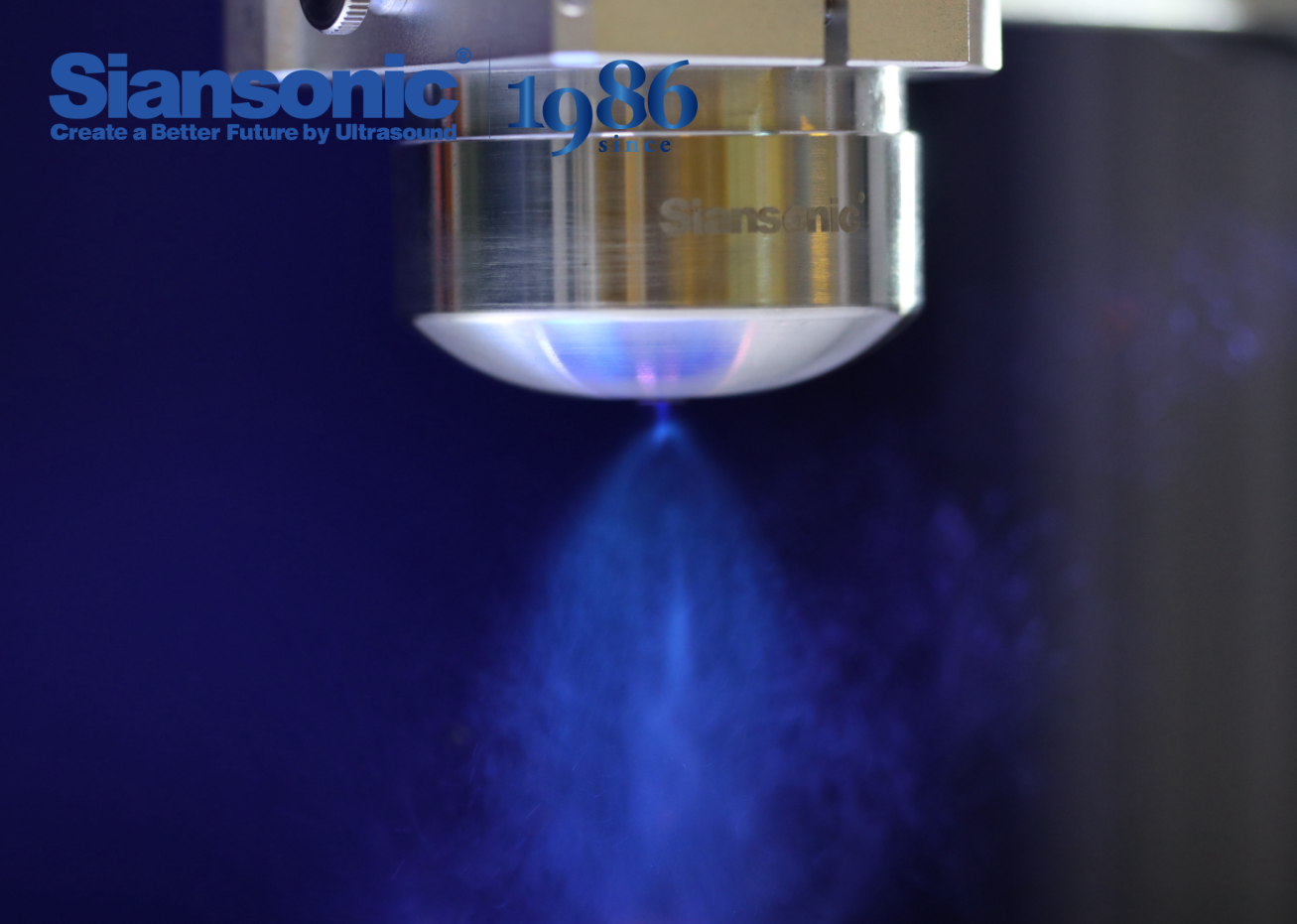
When atomization happens without air pressure, the liquid's journey to the substrate shifts from a high-energy turbulent spray to a much gentler, gravity-fed stream or low-velocity droplet field. The most immediate change on the substrate is a reduction in overspray and bounce-back, since the droplets arrive with far less kinetic energy. This often translates into thicker, more localized wet films that sit exactly where they land, rather than being blasted into micro-crevices or forced to spread by impact. On porous surfaces, the slower arrival allows capillary action to dominate, pulling the liquid deeper into the substrate before the surface begins to seal. Consequently, coating thickness becomes less uniform in terms of edge-to-edge coverage but can gain improved penetration in tight geometries where air-assisted sprays might simply ricochet.
Another noticeable shift is in the surface texture and defect profile. Without the shearing force of compressed air to break the liquid into fine, uniform droplets, the substrate often receives a mix of larger droplets and occasional satellite droplets that create a slightly mottled or orange-peel-like finish. This can be beneficial for applications where a textured grip or matte appearance is desired, but it poses challenges for high-gloss or optically clear coatings. Additionally, the absence of air turbulence eliminates the risk of blowing dust or debris onto the wet film from surrounding areas, which means fewer surface contaminants get embedded. However, solvent evaporation rates change dramatically: without the rapid airflow to carry volatiles away, the film remains wet longer, giving the liquid more time to level and self-smooth, yet also increasing the chance of sagging on vertical substrates or dust settling from the ambient environment.
From a process control standpoint, removing air pressure fundamentally alters how the substrate temperature interacts with the coating. In conventional air-atomized spraying, the expanding gas cools the droplets significantly before impact, sometimes chilling the substrate surface and slowing cure kinetics. Without that adiabatic cooling, the liquid arrives closer to its reservoir temperature, which can accelerate initial solvent flash-off and lead to faster skinning on the surface. This is particularly noticeable on thin metal substrates, where thermal mass is low and the warmer liquid can cause premature surface drying while the underlying layer remains fluid. The result is a film that may develop micro-cracks or pinholes if the substrate is then heated quickly. On the other hand, for wax-based or high-viscosity materials, the warmer arrival can improve wetting and reduce the need for pre-heating the substrate, making the process more energy-efficient despite the trade-offs in film uniformity.
Keeping Edges Clean When Coatings Get Thinner
Thinner coatings leave less room for error along edges, where surface tension can pull material away from a sharp corner or leave a ragged bead. A quick wipe with a solvent-dampened swab right after application often does more than any post-cure cleanup, but the key is timing—too early and you smear the coat, too late and the edge has already set with a dull lip. Many finishers keep a set of fine-tipped brushes and low-lint wipes within arm’s reach, swapping them out frequently so residue never has a chance to harden into a ridge.
On complex geometries, the real trouble starts where two thin films meet at an inside corner. Capillary action tends to pool coating there, creating a fillet that looks fine wet but dries thick and unevenly. Masking the edge with a narrow strip of low-tack tape, then removing it while the coating is still slightly tacky, gives a crisp line without tearing the film. For touch-ups, a small amount of the same coating thinned down to nearly water consistency can be flowed into bare spots with a micro-brush, letting surface tension do the leveling instead of fighting it.
Temperature and airflow also influence how clean an edge stays. A warm, still environment extends open time, letting the coating settle into corners naturally, but too much heat causes the edge to skin over before the body has leveled. A gentle cross-draft from a low-speed fan can prevent solvent from lingering at edges and creating a soft, sticky margin. If a run or sag does appear, resist the urge to wipe it immediately—wait until the film has set just enough to hold its shape, then slice the defect away with a sharp razor blade held nearly flat against the surface.
From Water-Thin Solvents to Particle-Loaded Suspensions
The range of fluid behavior covered here stretches from clear, low-viscosity solvents that pour almost like water to thick, particle-laden mixtures that barely move under their own weight. A water-thin solvent, such as acetone or ethanol, follows simple Newtonian rules: its resistance to flow stays constant no matter how fast you stir it. These liquids wet surfaces quickly, evaporate cleanly, and are easy to pump or filter because the molecules slip past one another with little friction.
Once solid particles enter the picture, that simplicity disappears. Even a modest load of fine silica or pigment can turn a free-flowing liquid into a suspension with a noticeable body. The particles interact through collisions, electrostatic forces, or van der Waals attraction, and those interactions become stronger as the solids fraction rises. At high loadings, the mixture may develop a yield stress, meaning it behaves like a solid until enough force is applied, then it begins to flow. The viscosity is no longer a single number; it depends on shear rate, time, and even the sample's recent handling history.
Working across this spectrum means adjusting expectations and equipment. Thin solvents tolerate high-speed mixing and fine filters without trouble, but they also splash, evaporate, and offer little lubricity for moving parts. Particle-loaded suspensions demand gentler handling to avoid settling or shear damage, yet they can hold shape after deposition and build thicker films in a single pass. Choosing where a formulation sits on this continuum is less about finding a perfect fluid and more about matching the rheology to the coating, printing, or casting method at hand.
Unclogging the Myth: How the Nozzle Stays Clear in Continuous Use
Most people assume a nozzle will inevitably gum up after hours of nonstop flow, but the reality is that modern designs lean on fluid shear to do the dirty work. The internal taper isn't just for spray shape—it accelerates the liquid near the orifice, creating a thin, fast-moving boundary layer that scrubs the wall. Any particle trying to settle gets caught in that slipstream and dragged out before it can anchor. It's less about brute force and more about giving clogs nowhere to grab hold.
Temperature plays a sneaky but critical role. A nozzle kept at a steady, slightly elevated heat—just enough to lower viscosity without degrading the fluid—turns borderline solids into cooperative liquids. In hot-melt adhesives or wax-based inks, this means the waxy buildup that would otherwise crust over the tip never gets a chance to form. The trick is a tight thermal band: too cool and you're fighting crystallization, too hot and you're cooking the chemistry into varnish. Manufacturers fine-tune this by embedding a small cartridge heater directly in the nozzle body, not the reservoir, so the last millimeter stays the most liquid.
Of course, even the best self-cleaning geometry can't beat a poorly filtered supply line. The real myth-buster is upstream: a multi-stage filter, often a sintered metal disc right before the nozzle inlet, catches debris at 20 microns or less. Combine that with a brief reverse-pressure pulse at shutdown—a backflush that pushes a tiny slug of clean fluid backward through the orifice—and you've got a nozzle that shrugs off overnight downtime. It's a quiet, unglamorous engineering ballet, but it works so well most users never think about it until someone asks why the thing never clogs.
When Precision Beats Throughput: Matching Nozzle to Line Speed
A faster line doesn't automatically reward a larger nozzle. At higher substrate speeds, the time available for fluid transfer shrinks, and a nozzle chosen only for volume starts to smear, trail, or leave uneven edges. Matching the nozzle to line speed means treating the dispense as a brief, repeatable contact window rather than a simple flow-rate calculation.
When line speed climbs, the instinct is to open the orifice or raise supply pressure. That often shifts the failure point downstream: shear at the tip increases, separation becomes inconsistent, and you get satellites, necking, or bead width drift. The better move is to keep the orifice in a range where the fluid can wet and release cleanly at the actual substrate velocity, then adjust land length and taper so each cycle ends with the same clean break.
Precision then becomes the throughput lever. A line that runs at ninety percent of its theoretical maximum with a well-matched nozzle can outproduce a faster line that loses time to cleaning, inspection, and scrap. The goal is not to move fluid faster; it's to make every deposit predictable enough that speed doesn't buy you rework.
FAQ
It relies on high-frequency vibrations instead of air pressure, so the liquid leaves the tip as a narrow, low-velocity spray. That gives you tighter control over deposition and reduces overspray on delicate or three-dimensional surfaces.
The tip oscillates at ultrasonic frequencies and breaks the liquid into droplets through capillary wave formation. Because the energy is concentrated at the surface, it can atomize at very low flow rates without heating the fluid or clogging small orifices.
It shines in applications that need very thin, even layers—think photoresist deposition, conformal coating on electronics, medical device coatings, fuel cell membranes, and anti-fog or hydrophobic treatments on glass.
Yes, within a practical range. Low-to-medium viscosity liquids atomize most readily, but with proper tuning of frequency and flow rate you can often spray higher-viscosity coatings. Pre-filtering and maintaining consistent temperature help a lot.
The main factors are stable liquid delivery, clean nozzle surfaces, and consistent excitation frequency. Any buildup on the tip or variation in flow will show up as larger droplets or uneven coating, so routine inspection matters more than frequent adjustments.
Yes, its compact design and repeatable spray pattern make it easy to integrate into robotic systems. Many setups use it with programmable XYZ stages or inline conveyors because the spray starts and stops quickly without pressure lag.
Mostly you need to keep the tip free of dried residue and avoid running abrasive or heavily filled liquids without filtration. Occasional ultrasonic cleaning in a suitable solvent and checking the drive cable and O-rings will prevent most drift in spray quality.
Air-assisted nozzles rely on high gas velocity and can create turbulence and overspray. An ultrasonic nozzle uses mechanical vibration for atomization, which gives a softer spray, lower material waste, and more uniform droplet size when coating sensitive or complex parts.
Conclusion
In precision coating, yield often hinges less on how much liquid leaves the nozzle and more on how evenly that liquid reaches the surface. A high-quality ultrasonic nozzle generates droplets within a narrow size band, so every square millimetre of substrate sees the same deposition rate. That consistency directly prevents thin spots, pinholes, and local over-wetting that force rework or scrap. Because atomization relies on high-frequency vibration rather than compressed air, the spray plume stays soft and highly directional. There is no jet of air pushing droplets sideways or drying them mid-flight, which means wet film edges remain clean even when coatings are reduced to just a few microns. The result is a sharper transfer efficiency: less mist drifting into exhaust, fewer edge defects, and a measurable improvement in overall coating yield.
The same nozzle handles demanding fluids without changing its core behaviour. Water-thin solvents atomize into a fine, low-velocity mist, while particle-loaded suspensions pass through without the shear or impact that typical air spray can introduce. Continuous operation raises the usual clogging concern, but the vibrating tip and straight-through flow path keep solids from packing at the orifice; routine flushing restores full output without disassembly. In production, speed is not always the best metric. For thin functional layers, battery coatings, or medical films, a narrower spray pattern and uniform droplet size often beat a wider, faster air-atomized pass. Matching nozzle to actual line speed and coating width prevents wasteful overlap or dry edges, so the line runs consistently instead of repeatedly adjusting parameters.
Contact Us
Contact Person: Ivy Zhang
Email: [email protected]
Tel/WhatsApp: +86 1081502288
Website: https://www.siansonic.com/