

How a Piezo Inkjet Printer Manufacturer Optimizes Precision and Efficiency
2026-05-20
Achieving pinpoint accuracy without sacrificing speed has always been the holy grail in industrial printing. At Danmajet, that balance isn't just a goal—it's engineered into every piezo printhead we produce. But how exactly does a manufacturer turn micro-scale precision and high-throughput efficiency from competing ideals into a seamless reality? In this post, we pull back the curtain on the design choices, testing rigors, and smart manufacturing strategies that make it possible.
Mastering Micro-Nozzle Geometry for Pinpoint Accuracy
The shape of a micro-nozzle might seem like a minor detail, but it’s what turns a stream of fluid into a surgical tool. Every curve, edge, and taper influences how a liquid or gas exits, breaking the difference between a clean, on-target delivery and a scattered mess. Engineers spend countless hours tweaking internal contours to suppress turbulence and shape the jet just right, ensuring the flow stays coherent until it hits its mark.
Key features like the convergence angle, orifice diameter, and wall roughness play outsized roles. A smoothly converging section accelerates the fluid with minimal energy loss, while a precisely honed exit lip prevents droplet breakup or veering. Even micro-scale burrs left from machining can trip the flow into instability. By leveraging advanced fabrication methods—such as femtosecond laser drilling or electroforming—designers can create nozzles with sub-micron accuracy, yielding jets that behave more like laser beams than garden hoses.
This control unlocks pinpoint accuracy in fields where microns matter. Inkjet printheads rely on uniform droplet formation to place dots with pixel-perfect registration. Medical devices use micro-nozzles to deliver drugs to specific tissue layers without collateral damage. And in semiconductor manufacturing, precise nozzle geometry enables clean etchant application that doesn’t stray beyond the intended circuit path. Mastering these tiny geometries isn’t just a manufacturing challenge—it’s the linchpin of reliable micro-scale fluid handling.
Dynamic Pulse Shaping: The Heart of Droplet Control
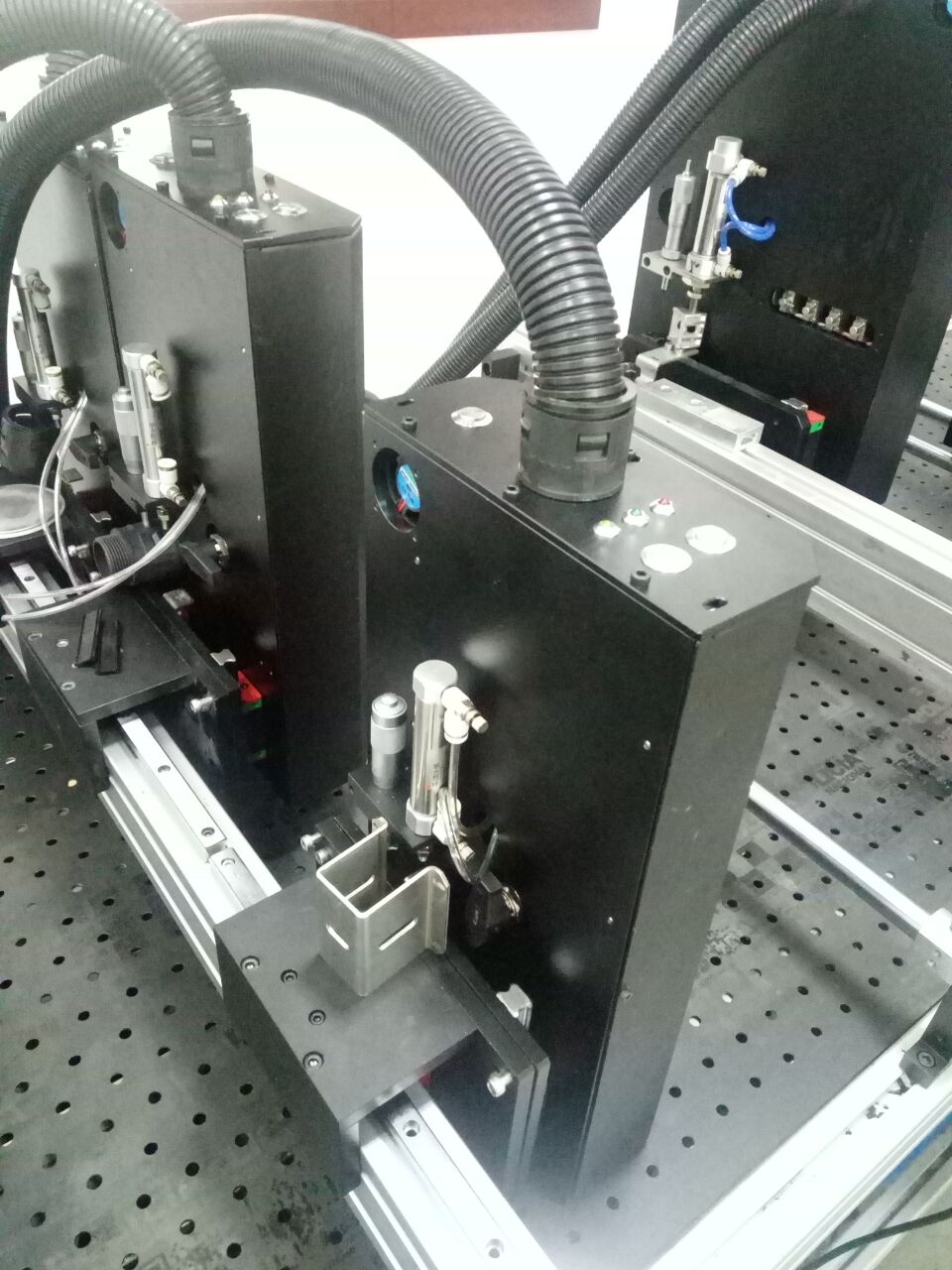
Droplet control isn't just about turning a valve on and off—it's about sculpting each pulse of liquid with precision. Dynamic pulse shaping refers to the real-time modulation of pressure, timing, and flow characteristics that form every droplet. Instead of a simple binary release, the system continuously adjusts the waveform of the fluid's exit, treating each ejection as a finely tuned waveform rather than a blunt squirt. This approach transforms dispensing from a mechanical event into an orchestrated fluidic gesture, allowing droplets to be tailored for size, velocity, and even mixing behavior mid-flight.
At the core of this technique lies a fluid dynamics philosophy borrowed from signal processing. By varying parameters like rise time, peak amplitude, and falloff slope, the dispenser can create droplets with dramatically different properties from the same nozzle. Imagine shaping a droplet to gently land on a delicate substrate without satellite splatter, or accelerating it sharply to break through an oil layer for encapsulation. The pulse shape essentially encodes the droplet's destiny—it dictates how the fluid breaks away from the bulk, how surface tension handles the detached volume, and how it interacts with its target. In practice, engineers use piezoelectric actuators or fast-responding solenoid valves driven by arbitrary waveform generators to achieve this level of control, turning dispensing into a programmable chemical choreography.
What truly distinguishes dynamic pulse shaping is its adaptive nature. Modern systems don't just execute preset waveforms; they listen to feedback from in-flight imaging, weight sensors, or capacitive monitors and adjust on the fly. A droplet that's forming a tail too long? The system tweaks the retraction phase. Need a higher frequency without losing consistency? It reshapes the pulse to dampen residual vibrations in the fluid column. This closed-loop agility means the same hardware can switch from nanoliter reagent spotting to high-viscosity adhesive deposition within milliseconds, all by rewriting the pulse's electrical blueprint. It's an ongoing conversation between physics and software, where every droplet becomes a tiny, deliberate experiment in fluid mechanics.
Fluids Engineering: Taming Ink Behavior for Reliability
Precision ink delivery stands at the core of modern printing, where a fluid’s whims can determine whether a print run succeeds or spirals into waste. Engineers tackle behavior that often feels counterintuitive, like how a subtle shift in surface tension can cause droplets to stray mid-flight, or how viscosity fluctuations under shear disrupt the steady flow needed for crisp reproduction. The challenge isn’t simply about finding a stable formula; it’s about designing systems that keep ink predictable across wildly varying speeds, temperatures, and substrate interactions.
Behind every nozzle and feed channel lies a delicate balancing act. In high-throughput scenarios, tiny instabilities can amplify rapidly, turning what looks like a calm liquid stream into a chaotic spray of satellites and misfires. By mapping the interplay between wetting dynamics and channel geometry, specialists develop feed architectures that suppress bubble entrapment and ensure that each droplet launches on target. These refinements often happen far from the printed page, inside computational models that simulate everything from meniscus recoil to solvent evaporation rates.
Reliability ultimately hinges on treating ink not as a passive supply, but as an active participant in the printing process. Real-time monitoring of rheological properties, coupled with adaptive pressure adjustments, lets systems compensate before defects become visible. When fluid behavior is truly tamed, manufacturers gain the freedom to experiment with unconventional pigment loads and reactive components without sacrificing the repeatability that high-value applications demand.
Active Alignment Surveillance for Nonstop Precision
Maintaining exact alignment in dynamic environments often feels like threading a needle while the fabric constantly shifts. Instead of relying on periodic manual checks that leave room for drift, active alignment surveillance embeds continuous, real-time monitoring directly into the workflow. Subtle deviations—whether from thermal expansion, vibration, or material fatigue—are instantly detected, triggering micro-adjustments that keep everything locked on target without ever pausing the operation.
The heart of this approach is a closed-loop system where sensors feed positional data back to actuators in milliseconds. A slight tilt in a laser beam, a micron-level shift in a wafer stage, or a microscopic misread in an optical assembly gets corrected before it can cascade into a flaw. By eliminating the lag between detection and response, the process sustains repeatable accuracy even as conditions fluctuate, turning potential stoppages into non-events.
What sets this apart is the surveillance aspect—it’s not simply adjustment on command, but an always-on guardian that learns and anticipates. Over time, patterns in drift become predictable, allowing the system to preempt misalignment before sensors even cross a threshold. This evolving vigilance keeps production lines humming, measurement tools spot-on, and research instruments locked in the nanometric sweet spot, all while the human oversight shifts from reactive to truly strategic.
Accelerating Throughput with Bespoke Drive Architectures
Off-the-shelf storage solutions often force compromises, but custom drive architectures unlock throughput levels that generic setups can't touch. By tailoring the layout of flash controllers, data paths, and even the physical placement of NAND chips, we eliminate the bottlenecks that standard drives accept as normal. The result is a streamlined pipeline where data flows with minimal latency and maximum parallelism.
These bespoke designs aren't just about raw speed; they're about intelligent resource allocation. We integrate workload-aware steering logic that dynamically prioritizes read and write operations based on real-time demand patterns. For instance, mixed workloads that would choke a conventional drive are gracefully handled by dedicating separate hardware queues and adjusting internal scheduling on the fly. This kind of fine-tuning keeps I/O depths optimized and prevents the performance cliffs that plague uniform architectures.
Building from the ground up also lets us rethink endurance and consistency. Custom error correction algorithms and wear-leveling mechanisms are baked into the silicon, tailored to the specific NAND characteristics we select. That means sustained throughput under heavy load, without the degradation you'd see in a COTS drive after just a few weeks of intensive use. It’s an approach that treats storage not as a commodity, but as a critical enabler of overall system performance.
Continuous Feedback Loops: Printing Perfection at Speed
In high-speed printing, maintaining consistent quality demands more than just precision hardware. Continuous feedback loops form the backbone of modern print systems, constantly monitoring output and making split-second corrections. Every line, dot, or droplet is analyzed against the intended design, allowing the machine to self-adjust before flaws become visible.
Sensors scattered across the print path capture real-time data on registration, density, and color accuracy. That data streams into an onboard processor that compares it with benchmark parameters. When a deviation is detected—perhaps a slight misalignment or a variation in ink volume—the system counteracts it immediately, tweaking pressures, speeds, or temperatures without halting production. The result is a dynamic, self-healing workflow that keeps prints flawless even at top speeds.
Operators benefit from this autonomy. Instead of babysitting the press, they can trust the feedback mechanisms to catch and resolve issues early. The loop not only prevents defective batches but also gathers historical patterns to preempt recurring problems. Over time, the system learns from each cycle, refining its responses and contributing to a level of consistency that manual oversight struggles to match.
FAQ
Piezo printheads use an electric charge to mechanically eject ink droplets, allowing for finer control over drop size and placement compared to thermal methods that rely on heating and bubble formation.
By optimizing waveform profiles and nozzle geometry, manufacturers can increase firing frequency while maintaining drop consistency, enabling faster printing with minimal defects.
Ink viscosity and surface tension must be tailored to the printhead’s piezoelectric actuator to ensure reliable drop ejection and prevent nozzle clogging, which directly affects placement accuracy.
Automated cleaning cycles and capping stations keep nozzles clear of dried ink, reducing downtime and ensuring consistent output over large print runs.
Multi-pulse firing techniques and MEMS fabrication allow for smaller, more densely packed nozzles with precise channel geometries, enabling micro-droplet formation and sharper image detail.
By using modular printhead arrays and scalable drive electronics, they can offer configurable systems that match performance needs without excessive over-engineering, keeping costs manageable.
Conclusion
Achieving pinpoint accuracy in piezo inkjet printing begins with meticulous micro-nozzle engineering, where geometry is optimized to eject droplets with sub-picoliter consistency. The shape, taper, and surface finish of each nozzle are honed through computational fluid dynamics and precision laser machining to eliminate trajectory errors and satellite formation. This mechanical precision is orchestrated by dynamic pulse shaping—custom voltage waveforms tailored to the ink’s rheology. By manipulating pulse amplitude, rise time, and dwell duration, manufacturers exert meticulous control over droplet velocity and volume, ensuring every deposition lands exactly where intended. Complementing this is deep fluids engineering: ink formulations are rigorously tuned with surfactants, humectants, and dispersants to maintain stable viscosity and surface tension, preventing nozzle clogging and jetting irregularities even during sustained runs. Together, these pillars transform a chaotic fluid jet into a reliable, micron-accurate printing tool.
To maintain such exactitude at industrial cadences, the system integrates active alignment surveillance, where optical sensors and linear encoders continuously monitor head-to-substrate positioning and correct drifts before they manifest as defects. Throughput is accelerated by bespoke drive architectures—custom FPGA-based controllers that orchestrate thousands of nozzles in parallel with deterministic timing, sidestepping the latency of generic electronics. This enables high-frequency jetting without compromising drop integrity. The final layer is a continuous feedback loop: high-speed vision systems inspect every droplet in flight, comparing its trajectory and size against a golden reference and instantly adjusting waveform parameters to counteract ink viscosity shifts or nozzle wear. By weaving these real-time corrections into the print cycle, the manufacturer achieves a self-sustaining equilibrium—delivering prints that are both blisteringly fast and virtually immune to quality drift.
Contact Us
Contact Person: Jacky
Email: [email protected]
Tel/WhatsApp: 086 15000607053
Website: https://www.danmajet.com