

How to Choose the Right Speaker Magnet Company for Your Audio Products
2026-11-16
Speaker magnets rarely get the attention they deserve—until a batch fails and your audio product starts underperforming. The right magnet partner influences sound quality, thermal stability, and long-term reliability, so this decision belongs in the design conversation, not just procurement. Below, we break down how to evaluate suppliers without the usual guesswork. And if you want a concrete benchmark, DAWA is worth a closer look.
Reading Between the Lines of Magnet Grade Claims
A magnet stamped N52 sounds like it should easily outperform N35, but the designation only captures one slice of performance under idealized conditions. The number following the letter refers to maximum energy product in megagauss-oersteds, a laboratory figure that says little about how the material behaves once it is cut, coated, and asked to work at elevated temperatures or in a real air gap. Two magnets can share the same grade on paper yet differ noticeably in pull force because composition, sintering density, and dimensional tolerances quietly shift the result.
Then there is the habit of listing the highest grade in a product line while shipping something more modest. Sometimes the claimed N52 is actually a thin surface layer or a small reference sample, while the bulk of the part performs closer to N42. If a supplier cannot provide a demagnetization curve for the specific magnet you are buying, the printed grade should be treated as a rough label rather than a promise.
Why Batch Consistency Outweighs a Flawless Sample
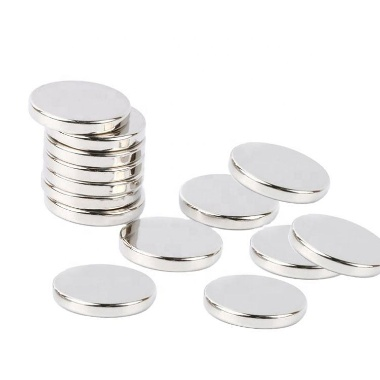
A single flawless sample can quietly hide an unstable process. One unit that passes every inspection may look impressive, but it doesn't reveal what the rest of the run will do. When the next batch shifts in color, weight, fit, or performance, the cost shows up in returns, line stoppages, and extra sorting. Batch consistency closes that gap because it asks a more useful question: not “can we make one good piece,” but “can we make the whole run stay within the same narrow window.”
Most teams don't inspect every item by hand. They rely on patterns. A standout sample followed by drift creates false confidence and forces downstream checks to absorb the variation. Uniform output, on the other hand, makes handling, assembly, and packaging more predictable. It also signals that raw materials, machine settings, and operator methods are under control. When the tenth carton and the thousandth carton behave nearly alike, the sample stops being a lucky exception and becomes a normal result.
A perfect sample is a snapshot; consistency is the process itself. Buyers remember what they can rely on, not what they saw once. Prioritizing repeatable output reduces the need for heroic rework and makes future orders easier to plan, quote, and deliver. Over time, the brand value shifts from “this one looked great” to “every order arrives as expected,” which is the stronger promise in practice.
When Custom Magnetic Assemblies Actually Earn Their Cost
Standard magnets often look cheaper right up until they force a compromise. A custom magnetic assembly earns its cost when the mounting surface is irregular, the available space is awkward, or the required flux pattern cannot be achieved without adding brackets, shims, or secondary machining. Those workarounds have a way of erasing the initial savings.
Another trigger is environmental stress. High heat, chemical exposure, repeated impact, or a sealed mechanism can quickly demagnetize or corrode a generic part. In those cases, a tailored grade, coating, or encapsulated design stops being an upgrade and starts acting like insurance against field failures and late-stage redesigns.
The strongest financial case often comes from consolidation. When one custom assembly can replace multiple stock magnets, a pole piece, and a plastic housing, the piece price may rise while the installed cost falls. Fewer suppliers, fewer tolerance issues, and a single part that arrives ready to mount give the custom route a return that shows up on the production line rather than in a catalog.
Thermal Behavior Spec Sheets Rarely Mention
A single room-temperature thermal conductivity value hides how much that number shifts once a housing or bracket actually gets warm. Filled thermoplastics can move heat twice as easily along the polymer flow direction as across it, and moisture uptake can nudge readings enough to change a thermal simulation. The gap between two candidate materials on a datasheet often looks nothing like the gap at the upper end of the operating range.
The coefficient of linear thermal expansion gets the same compressed treatment. One average number does not describe a rib growing at a different rate than a thick boss, or a glass-filled grade expanding more in one axis than another. That mismatch builds constrained stress, sinks, and warpage that only appears after the part settles into a temperature cycle.
Repeated cycling is even less visible in published data. A resin can pass a short-term heat deflection test yet start forming microcracks where filler particles meet the polymer after a few hundred swings between cold start and peak load. Surface emissivity and contact resistance at joints rarely appear either, even though they frequently decide whether an enclosure sheds heat or cooks its internals.
Factory Clues That Point to Reliable Quality Control
Walk past a workstation and the first thing worth checking is whether measurement tools look like they are actually used. Calipers with worn grips, gauges stored without dust, and logbooks with entries in different handwriting usually mean people are taking readings throughout the day instead of just before an audit.
Another signal shows up in how a plant handles off-spec parts. Reliable operations tend to have clearly marked quarantine areas, physical tags describing the defect, and bins that are not overflowing. If rejected material sits around without dates or owner names, that is often a sign that problems are being parked rather than solved.
Maintenance and traceability marks also tell a quiet story. Look for torque wrenches with calibration stickers inside their validity window, raw material labels that can be traced back to a lot number, and small samples kept from recent production runs. These details rarely appear in polished marketing copy, but they reveal whether quality control is a daily habit or a checklist performance.
Hidden Cost Drivers in Tolerances and Coatings
Tolerances look like a design-level decision until they collide with process capability. A shift from ±0.1 mm to ±0.05 mm may appear minor on a print, but it can push a stable turning operation into mandatory grinding, add in-process gauging, and force 100% inspection where spot checks previously worked. The real cost rarely shows up in the quote; it accumulates in longer cycle times, higher scrap on borderline setups, and tooling that wears past the acceptable band within a single shift.
Coatings carry a similar pattern. A spec change from standard anodizing to a high-build fluoropolymer layer might solve one wear or corrosion issue, yet it changes clearance fits, masks threaded holes unevenly, and leaves edges prone to chipping during assembly. Rework often means stripping the coating, re-masking, and re-coating—costs that are absorbed into overhead rather than traced back to the original coating call-out.
Worse, both tolerances and coatings interact. Tight bores paired with thick coatings can require post-coat honing; dimensional checks before coating become meaningless if the film thickness varies by a few microns. Teams that track only piece price miss these interactions until they appear as delayed first articles, concession requests, or a batch held at incoming inspection with no obvious defect.
FAQ
Look at how they handle material traceability and batch consistency. A good shop can tell you the exact grade, coating, and dimensional tolerance for every shipment, and they will send you the actual test data rather than just a generic datasheet.
Yes. If your product leans toward compact, high-output designs, you want a company that works with neodymium grades like N42 or N48 and understands how temperature ratings affect field strength. For larger, budget-sensitive drivers, a ferrite specialist with stable Y35 supply can be more useful.
Ask how they measure flux density across the gap and whether they can adjust chamfers, plating thickness, or pole geometry without being handheld. If they talk in terms of BL curves, demagnetization risk, and voice coil clearance, that is a good sign.
Often yes, but you need to confirm their grinding and machining capabilities early. Some companies only want to sell stock rings or blocks, while others will hold a few hundredths of a millimeter on custom arcs or stepped magnets.
At minimum, ask for magnetic flux, coercivity, and dimensions on samples from the actual production run. For coated parts, a salt spray test report tells you more than a visual check. If they push back on sharing those, move on.
Quite a bit. Speaker magnets often sit in humid or heat-cycled environments. A supplier that offers nickel, epoxy, or multi-layer coatings and can explain the trade-offs between adhesion, thickness, and gap clearance is worth holding onto.
They can range from a few weeks for standard shapes to several months for custom tooling and coatings. Ask for a clear breakdown of die preparation, trial runs, mass production, and shipping instead of a vague promise.
Yes, but make the sample request specific. Ask for parts from the same production line and grade you will actually buy, and test them in a real prototype rather than only checking them on a bench. A company that understands this will not treat samples as an afterthought.
Conclusion
Choosing a speaker magnet supplier starts with healthy skepticism about grade claims. A datasheet may say N52, but actual flux output at operating temperature can be a different story; request demagnetization curves instead of relying on a label. Then weigh batch consistency. A flawless sample is easy for any factory to ship, but the real test is whether the next several thousand units hold the same magnetic and mechanical window. Custom magnetic assemblies only earn their cost when they solve a genuine acoustic, shielding, or mounting constraint—not because a catalog part is slightly cheaper. If custom work appears on the quote, ask how many similar jobs the vendor has actually completed.
Thermal behavior is another blind spot. Many specification sheets quote room-temperature values, but voice coil heat can reduce flux more than expected. Ask how the magnet performs after repeated cycles near the upper end of your thermal budget. Factory clues often reveal more than certificates: look at how raw material is stored, whether instruments are calibrated on a set schedule, and whether the line keeps batches clearly separated. Finally, watch hidden cost drivers. Tighter tolerances and less common coatings can quietly inflate unit price and lead time. A supplier that explains those trade-offs clearly, rather than burying them in the quotation, is usually the safer long-term partner.
Contact Us
Contact Person: Kelvin Lo
Email: [email protected]
Tel/WhatsApp: 0769-88561131
Website: https://dawamagnetic.com/