

Insole Solutions for Targeted Arch Support and All-Day Comfort
2026-09-04
Most people don’t think about their arches until the ache sets in. Then every step feels like a reminder that something’s missing. That’s where targeted arch support steps in—not just another layer of foam, but a precise lift that follows your foot’s natural curves for all-day comfort. YONGFENG builds its insoles around that principle, pairing biomechanical alignment with materials that hold up from your first step to your last. Here’s what to look for and why it matters.
Arch Support That Moves With You, Not Against You
Most arch supports feel like rigid braces—they lock your foot in place and fight your natural stride. That constant resistance can cause fatigue, soreness, and a stiff walking pattern. But what if support adapted to you instead of forcing you to adapt to it?
This design moves with your foot through every phase of the gait cycle. The material flexes as your arch lowers and rebounds as it lifts, providing just enough lift without restricting motion. The result is a seamless transition from heel strike to toe-off, giving you stability without the stiffness.
You’ll notice the difference within the first few steps—less pressure on your heels, more energy return, and a sensation of walking on a custom-molded surface that responds to your movement. It’s support that feels like a natural extension of your foot, not a corrective device.
Why Most Insoles Quit Before Your Workday Does
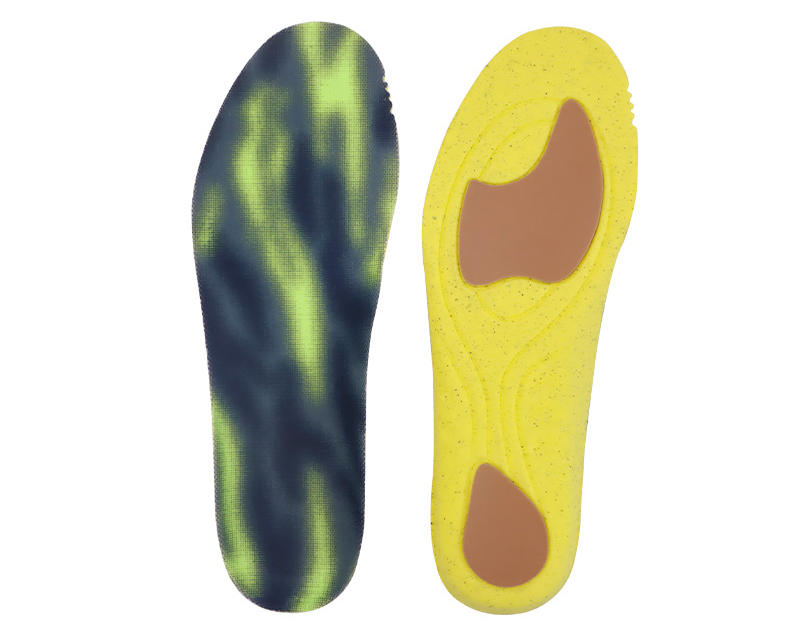
Most insoles start strong with a soft, bouncy feel that fades by mid-afternoon. The foam compresses under repeated heel strikes, losing its ability to cushion and support. Once that layer flattens, your feet take the full brunt of every step, and fatigue sets in long before quitting time.
The real problem is that standard insoles are built for light use, not eight hours of standing or walking on hard surfaces. They lack dense support structures that resist compression over time. Instead, the materials soften quickly, and the arch collapses just when you need it most. That's why the early-morning comfort turns into late-day soreness.
A better approach is to look for insoles with stiffer cores and layered construction that holds its shape under continuous pressure. Without that kind of durable support, even a pricey insole can give up halfway through your shift. The key is matching the insole's density and rebound to the actual demands of your workday, not just the first ten steps after you put them in.
Low-Profile Lift for Shoes That Weren't Built for Insoles
Most dress shoes, loafers, and casual sneakers come with glued-down footbeds that leave almost no vertical space. A standard heel lift or thick orthotic just forces your foot upward until the laces or vamp dig in. That’s where a low-profile lift earns its place—it adds height without crowding the toe box or making the heel slip.
The trick is in the taper. Instead of a uniform slab, these lifts slope from roughly 3mm at the heel to nearly nothing at the forefoot. The base is often a dense but flexible EVA or cork composite, topped with a non-slip fabric so the foot stays anchored. Because they’re thin enough to sit over an existing insole, there’s no need to rip out the factory lining or size up.
For shoes that already fit snugly, this kind of lift works best when you test it with thinner socks and re-lace from the bottom up. It won’t turn a shallow shoe into a deep orthotic shell, but it can correct a slight leg-length difference or give a subtle height boost without the telltale bulge.
The Connection Between Heel Strike and Arch Fatigue
When your heel hits the ground first, the impact doesn't stop at the calcaneus. A rapid loading wave travels up the leg, but before that, the foot's arch has to cope with a sudden stretch. The plantar fascia and intrinsic muscles are designed to absorb this shock by lengthening under control. If the heel strike is too forceful or happens without enough ankle dorsiflexion, that controlled lengthening turns into a sharp yank. Over thousands of steps, the arch tissues start to fatigue, losing their spring and leaving you with a dull ache along the medial side of the foot.
This fatigue often shows up later in a run or after a long day on hard surfaces. What begins as a slight heaviness in the arch can progress to tenderness near the heel or the ball of the foot. The problem isn't simply that the heel touches down; it's how abruptly the foot rolls from that initial contact into midstance. A heavy heel strike forces the arch to flatten more quickly than it can handle. Runners who overstride tend to land harder on the heel, and that extra braking force translates directly into extra work for the arch-supporting structures.
Changing footwear or cushioning can mask the impact for a while, but the underlying mismatch between heel strike pattern and arch capacity remains. Strengthening the foot's intrinsic muscles, shortening stride slightly, and allowing the ankle to flex before contact can reduce the strain. When the heel touches down with less braking and the forefoot becomes involved sooner, the arch no longer has to act as the sole shock absorber. That shift often eases the deep, tired feeling that many people mistake for flat feet or poor arch support.
Sweat, Friction, and How Long Insoles Really Last
Most people assume a quality insole will last as long as the shoe itself, but that's rarely true. Sweat is the silent killer here. Your feet release roughly half a pint of moisture per day, and that salty liquid seeps into the foam or gel layers, breaking down the polymers slowly. By the time you notice a loss of bounce or a faint odor that won't wash out, the material has already lost much of its rebound.
Friction works in tandem, though in a different way. The ball of the foot and the heel cup take the most abrasive wear from every step. Over time, the top fabric layer pills, thins, or even separates from the cushioning underneath. In heavy-use scenarios—think daily walking or trail running—this friction can compress the arch support by 20-30% within a few months, leaving your foot sliding around more than it should.
So how long do insoles actually last? A good rule of thumb is 300 to 500 miles for athletic insoles, or 6 to 12 months for everyday wear. But if you sweat heavily, work on your feet all day, or weigh more than average, cut that estimate in half. Watch for flattened zones, cracked edges, or a shoe that suddenly feels roomier. Those are the real signs it's time to swap them out, not just the date on the box.
A Two-Minute Test to Find Your Arch Type at Home
Grab a shallow pan, pour in just enough water to cover the bottom, and set a sheet of heavy paper or a brown grocery bag on the floor. Step one bare foot into the water, let the excess drip for a second, then plant that foot firmly on the paper. Hold still for a couple of seconds, then step off and do the same with the other foot. The whole thing takes less than two minutes, but the imprint you leave behind tells you more than most shoe store scanners.
Now look at the shape between the ball of your foot and the heel. If the middle section bulges out nearly as wide as the rest of the print, you're likely flat-footed. A sharply curved inward gap that connects only a thin strip to the forefoot usually points to a high arch. Somewhere in between, with a moderate curve and a solid but not oversized contact patch, sits the neutral arch most people fall into.
Keep in mind that this test reads the foot at rest, not how it behaves when you run or stand for hours. If one foot leaves a flatter mark than the other, that asymmetry is worth noting before your next shoe purchase. Old newspapers work fine, and you can toss the whole thing in the recycling when you're done.
FAQ
They're shaped to match the natural curve of your arch rather than being just a thin layer of foam. The support is concentrated under the arch and metatarsal area, which helps distribute pressure more evenly across the foot instead of letting it pool at the heel or ball.
Yes, they hold up well during movement. The arch support stays firm without feeling rigid, and the top layer absorbs some of the impact. If you're doing lateral movements or heavy lifting, you might feel a bit more stability under the midfoot too.
Most people adjust within three to five days. Start with a couple of hours a day and gradually increase wear time. Your arches may feel a mild stretch at first, which is normal as the muscles and ligaments adapt to being supported rather than collapsing inward.
They are low-profile enough to slip into most dress shoes, loafers, and casual sneakers without crowding the toe box. If your dress shoes have a removable liner, take it out first to create more room. For very shallow shoes, you can trim the toe edge slightly with sharp scissors.
Many people with plantar fasciitis find relief because the raised arch reduces tension on the plantar fascia ligament. That said, they're not a medical device. If the pain is sharp or persistent, it's worth checking with a podiatrist before relying on insoles alone.
The base is a semi-rigid EVA foam that provides structure without adding much weight. The top fabric is a breathable mesh that wicks moisture, so your feet stay cooler than with gel or leather-topped inserts. They're also easy to wipe down with a damp cloth.
Yes, they're not glued in and hold their shape when transferred. If you switch between shoes of the same size, it's easy. The only issue is if one shoe has a much tighter fit, in which case you might want a second pair trimmed to that shoe's outline.
With daily use, expect about six to nine months before the cushioning starts to flatten. If you're on your feet all day for work, you might notice the arch support feeling less springy after four or five months. A good test is to place them on a flat surface—if the arch area touches the table, it's time for a new pair.
Conclusion
Most arch supports feel like they're fighting your foot by mid-afternoon. The problem isn't the idea—it's the execution. A rigid plastic shell that doesn't flex with your metatarsals creates pressure points, not relief. The better approach uses a layered, adaptive core that shifts as you move, giving you firm push-off support without restricting natural flexion. That's also why low-profile options matter: your favorite dress shoes or flat-soled sneakers weren't built with a half-inch of foam in mind. You need a solution that slips in without crowding the toe box or altering your gait. When the insert disappears under your foot, you stop thinking about it—and that's when all-day comfort actually happens.
Heel strike isn't just a running term; it's the first domino in daily arch fatigue. If your heel lands hard and your arch collapses slightly with every step, you're asking a small band of tissue to do a structural job. Targeted arch support should begin at the heel cup, guiding the calcaneus into a neutral position so the plantar fascia isn't yanked taut. Then there's the moisture issue: sweaty feet and constant friction break down cheap foam within weeks. Look for a top layer that wicks and a base that keeps its rebound after months of compression. Finally, figure out your arch type at home—wet your foot, step on a paper bag, and read the imprint. Flat, neutral, or high, that two-minute test tells you whether you need a deeper heel cradle, a metatarsal pad, or a modest lift. That's not guesswork; it's the difference between another pair of insoles in the drawer and one you actually forget you're wearing.
Contact Us
Contact Person: Mr Deng
Email: [email protected]
Tel/WhatsApp: +86-18926872657
Website: https://www.uniyongfeng.com/