

MCM Interior Wall Covering Recommendations for Modern Interiors
2026-09-01
A flat, sterile wall can drain the life out of a modern room. MCM interior wall coverings flip that script, offering nuanced texture and a soft, matte depth that paint alone can't match. But not every MCM product is worth your time. In this guide, we'll cut through the noise and share field-tested recommendations—including the surfaces we trust from Magic Stone—so you can plan a contemporary interior that feels intentional, not generic.
Slatted walnut panels that keep sightlines clean
Slatted walnut panels are a quiet architectural move that keeps horizontal and vertical lines from tangling. The gaps between each strip let the eye travel without interruption, so a long hallway or open living area doesn't feel sectioned off. Instead of solid wood that stops a view, the slats suggest a boundary while letting daylight and air drift through.
What makes this work is the rhythm of the walnut itself. The grain runs in one direction, and the repeat of evenly spaced slats creates a visual cadence that reads as intentional rather than busy. Shadows fall between the strips in thin, predictable bands, which adds depth but never clutter. That restraint is why the panels help an interior feel composed even when furniture or art nearby is more expressive.
In practical terms, the slats also soften sound and define zones without putting up a hard wall. A room can stay visually open while still gaining a bit of privacy or acoustic calm. The walnut darkens slightly with age, so the panels don't fight for attention; they settle into the background and keep the sightline clean by doing less, but doing it well.
Burnished plaster with a trowel's visible drag marks
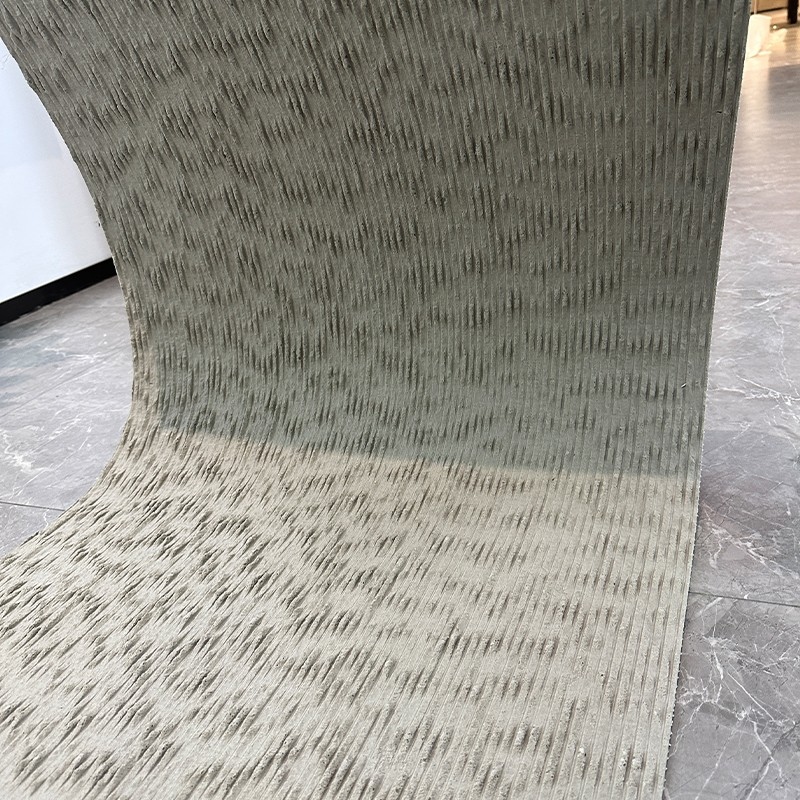
The surface holds a soft, compressed sheen from repeated passes of the steel trowel. Those passes leave behind faint, parallel grooves—some deeper, some barely grazing the plaster—so the wall never reads as mechanically flat. Light catches the high points and slips into the low marks, making the texture shift as you move past it.
Because the drag marks follow the plasterer's actual hand movements, no two sections are alike. This unpredictability gives the finish a grounded, weathered presence without feeling decorative or forced. It pairs naturally with raw wood, leather, and unpolished stone, but can also soften the starkness of crisp modern lines.
Cork tiles that quiet a room and take a pushpin
Cork has a strange double life: it softens the clatter of a busy room without making the walls feel dead. Tap a section of these tiles and you'll notice how the sound drops off instead of bouncing. It's the same natural structure that lets a pushpin slide in and hold a photo, a note, or a half-finished list without leaving a lasting scar.
Most acoustic panels ask you to choose between function and everyday use. These don't. The surface gives just enough resistance to keep pins from wobbling, yet it recovers once you pull them out. Over time the wall keeps its texture and color instead of turning into a pincushion of holes.
Install a few around a desk or across a shared wall and the change is more felt than heard - conversations stop carrying, footsteps lose their edge. And when you need to pin up a sketch or a reminder, the wall already accepts it. No tape, no damage, no extra thought.
Linen panels with raw, fringed edges
There's a quiet confidence in leaving linen unfinished at the edges. The loose threads catch light and air, softening the panel's geometry and giving each piece a hand-touched rhythm no machine hem could imitate. Over time, these raw fringes shift and settle, recording the life of the room in small, almost invisible ways.
Rather than hiding the weave, the fringed margin draws attention to it—the slight irregularities in thread thickness, the uneven pull where the fabric was cut. That visible honesty makes the panel feel less like a manufactured product and more like a length of cloth chosen for a specific wall, a specific window, a specific hour of afternoon.
For anyone tired of crisp, over-finished interiors, this edge treatment offers a soft counterpoint. It pairs naturally with worn wood, plaster, or raw clay, but it also brings a needed looseness to sleek modern rooms. Care is simple: allow the fringe to do what it wants, occasionally trimming only the most wayward threads with sharp scissors.
Honed stone veneer cut as thin as a paperback
Run your fingers over this veneer and you'll swear it's not stone at all. The honed surface has a soft, matte grip that feels more like thick paper than quarried rock. At just a few millimeters thick, each sheet flexes ever so slightly under pressure, letting you wrap corners and curves that would crack a traditional slab. The cutting process removes all the weight but none of the character—every natural fissure, mineral streak, and subtle tonal shift stays intact, just flattened into an almost impossibly slender profile.
Because it arrives in sizes no bigger than a hardcover novel, you can install it with simple adhesive and a utility knife. No heavy machinery, no dust-choked cutting station, no extra framing to bear the load. Designers tend to use it where real stone was never practical: lining the inside of a bookshelf, cladding a curved kitchen island, or wrapping an elevator lobby in a whisper of slate. It fools the eye from two feet away, and only the faintest seam reveals the trick.
Wallpaper that looks screen-printed, not rolled
A screen-printed wallpaper has a dry, matte surface where the color seems to sit on top of the paper rather than soaking into it. You can usually spot faint squeegee drag lines, minor shifts between color layers, and tiny variations in ink density around the edges of a motif. Those imperfections aren’t flaws; they’re what make the wall feel like a hand-pulled print instead of a machine-coated sheet.
Roller-printed papers tend to lay down a thin, even film that can look glossy or plasticky, especially under side light. Screen-printed versions swap that uniformity for a slightly chalky, pigment-rich finish. The background often has a soft grain or tooth, while the printed shapes keep their edges crisp but not laser-sharp. This gives the pattern more depth without adding texture you can feel.
If you want that look, pay attention to inks and substrate. Water-based pigments on a heavy matte stock usually get closest. Avoid anything labelled “vinyl-coated” or “peel-and-stick” if you’re after the true screen-printed character. In a room, this style pairs well with raw wood, linen, and unglazed ceramics because it shares the same quiet, tactile quality.
FAQ
MCM typically refers to Metal Composite Material, a sandwiched panel with thin metal skins bonded to a core. For interiors, it is valued for its clean lines, durability, and the ability to create flat, seamless surfaces. It is not a coating or paint, but a rigid panel system.
Because the panels provide a crisp, monolithic appearance that paint cannot match, especially when large expanses are involved. They also resist scuffs and moisture better than drywall, and they can incorporate integrated reveals and shadow gaps that emphasize a contemporary aesthetic. The material's rigidity means fewer waves or imperfections over time.
Yes, as long as the core is rated for moisture exposure. Many manufacturers offer moisture-resistant MCM panels designed specifically for wet zones. They will not swell or delaminate the way wood-based substrates can, making them a practical choice for steam-prone environments when properly sealed at the edges.
Look for wood-grain finishes, matte neutrals, or subtle metallic brushed tones. Pairing MCM with soft textiles, warm lighting, and organic shapes like rounded furniture helps balance the panel's sleekness. Avoid high-gloss mirror finishes unless you intentionally want an ultra-sleek, gallery-like effect; a low-sheen lacquer or textured powder coat tends to feel more inviting.
They require a reasonably flat substrate because the panels are rigid and will telegraph major irregularities. Minor unevenness can be handled with shims or a furring system, but severely wavy walls should be leveled first. Many installers use a lightweight metal or wood grid to create a perfectly planar surface, which also allows for acoustic backing or cable management.
Routine cleaning is simple: a soft cloth or sponge with a mild, non-abrasive detergent and warm water. Avoid steel wool, acidic cleaners, or solvent-based products because they can dull or stain the finish. For stubborn marks, a plastic scraper or gentle rubbing compound approved by the panel manufacturer can be used. No waxing or sealing is typically required for interior applications.
Overusing the same finish across every wall, which can make a space feel sterile or showroom-like. Better to treat MCM as an accent material, perhaps on a feature wall, fireplace surround, or built-in cabinetry front, while allowing other surfaces to provide visual relief. Also, ignoring the panel joint pattern can lead to awkward seams; plan the layout so joints align with doors, windows, and architectural features.
MCM panels themselves are dense and reflective, so they can increase reverberation in large or sparsely furnished spaces. To manage sound, combine them with acoustic backer boards, perforated MCM options, or introduce soft materials like area rugs, drapes, and upholstered panels in the same room. This way you retain the crisp look without sacrificing acoustic comfort.
Conclusion
Walnut slats set the tone without shouting. They run vertically, spaced just enough to let the wall breathe, and their matte finish keeps sightlines from breaking apart. Next to them, burnished plaster reads as a quiet handmade gesture—every pass of the trowel leaves a faint drag mark that shifts with the light. It is the opposite of a flat painted surface. For rooms that need to absorb sound, cork tiles do the job without turning the wall into a bulletin board, though a pushpin still goes in easily and leaves almost no trace when pulled. Their warm brown speckle works better than expected against both pale oak and dark steel.
Linen panels bring a softer edge, literally. The raw fringe at each seam catches air and makes the wall feel less permanent, more like furniture upholstery stretched tight. Honed stone veneer, cut no thicker than a paperback, offers the weight of limestone or travertine without the structural hassle; its matte face avoids the polished glare that makes stone feel cold. And when pattern is needed, the right wallpaper has the slight misregistration of a screen print—ink sitting on the surface with tiny variations from one repeat to the next, never the perfect roller-printed uniformity you see in most rooms. Together these coverings let a modern interior stay warm, tactile, and a little imperfect.
Contact Us
Contact Person: Vito
Email: [email protected]
Tel/WhatsApp: 86 13088879266
Website: https://www.magicstonemcm.com