

Medium Voltage Switchgear Company Guide to Choosing the Right Partner
2026-08-24
Most medium voltage switchgear selection guides drown you in ratings and forget the real question: will this partner still be there when the warranty ends? This guide flips that lens. We’ll walk through what to probe before signing—from hidden lead time risks to service responsiveness—and why Deepwill approaches partnerships as a long-term reliability commitment rather than a one-time sale.
Is Their Engineering Team Actually Familiar With Your Medium Voltage Switchgear Environment?
Medium voltage switchgear is not a catalog item you can drop into any building and forget. It operates inside substations, generating plants, and heavy industrial sites where heat, conductive dust, and available fault current put real stress on bus connections, cable terminations, and protective relays. An engineering team that has only designed low-voltage panels or worked from generic reference drawings will often underestimate how much the physical environment shapes the final design. Clearances, arc-resistant construction, and even the placement of vents and louvers change meaningfully when you move from 480 V to 5 kV or 15 kV.
A supplier with genuine medium voltage experience tends to ask sharper questions before any drawings are issued. They want to know how your grounding system is configured, whether the switchgear will be front-accessible or rear-accessible, what the actual available fault current is at the incoming terminals, and how your operators handle racking and breaker removal. If those questions never come up and the conversation stays on price per section or delivery weeks, that is usually a sign the engineering team has not been inside many real medium voltage switchgear rooms.
The easiest way to verify their familiarity is to give them one concrete problem from your site. Ask how they would handle a tie-breaker transfer with momentary paralleling under your existing protection scheme, or how they would fit draw-out breakers into a room with limited working clearance while still meeting arc flash boundaries. A team that lives in this environment will give you a plain-language answer with trade-offs. A team that does not will stall, hide behind the spec, or promise that the factory default will handle it.
How Do They Handle Non-Standard Busbar and Protection Requirements?
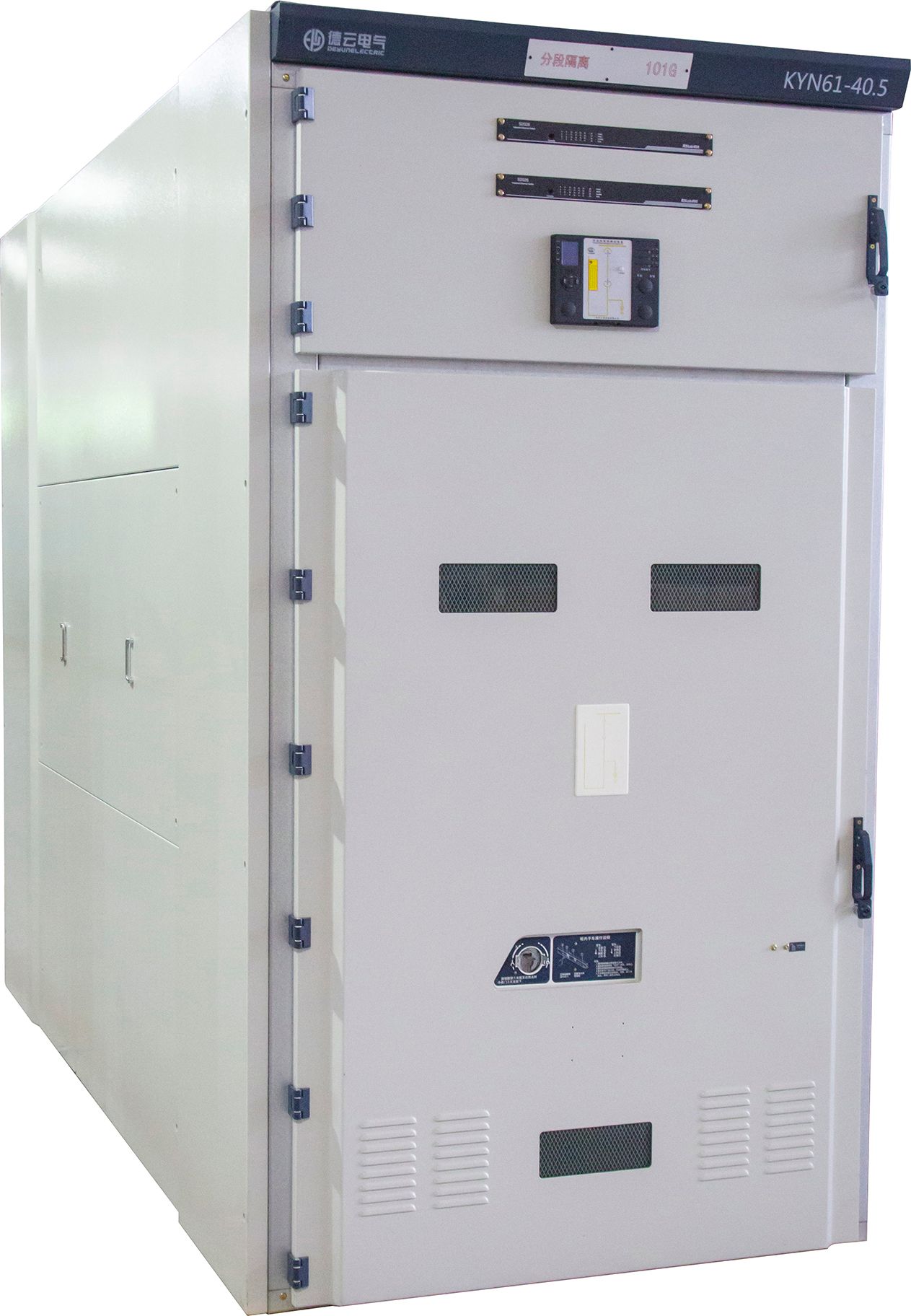
Non-standard busbar geometries and protection demands rarely fit a catalog page. They get tackled by first mapping the actual fault currents, thermal stress points, and clearance constraints unique to the site, not by forcing a pre-sized copper run into place. That means bending radii, joint overlaps, and insulation coordination are recalculated from the specific short-circuit levels and ambient conditions, rather than borrowed from a similar project. The result is a busbar layout that matches the physical space and the electrical stress together, instead of one being compromised for the other.
For unusual protection requirements—say, selective coordination with legacy breakers or arc-flash limits that sit below standard thresholds—the approach shifts to staged verification. Current transformers, relay settings, and busbar diff protection zones are arranged around the actual conductor geometry, including any mixed material joints or reduced cross-sections. Where off-the-shelf protective devices don't line up cleanly, the design uses measured impedance values and thermal models to set trip curves that still isolate faults quickly without nuisance tripping. This keeps the non-standard busbar from becoming a weak point that only gets noticed after an incident.
Can They Show Internal Arc Test Results That Match Your Installation, Not Just a Generic Certificate?
A test certificate means next to nothing if the assembly it describes isn't the one sitting in your switchroom. Ask the supplier to identify the exact enclosure size, busbar arrangement, cable entry side, and termination layout covered by the internal arc report. Even small changes, like moving the cable box from top to bottom or shortening the arc chamber, can change pressure relief behavior enough to invalidate the original result.
It's worth pushing for the actual test documents rather than a cover page or a family certificate. Look for the model designation, arc current, arc duration, and the exact physical orientation used during the test. If your installation puts the gear against a wall, but the tested arrangement assumed free-standing access from all sides, the certificate is effectively a different product.
Also confirm how the doors, vents, and fasteners in your order compare with the tested unit. Internal arc testing is highly sensitive to door latching, gasket compression, and vent opening area. A generic certificate that lists a broad product range rarely captures those details for your specific configuration, so the only credible evidence is a report where the drawings match the hardware you are buying.
What Does Their Post-Commissioning Support Look Like When Something Goes Wrong?
When a system trips offline at 2 a.m., the real test isn't the installation—it's whether the vendor picks up the phone. Some firms route you to a generic ticket queue with a 48-hour response; others have an engineer on the line who already knows your site layout. Ask for a written escalation path before signing, not just a warranty certificate. The best support often comes from the same commissioning team sticking around for the first month rather than handing you off to a call center.
Look for concrete numbers: guaranteed response windows, on-site arrival times, and whether emergency parts are stocked locally or shipped from overseas. A vendor that logs every post-commissioning fault and shares the report with you is signaling they treat failures as data, not excuses. If they hesitate to define what "urgent" means or can't name a single person accountable after handover, that silence will cost more than the hardware.
Also check how they handle repeat faults or design gaps found after startup. Do they send a field technician with root-cause authority, or do you end up re-explaining the problem to a different junior rep each time? Strong support includes a feedback loop into engineering, so a fix on your unit becomes a permanent revision for the next one. Request a sample incident report from a past job—it reveals more than any sales pitch.
Do Their Past Projects Mirror Your Load Profile or Just Their Sales Brochure?
A glossy lineup of completed installations can look convincing until you cross-check the load shapes. If their past work skews toward steady, predictable demand and your facility runs sharp morning peaks with afternoon lulls, that brochure is answering a question you never asked. The mismatch usually hides in plain sight: similar capacity ratings but wildly different duty cycles, ambient conditions, or parasitic loads.
Ask for interval data from a project that actually resembles yours—not just the same industry, but the same ramp rates, minimum baseload, and seasonal swings. A vendor who has only handled flat commercial profiles will struggle when your compressors cycle every few minutes and your demand charges spike at 6 a.m. You want to see how their solution behaved when the real load deviated from the modeled one, not when it sat in a perfect test environment.
The point isn't to dismiss polished case studies; it's to separate evidence from decoration. Past projects that mirror your load profile will include unflattering details: occasional overload alarms, recalibration after commissioning, adjustments to setpoints. Those are the files worth reading. If all you're handed is a sales brochure with smiling site managers and a single kW peak, you're looking at marketing, not a mirror.
How Transparent Are They About Spare Parts Availability and Long-Term Costs?
Spare parts transparency varies more than most buyers expect. Some brands publish clear parts lists and projected wear-item costs before you even ask, while others keep that data locked behind dealer portals or vague “contact us” pages. A quick test is to request a quote for common consumables—filters, seals, bearings, or printheads—and see how long it takes to get a straight answer. Delays or roundabout replies often signal that long-term ownership costs will be harder to predict.
Long-term cost clarity matters just as much as the initial price tag. The most helpful manufacturers provide estimated service intervals, average part lifespans, and even calculator tools for total cost of ownership. If a company avoids publishing this information or bundles it into paid service contracts, that is a red flag. In practice, buyers who push for written maintenance schedules and spare part price lists before purchase tend to face fewer surprises later.
Overall, transparency here is a strong indicator of how a company treats customers after the sale. Brands that openly share parts availability and cost projections usually have confidence in their supply chain and support network. Those that do not often shift the burden onto the buyer, leaving you to discover hidden costs only after a component fails. Asking the right questions early can save significant money and downtime.
FAQ
A dependable partner gets involved long before the order is placed. They ask about your fault levels, ambient conditions, maintenance routines, and future expansion plans instead of pushing a standard catalog. The real difference shows up later: they keep as-built drawings current, respond to emergency callouts without hesitation, and don't disappear after commissioning.
It's one of the few things you should never skip. Routine tests like power frequency withstand and partial discharge testing catch assembly mistakes before they reach your site. If a manufacturer tries to reduce testing scope or offers only type test certificates from an unrelated design, treat that as a major red flag.
Look beyond the sales office count. Ask whether they stock critical spares locally, how many field engineers cover your region, and what their average response time is for breaker failures. A partner with a warehouse thirty minutes away is far more valuable than one with a glossy brochure and a call center three time zones over.
It matters when your site has unusual constraints—restricted room height, high altitude, corrosive atmosphere, or specific protection relay preferences. A strong partner will modify busbar layouts, enclosure ratings, and control schemes without treating every change as a special project that doubles the lead time.
Request a sample O&M manual before signing. Check whether they provide genuine spare parts lists with clear ordering codes, not vague references. Also ask how they handle obsolete components ten years down the line. A partner who can retrofit or cross-reference older breakers proves they care about the equipment's entire life cycle.
Ask for contact details of installations that have been in service for at least five years—not just recent projects. Then call those operators and ask about nuisance trips, corrosion issues, and warranty claim handling. Site visits to operating installations reveal more than any polished presentation.
Because switchgear often sits on the critical path of a project. A partner who gives a vague '12 to 16 weeks' without clarifying design freeze dates may cause costly delays. You want someone who explains exactly which milestones trigger schedule changes and flags long-lead items like vacuum interrupters or protection relays early.
Increasingly, protection relays and communication modules are network-connected. A trustworthy partner should supply equipment with hardened communication protocols, support firmware updates, and provide guidance on segregating operational technology from business networks. A vendor that avoids the topic may leave you with a vulnerable substation.
Conclusion
Choosing a medium voltage switchgear partner goes far beyond scanning a brochure or trusting a generic compliance stamp. The real test starts with whether the engineering team has actually worked inside environments like yours—whether that means dusty mining substations, humid coastal plants, or aging industrial networks with unpredictable load steps. A partner who only quotes standard IEC or ANSI ratings will stumble the moment you mention non-standard busbar layouts, custom protection coordination, or breaker retrofits into existing cubicles. Ask for evidence: internal arc test reports that mirror your actual cable entry, switchgear orientation, and arc duration, not just a certificate from some unrelated configuration. If they can't produce that, they haven't earned the right to be called a partner.
Post-commissioning behavior separates true partners from transactional vendors. What happens on a Sunday night when a protection relay trips and no one can interpret the event record? A partner with a field service team that knows your switchgear topology will pick up the phone, not hide behind a ticket portal. Equally important is load profile honesty: if their past projects all served steady-state data centers while your site runs arc furnaces or frequent motor starts, their confidence means little. Finally, press them on spare parts. A partner who can show you a ten-year parts availability matrix, including obsolete component strategies and realistic long-term cost curves, is the one who sees your partnership as a responsibility rather than a one-time sale. These six questions, asked bluntly, will sort out the contenders from the rest.
Contact Us
Contact Person: Julion
Email: [email protected]
Tel/WhatsApp: 8617351370631
Website: https://www.deyunelectric.com