

Membrane Filter Press Fabrication: Expert Techniques and Process Insights
2026-08-07
Every great filtration system starts with precision engineering, but what truly sets a high-performance membrane filter press apart? At Sinou, the fabrication process blends advanced metallurgy with meticulous assembly techniques—often overlooked details that directly impact cake dryness and cycle times. Here’s a rare look into the expert methods that transform raw steel and polymer membranes into a workhorse of solid-liquid separation.
Selecting Advanced Polymers to Extend Membrane Filter Plate Life
Membrane filter plates operate under relentless conditions, facing aggressive chemical slurries, elevated pressures, and abrasive solids. Standard polypropylene plates often degrade prematurely due to chemical attack or fatigue cracking, especially when processing hot, acidic, or solvent-laden streams. Recognizing the specific failure mode is the first step—whether it’s swelling from organic solvents, embrittlement from oxidative chemicals, or mechanical creep at high temperatures. Advanced polymers address these weaknesses at the molecular level, offering tailored resistance that commodity materials simply cannot match.
The selection hinges on matching the polymer’s intrinsic properties to the process chemistry and thermal demands. For extreme acid or caustic environments, fluoropolymers like PVDF or ECTFE provide near-universal chemical inertia, while polyphenylene sulfide (PPS) excels in high-temperature aqueous applications up to 200°C. Where stiffness and dimensional stability matter most under heavy clamping forces, reinforced grades of polyetheretherketone (PEEK) or fiber-filled thermoplastics prevent warping and maintain seal integrity. Blends and copolymers can further fine-tune toughness, hydrophobicity, or thermal expansion, creating a bespoke solution that sidesteps the generic one-size-fits-all approach.
Beyond the base resin, surface modifications and processing techniques play a decisive role in plate longevity. Plasma treatments or fluorination can reduce fouling and ease cake release, cutting down on cleaning cycles that mechanically stress the plate. Optimized welding methods and uniform crystallinity from controlled molding prevent built-in stresses that later become crack initiation points. By viewing the filter plate as an engineered system rather than a simple consumable, operators can often double or triple service life, significantly lowering the total cost of ownership and reducing unplanned downtime.
Precision Welding Methods That Eliminate Microscopic Leak Paths
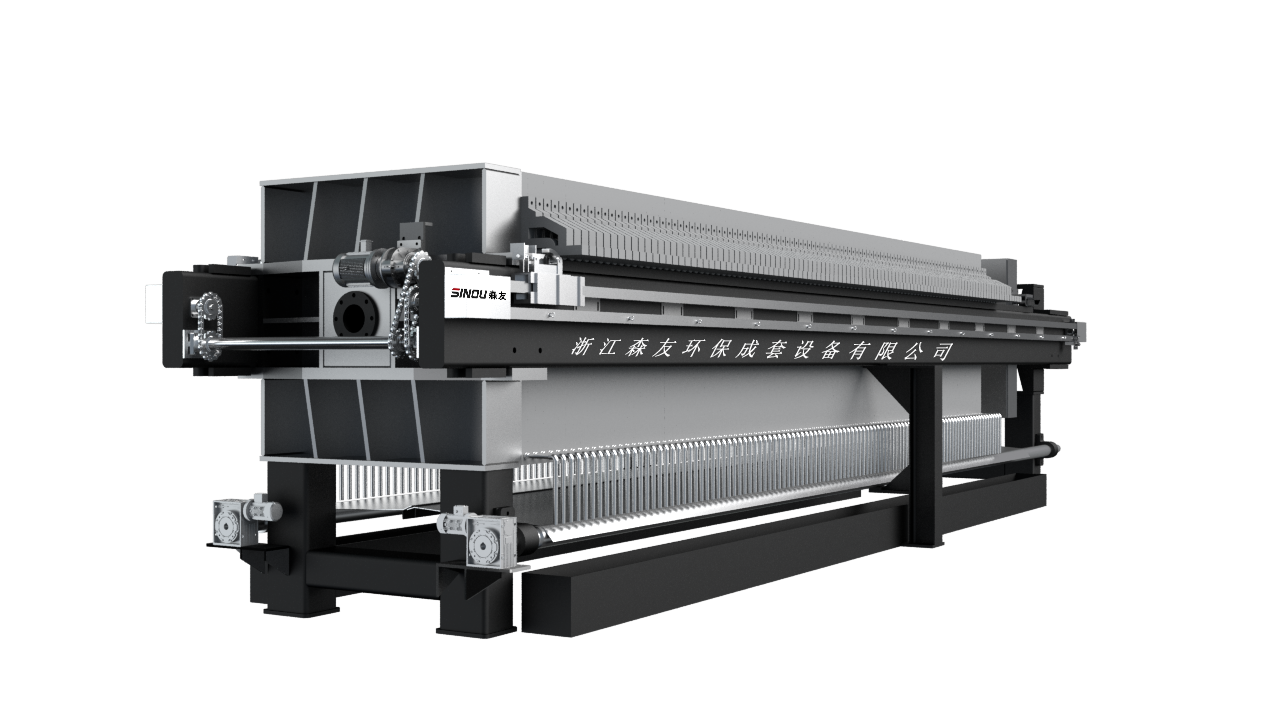
When components must operate in high-vacuum environments or contain aggressive fluids, even sub-micron channels can compromise performance. We rely on electron beam and laser welding techniques performed inside vacuum chambers, where the beam can be focused to a diameter smaller than a human hair. This level of control lets us create fusion zones that are fully dense and effectively erase the seam line, leaving no capillary routes for gas or liquid to travel through. The absence of filler material further eliminates the risk of foreign inclusions that could later become initiation points for micro-cracks.
In applications involving thin-walled vessels or heat-sensitive alloys, we intentionally synchronize pulse shaping with real-time melt pool monitoring. By adjusting peak power and duration on the fly, we achieve penetration profiles that exactly match the joint design while suppressing the formation of root porosity. This dynamic approach is especially useful when welding dissimilar metals, where differences in thermal expansion would otherwise create stresses that open up gaps during thermal cycling. The result is a hermetic seal that survives thousands of pressure fluctuations without degradation.
Post-weld verification goes beyond standard helium leak testing. We couple mass spectrometry with X-ray computed tomography at resolutions below 5 microns to map the internal structure of each weld. This allows us to confirm not just the absence of through-leaks, but also the integrity of the heat-affected zone. For critical assemblies, the combination of precise energy delivery and rigorous validation yields a true leak-tight condition that can endure for decades in service.
Hydraulic System Tuning for Uniform Slurry Distribution and Cake Dryness
Fine-tuning the hydraulic system begins with a careful analysis of pressure fluctuations across the filter press cycle. Small, often overlooked inconsistencies in pump output or valve response can lead to uneven slurry distribution, causing some chambers to pack prematurely while others remain underfilled. By adjusting the ramp-up curve of the feed pump and verifying the synchronization of all actuated valves, you can smooth out the flow into each chamber. This not only improves the initial distribution but also sets the stage for a more predictable filtration phase.
Once the slurry is evenly distributed, the focus shifts to the squeezing and holding stages where cake dryness is largely determined. Tuning the pressure relief settings and the timing of diaphragm inflation makes a noticeable difference. Instead of relying on a fixed setpoint, many plants now set a dynamic pressure threshold that adapts to the resistance felt by the cake. This prevents crushing the cake while still extracting enough moisture. A well-tuned hydraulic circuit will maintain a steady squeezing force without sudden drops, ensuring that the final cake breaks cleanly from the cloth with minimal moisture variation from one cycle to the next.
Beyond individual parameter adjustments, the real gains come from treating the entire hydraulic circuit as a single, responsive unit. Regular preventive checks—such as verifying accumulator pre-charge pressure and inspecting for internal leakage in cylinders—keep the system from drifting out of tune. Small air bleed maneuvers on the return lines can eliminate spongy response that plays havoc with closing and opening times. When these details are consistently attended to, the result is a remarkably uniform cake dryness and a distribution pattern that requires less operator intervention, even when feedstock characteristics shift slightly.
Tailored Plate Geometries to Handle Viscous and Abrasive Slurries
When dealing with viscous and abrasive slurries, the geometry of the plates isn't just a design detail—it's the key to keeping operations smooth and wear to a minimum. Standard flat plates often struggle as thick slurries cling to surfaces, creating uneven flow and rapid erosion in high-impact zones. By curving the plate contours to match the natural flow paths of the slurry, we can direct the material more efficiently, reducing the energy needed to move it and cutting down on the friction that grinds away at equipment.
Abrasion is the silent killer in slurry handling, especially where particles concentrate or change direction sharply. Instead of relying on thicker plates as a brute-force solution, we engineer the surface profile with recessed channels and gradually sloped transitions. These features let the heaviest, most abrasive particles travel within a protective layer of slower-moving fluid, while the plate itself deflects less of the wear. This approach not only extends service life but also keeps the plate lighter and more cost-effective over time.
Viscosity adds another layer of complexity—high-viscosity slurries can stall in sharp corners or over ribbed surfaces. Our tailored designs incorporate continuously sweeping radii and gentle expansion zones that prevent buildup without sacrificing structural integrity. Field tests have shown that even a subtle adjustment, like a 15-degree shift in the outlet angle, can dramatically lower pressure drops and eliminate the dead spots where slurries would otherwise thicken and harden. It's a shift from treating the plate as a passive barrier to using it as an active flow-shaping tool.
Automating Filtration Cycles with Real-Time Pressure and Moisture Feedback
Filtration systems often run on fixed timers, which can lead to inefficiencies like premature maintenance or unexpected clogging. By integrating real-time pressure and moisture sensors, the system dynamically adjusts cycles based on actual conditions rather than preset intervals. This approach not only extends equipment life but also reduces energy and resource waste, since filters are cleaned or replaced only when truly needed. The result is a more responsive process that adapts to varying loads without human intervention.
The moisture feedback loop adds another layer of precision. Instead of relying on pressure differentials alone, which can be influenced by factors like viscosity changes, moisture sensors directly measure the water content in the filter cake or effluent. This dual feedback ensures that filtration stops at the optimal dryness level, preventing over-drying or product loss. It’s particularly useful in industries like pharmaceuticals or food processing, where consistent output quality is critical.
Implementing such automation requires careful sensor placement and calibration, but the payoff is immediate. Operators see fewer alarms and manual checks, while the system logs provide valuable data for predictive maintenance. Over time, the self-adjusting nature of the cycles minimizes downtime and creates a more stable production environment, all without constant oversight.
Non-Destructive Evaluation Techniques for Verifying Chamber Integrity
Verifying the structural soundness of sealed chambers often leans on methods that leave the unit untouched and ready for service. Acoustic emission monitoring, for instance, listens for the faint stress waves released by growing defects under pressure. This technique works in real time, catching flaws as they evolve during a proof test without ever opening the vessel. It's a bit like diagnosing a fault in a running engine by the sounds it makes—subtle, but incredibly revealing when interpreted correctly.
For pinpointing the tiniest breaches, helium leak detection remains a trusted staple. The chamber is either pressurized with helium or surrounded by it while a vacuum is drawn inside; a mass spectrometer then sniffs out even minute traces of the escaping gas. The sensitivity here can be astonishing, detecting leaks far smaller than what a bubble test would ever show. Meanwhile, infrared thermography offers a different lens, mapping surface temperature variations to spot anomalies like uneven thermal signatures that hint at hidden voids or delaminations in chamber walls.
FAQ
In aggressive chemical conditions, material selection hinges on chemical compatibility, temperature resistance, and mechanical stress tolerances. Polypropylene is widely used for its broad chemical resistance and cost-effectiveness, but for highly oxidizing acids or solvents, PVDF or even stainless steel with specialized coatings might be required. The core consideration is ensuring the material's long-term integrity without leaching or degradation, often verified through immersion testing at elevated temperatures to simulate service life.
Uniformity in membrane plate thickness is achieved through precision-controlled injection molding or compression molding processes, with strict monitoring of melt temperature, injection pressure, and cooling rates. Any variation can cause uneven squeezing forces during filtration, leading to incomplete cake discharge, premature membrane wear, or even plate cracking. Laser scanning and ultrasonic gauging are often used in-line to detect deviations and adjust parameters instantly, ensuring each plate meets tight dimensional tolerances.
Membrane bonding typically uses hot plate welding for large flat surfaces due to its ability to create continuous, high-strength seams without additives. For intricate geometries, infrared welding or vibration welding may be used to avoid material displacement. Hot plate welding offers superior hermetic seals but requires careful temperature zoning to prevent warping, while infrared welding provides non-contact precision, reducing contamination risk but demanding exact joint design to achieve full bond strength.
Frame distortion is mitigated by stress-relieving heat treatments after welding and by using finite element analysis during design to identify high-stress points. During fabrication, automated welding with predefined sequences minimizes heat input asymmetry, and post-weld straightening or machining ensures flatness within 0.5mm per meter. Hydraulic pressure testing at 1.5 times the design pressure is standard to verify structural integrity before release.
Surface finish on membrane plates directly affects cake release and cleaning efficiency. A smooth, low-Ra surface reduces adhesion, but some textures can improve initial cake buildup or enhance filtration rate. Chemically etched or plasma-treated finishes are often applied to achieve a consistent micro-roughness without compromising chemical resistance. The optimization balances anti-stick properties with the need for easy cleaning, often verified through repeated filtration cycles with sticky or fine-particle slurries.
Validation starts with pilot-scale tests using client-provided slurry to determine optimal chamber depth, membrane pressure, and cycle times. Fabrication teams then build a single full-size plate set and run extended trials, recording moisture content, throughput, and membrane fatigue data. Non-destructive testing like computed tomography or dye penetrant inspection checks for hidden defects. Only after surpassing performance benchmarks and durability targets does the design transition to series production.
Conclusion
The fabrication of membrane filter presses today relies on a synergy of material science, precision engineering, and intelligent control to meet demanding industrial separation challenges. At the core of extended service life is the careful selection of advanced polymers that resist chemical attack and mechanical fatigue, allowing membrane plates to maintain elasticity and sealing integrity over thousands of cycles. This is complemented by welding techniques so refined that they practically eliminate microscopic leak paths, ensuring that no unfiltered slurry bypasses the cloth. Meanwhile, hydraulic systems are finely tuned not just for clamping force but to promote uniform slurry distribution across the entire plate pack, directly influencing cake dryness and cycle consistency. Adaptive control loops now leverage real-time pressure and moisture feedback to automate filtration cycles, reducing operator intervention and optimizing energy consumption without sacrificing throughput.
Underpinning these visible advances is a deeper focus on tailored plate geometries designed to handle the most difficult slurries—whether highly viscous, abrasive, or prone to blinding—by optimizing flow channels and reducing dead zones. Equally critical is the role of non-destructive evaluation techniques such as ultrasonic scanning or thermography, which are employed during both manufacturing and in-service inspections to verify chamber integrity and detect early signs of delamination or cracking. Together, these techniques represent a holistic fabrication philosophy where each component and process step is engineered to work in concert, pushing membrane filter press performance beyond traditional limits while ensuring reliability in the harshest operating environments.
Contact Us
Contact Person: HaiYan
Email: [email protected]
Tel/WhatsApp: +86 18957325588
Website: https://www.senyoubeton.com/