

Milled Parts Exporter Questions to Ask Before Placing Your First Order
2026-10-21
Ordering custom milled parts from a new exporter can feel like a leap of faith. You see the quote, the lead time looks fine, and the samples might even pass a quick glance—but what happens when tolerances drift or the material isn’t what you specified? Before you place that first order, a handful of targeted questions can separate a reliable partner from an expensive lesson. At BOYIKUN, we’ve seen too many buyers skip this step and pay for it later. Here’s what to ask your milled parts exporter before committing.
Who’s Actually Setting Up Your Job on the Shop Floor?
On most shop floors, the person dialing in your job isn't always the one who programmed it. A dedicated setup technician or an experienced machinist usually handles the fixturing, tool offsets, and first-article checks. They read the work order, pull the right jaws or collets, and make small tweaks until the process runs stable.
In smaller shops, that responsibility often falls on the operator running the machine. They might be expected to handle everything from loading raw stock to adjusting wear offsets mid-run. Larger facilities tend to separate the roles, with a setup crew prepping jobs ahead of time and handing off a ready-to-run process.
Either way, clear communication matters. If the setup notes are vague or the tool list is incomplete, whoever is at the machine ends up improvising. That's when cycle times slip and scrap appears. So before blaming the operator, check who actually touched the job last.
Can They Hold the Tolerance on a Bad Day, Not Just a Sample?
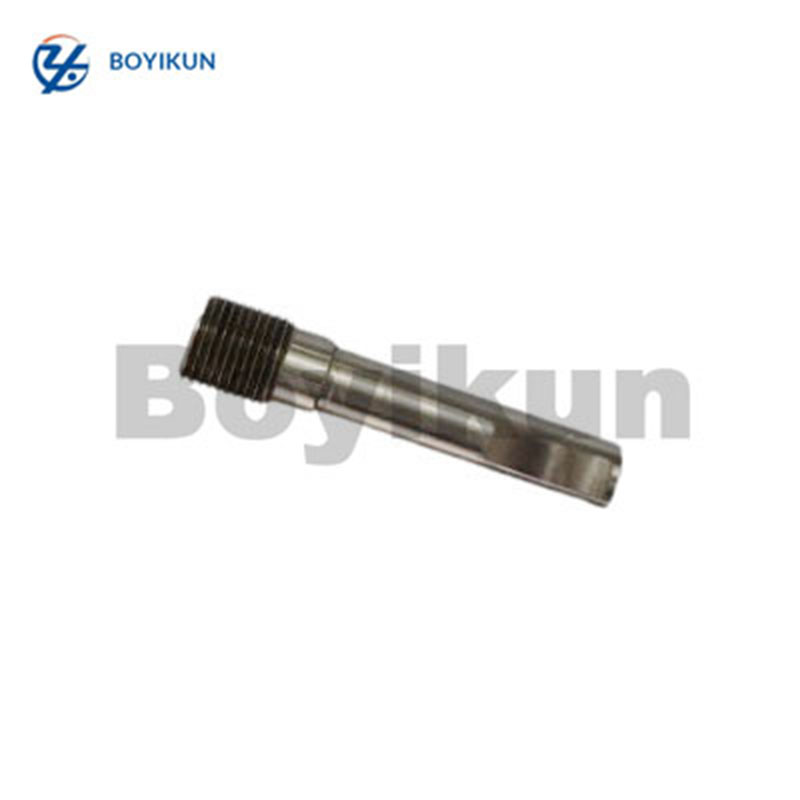
Anyone can cherry-pick a good part off the line. The real test of a supplier's tolerance claim is what happens on a Tuesday afternoon when the machine has been running since 4 a.m., the raw material lot is on the edge of spec, and the temperature in the shop has climbed fifteen degrees. A sample only proves the process was capable for a few minutes under whatever conditions were present. It says nothing about drift, tool wear, or operator changeover.
Ask for the data that covers entire production runs, not just the first article or the pretty parts in a velvet box. Look at the spread across shifts, material batches, and ambient conditions. A process that can hold plus or minus a thousandth only when everything is perfect isn't really holding it at all. The tolerance needs to survive the worst reasonable day, because that's the day your parts will actually ship.
A supplier worth trusting will show you control charts with out-of-control points flagged and explained, not hidden. They'll talk about how they handle a drift before it becomes a reject, not pretend it never happens. That honesty is what separates a capable shop from one that just got lucky on a sample.
What’s the Real Rejection Rate They’re Not Advertising?
The approval numbers you see in ads are usually filtered before they ever reach the public. Companies count only applications that clear an invisible pre-screen—soft credit checks, income minimums, or even just clicking through from a specific email list. Once you submit a full application with a hard pull, the rejection rate can be two to three times higher than the advertised figure.
Take a typical credit card promotion: "9 out of 10 applicants are approved." That stat often excludes anyone who failed the pre-qualification step. If you didn't get a pre-approval in the mail, you're already outside the denominator. Among people who actually complete a full application without a pre-qualified offer, the real denial rate can climb to 40% or more depending on the issuer's internal cutoff that week.
To find the real number, you'd need to compare total hard-pull applications against total denials in the same period—and almost no issuer publishes that split. What they advertise is a curated approval rate designed to pull you into the funnel. Your pre-approval isn't a guarantee; it's an invitation to be re-evaluated under stricter rules.
How Do They Trace a Material Cert Back to the Exact Heat Lot?
At the receiving dock, the first move is always a physical check. Every bar, plate, or coil that comes through the door should carry a heat number—either stenciled, laser-etched, or marked with a durable tag. That number isn’t random; it’s assigned at the melt shop and follows the material through rolling, heat treating, and cutting. If the number on the part doesn’t match the cert in your hand, it gets quarantined on the spot. No exceptions.
From there, the paper trail does the heavy lifting. A legitimate material cert will list the heat number as a top-line identifier, right next to the grade and the mill’s signature. Inside, you’ll find the actual chemistry for that exact melt, plus mechanical results tied to the same heat. Some certs go further and include a lot number, which covers a smaller subset of pieces produced from one heat—useful when a batch is split across different sizes or customer orders.
The final link is internal control. Shops that take traceability seriously will transfer the heat number onto cut remnants, work orders, and inspection reports before the original marking disappears. That way, if a question comes up months later, you can pull a leftover piece, read the number, and walk it back to the mill’s report without guessing. Skip that step, and you’re left with a generic cert and a hope that everything matched.
Are Their Lead Times Based on Current Workload or Wishful Math?
When a supplier quotes a lead time, the first question that should come to mind is whether that number is rooted in their current production schedule or simply pulled from thin air. Many vendors calculate lead times based on ideal conditions: machines running at full capacity, materials arriving on time, and no unexpected bottlenecks. But the reality on the factory floor rarely matches that picture. A lead time that doesn't account for actual workload—such as pending orders, machine maintenance, or labor shortages—is little more than wishful math dressed up as a promise.
The difference becomes obvious when you ask for specifics. A supplier operating with real data can often break down the lead time by process: cutting, welding, painting, assembly, and shipping. They can tell you what's currently in queue and how your order fits into the sequence. On the other hand, a supplier relying on guesswork will give you a round number, often repeated for every customer regardless of order size or complexity. That uniformity is a telltale sign that the lead time isn't tied to actual capacity but to a hopeful estimate.
Over time, the consequences of wishful math compound. Late deliveries force you to hold extra inventory, reschedule production, or disappoint your own customers. Meanwhile, a supplier who calculates lead times from real workload may occasionally quote a longer timeframe upfront, but they deliver on it far more consistently. The question isn't just about speed—it's about whether the number you're given has any connection to the floor where the work actually happens.
What Inspection Equipment Do They Actually Use—and When?
In most shops, the go-to for dimensional checks is still the coordinate measuring machine, but it's not always the first choice. If a part has tight tolerances on holes or complex surfaces, a CMM with a touch probe gets pulled out early, often right after first article. But when you're dealing with hundreds of small turned parts, a vision system or optical comparator is faster and doesn't require the same setup time. The real difference is knowing when to switch from one to the other—many teams use CMM for setup approval and then rely on in-process gauging or laser scanners for the rest of the run.
Surface finish and hardness are another story. A portable roughness tester gets used at the machine if the finish spec is tight, while a bench profilometer is reserved for final audit or customer sign-off. Hardness testing tends to happen after heat treatment—Rockwell for quick checks, Vickers or Knoop for thin cases or small parts. Ultrasonic testing or eddy current shows up when there's a need to find internal flaws without cutting the part, especially in aerospace or pressure vessel work. The timing is usually: dimensional first, then surface, then material integrity, unless the order of operations forces a different sequence.
Some shops also use 3D laser scanning or white light scanning for complex freeform shapes, but mostly during prototype or reverse engineering stages, not for routine production. X-ray or CT inspection is rare for everyday parts because of cost and speed, but it's the only way to check internal passages in castings or additively manufactured components. The rule of thumb is to match the equipment to the failure mode you're trying to prevent—if a part is likely to fail from a bad thread, use a thread gauge early; if it's likely to fail from porosity, bring in the X-ray before you commit to a full batch.
FAQ
It depends on complexity and quantity, but we usually quote 3-4 weeks. Rush options are available if you need parts sooner.
Yes, we include full material certs and dimensional inspection reports by default. If you need specific testing like hardness or tensile, just ask.
Every batch goes through in-process checks and a final inspection using CMM. We also do random sampling for critical dimensions.
We don't have a strict MOQ. Even 5 or 10 pieces is fine, though pricing per unit gets better with larger volumes.
We handle anodizing, bead blasting, and passivation. For plating or painting, we work with trusted partners and manage that process for you.
You'll get a confirmation within 24 hours, then a weekly update with photos. If any issue comes up, we contact you right away.
Sure. We can make a small pre-production sample. You cover the tooling and shipping, but we credit that back if you proceed with the full order.
We'll replace or rework them at our cost, including return shipping. We also do a root cause analysis and share the report with you.
Conclusion
Before you commit to a milled parts exporter, dig past the polished capability deck and find out who actually sets up the job on the shop floor. A company may quote impressive tolerances, but if the machinist running your first batch lacks experience with your material or geometry, those numbers can crumble under real production pressure. Ask whether they can hold the tolerance on a rough Monday morning, not just on a carefully selected sample. Equally revealing is the rejection rate they won't volunteer. Every shop scraps parts; the ones worth trusting can tell you their internal failure rate by process and part family, then explain what they did to fix the root cause. If they answer with silence or a flat claim that nothing ever fails, treat that as a warning sign.
Traceability matters far more than a generic material certificate. You need to know that the cert on file can be linked back to the exact heat lot used for your order, and that the shop keeps that link through cutting, machining, and finishing. Otherwise, a material mix-up becomes impossible to untangle. The same skepticism applies to lead times. Are those dates based on the current backlog and machine availability, or are they pulled from a salesperson's optimism? Ask to see the scheduling assumption. Finally, don't accept a vague list of inspection gear. Find out which instruments they actually use—CMM, profilometer, optical comparator—and at what stages they check, not just at final inspection. A shop that measures only after everything is done has already lost the chance to catch drift early.
Contact Us
Contact Person: Xianchen Hu
Email: [email protected]
Tel/WhatsApp: 86-13248645200
Website: https://www.hexnb.com/