
OEM Cycling Socks: The Ultimate Guide to Custom Performance Footwear
2026-06-01
Every cyclist knows that finding the perfect gear isn’t just about the bike—what you wear matters. Socks might seem like a minor detail, but the right pair can transform your ride, blending comfort, performance, and personal style. In this guide, we delve into the world of OEM cycling socks, showing you how custom designs can push your limits. Whether you’re chasing a sleeker aerodynamic profile or need moisture control for long hauls, the secret is in the craftsmanship. And when you’re ready to bring your vision to life, Mingjun delivers precision manufacturing that keeps your brand ahead of the pack.
Beyond Off-the-Shelf: Why Custom Socks Redefine Every Ride
There's a certain rhythm to cycling, a cadence that begins the moment your foot presses against the pedal. It's not just a physical motion; it's a conversation between you and the road. Off-the-shelf socks, with their generic cuts and one-size-fits-all mindset, interrupt that dialogue. They bunch, they slip, they distract. Custom socks, on the other hand, are crafted to move with you—mimicking the contours of your foot, cushioning the impact zones that matter, and wicking moisture exactly where it accumulates. Every seam, every fiber feels intentional, turning a simple piece of fabric into an extension of your ride.
Think about the times you've adjusted your sock mid-ride, that tiny annoyance breaking your focus. It's a subtle erosion of joy, a reminder that what you're wearing wasn't made for this exact moment. Custom socks eliminate that. They're not just about fit; they're about headspace. When nothing pinches or slides, your mind stays locked on the path ahead, on the burn in your quads, on the pure, uncluttered experience of movement. That mental clarity is a luxury generic gear can't offer, and it's why riders who go custom rarely look back.
Beyond performance, there's an identity thread woven into every pair. Custom socks let your legs tell a story—whether it's a splash of color that matches your frame, a pattern only your crew recognizes, or a texture that speaks to the terrain you love. They become a signature, an unspoken statement that you don't just ride; you curate every detail of the ride. In a sport drenched in data and tech, it's these human touches—the things that feel personal—that truly redefine why we saddle up in the first place.
Where Performance Meets Precision: The Engineering Inside OEM Socks
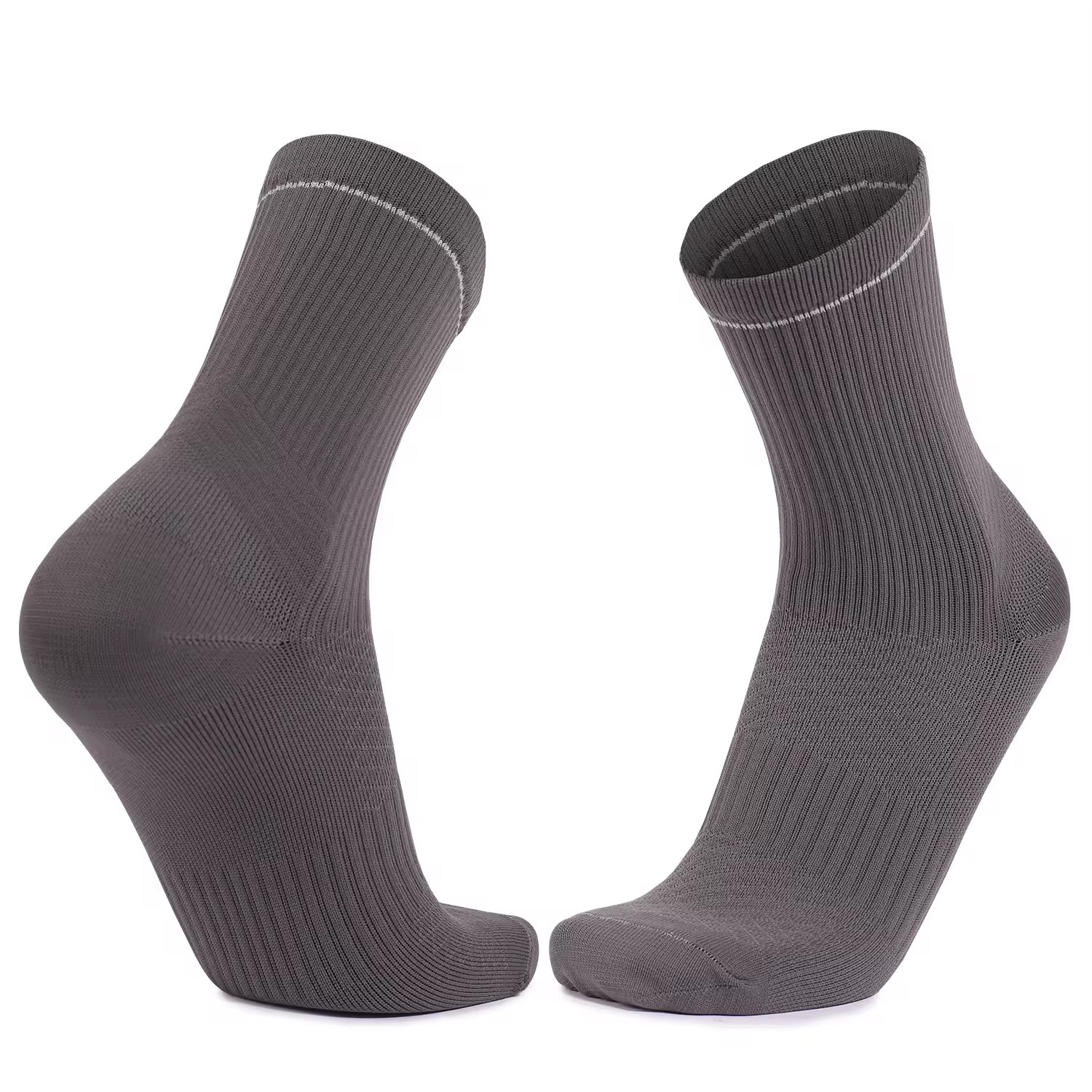
In the world of OEM socks, every stitch and fiber is a calculated decision. Performance isn't just about comfort—it's about how the sock supports movement, manages moisture, and withstands wear without compromise. Precision engineering begins at the material selection stage, where blends of merino wool, Coolmax, and nylon are tested for breathability, tensile strength, and thermal regulation. The result is a sock that adapts to the foot's anatomy, not the other way around.
The difference is in the details that most people never see. Reinforced heel and toe zones are mapped using pressure data to prevent hotspots, while targeted compression zones support the arch and ankle. Knitting machines with variable tension control allow for seamless transitions from cushioning to ventilation, creating a second-skin fit. These aren't just socks—they're engineered solutions designed to extend endurance and reduce fatigue, whether on a factory floor or a marathon course.
What sets apart a well-engineered OEM sock is the invisible synergy between materials and construction. Flatlock seams minimize friction, moisture-wicking channels are integrated directly into the knit pattern, and anti-microbial treatments are applied without compromising feel. Every element is scrutinized, from the thread count to the stretch recovery rate, ensuring that the sock performs consistently after countless washes. This is where function meets finesse—building a foundation that OEM partners rely on to deliver reliable, high-performance gear.
From Yarn to Finish Line: Inside the Custom Sock Creation Process
Every custom sock starts with the careful selection of yarns, where softness, durability, and stretch are balanced to match the intended use—whether it’s a lightweight athletic sock or a plush everyday staple. The yarn is then dyed in small batches to capture exact brand colors, often requiring multiple sampling rounds to perfect the shade before a single stitch is knit.
Once the color is approved, the design moves to digital knitting machines that can shape the sock in one continuous piece, incorporating logos, patterns, and cushioning zones without the risk of misalignment. This stage demands precise programming to translate two-dimensional artwork into a seamless tube that hugs the foot naturally, all while managing tension to avoid sagging or tight spots.
After knitting, each sock is carefully washed and stretched over heated metal forms—a process called boarding—to set the final size and smooth out any irregularities. Quality checks catch loose threads or uneven textures before the socks are paired, labeled, and packaged. It’s this hands-on attention from fiber to finish that turns a simple sock into a personalized experience, ready to be worn and washed hundreds of times.
Unseen Details That Make or Break Your Longest Miles
It’s rarely the obvious factors that derail a long effort. You can have the fitness, the nutrition plan, even a rock-solid pacing strategy, yet a single overlooked detail can turn mile eighty into a death march. Think about the interior seams of your shorts—when you’re fresh, they’re invisible. After hours of repetitive motion and sweat, that tiny ridge becomes a hot spot, then a raw wound that distracts from every step. Or consider the way your socks gather moisture between the toes. That subtle dampness softens the skin, and by the time you notice the sting, you’re already compensating your stride, inviting blisters or worse, a cascade of joint stress.
Equally unseen but utterly consequential are the mental micro-drains nobody talks about. The slight fog on your sunglasses that builds on a humid climb? It’s not just annoying; it forces your eyes to work harder, adding to cognitive fatigue that accumulates silently. The intermittent squeak of a hydration pack strap—barely audible, but it creates a low-grade irritation that gnaws at your patience over hours. And then there’s the way you hold your hands when you fatigue: a tight fist wastes energy and tightens your upper back, restricting breathing you desperately need. These patterns don’t announce themselves, but they quietly siphon off the reserves you thought you’d banked for the final push.
Perhaps the most deceptive detail is the gradual shift in your form as your primary stabilizers fatigue. You won’t feel it happening, but your pelvis might start tilting just a few degrees, which shifts load onto smaller muscles that aren’t built for endurance. By the time you sense a deep, aching fatigue in your hip flexors or lower back, you’ve already been leaking efficiency for miles. The fix isn’t always more strength training—it’s often about building the sensory awareness to catch these micro-collapses early, so you can reset before they become your undoing. In the end, the longest miles aren’t conquered by grit alone. They’re navigated by an almost obsessive attention to the tiny, unglamorous things that whisper failure long before it shouts.
Tailored Fit, Bold Identity: Marrying Function and Team Aesthetics
We believe that team apparel should never force a choice between looking sharp and performing at your best. That's why our gear is constructed around how your body moves, not just how it stands still. Articulated seams, four-way stretch fabrics, and carefully mapped ventilation zones ensure every sprint, lunge, and dive feels effortless—no tugging, no restriction, just a second-skin feel that disappears when the game heats up.
Beyond the fit, our design ethos embraces each team's unique visual identity with purpose. We skip the generic templates and work with you to amplify the elements that make your squad distinct—whether it's a heritage-inspired crest, a color combo that pops under stadium lights, or subtle texture details that catch the eye on replay. The result is a kit that doesn't just represent your team; it becomes part of the competitive edge, weaving together pride, unity, and instant recognition on the field.
This fusion of technical tailoring and unapologetic style also means your gear works harder off the pitch. The same precision fit that supports a bicycle kick also keeps players comfortable during travel or recovery, while the standout aesthetics spark conversations in the community. It's apparel built for the whole athlete experience—where function meets a fearless look that can't be ignored.
The Silent Advantage: How Material Choices Transform Ride Comfort
When you settle into a vehicle, the first things you notice are the obvious touchpoints—the plushness of the seat, the smoothness of the steering wheel, the softness of the armrest. But beneath these surface sensations lies a far more subtle and pervasive factor: the materials used throughout the cabin and chassis. It’s not just about padding; it’s about how every component works together to isolate you from vibration, harshness, and unwanted noise. The right choice of metals, polymers, and composites can turn a jarring ride into a serene journey, and the transformation often goes unnoticed simply because the best designs do their job silently.
Consider how lightweight aluminum structures behave compared to traditional steel. While steel adds mass that can dampen certain frequencies, it can also transmit higher-frequency vibrations directly into the cabin if not managed properly. Aluminum, on the other hand, has different inherent damping properties—it absorbs and dissipates energy differently, which can reduce the high-pitched buzz that leads to driver fatigue on long trips. Engineers don’t just choose these materials for weight savings; they tune the entire acoustic and tactile experience. From the rubber bushings in the suspension to the acoustic glass in the windows, every material is selected not just for its mechanical properties but for how it shapes the invisible sensation of comfort.
The real magic happens when material choices are integrated holistically. A dashboard isn’t just a piece of plastic; it’s a sound-absorbing panel, a vibration barrier, and a visual anchor all in one. The foam in the seats isn’t just for softness—it’s engineered with specific compression and recovery rates to support your body without transmitting road vibrations. Even the carpet and headliner play a role, trapping airborne noise that would otherwise bounce around the interior. When these elements are harmonized, the result is a driving environment that feels effortlessly calm, where the road’s imperfections are hinted at rather than intruding. This silent advantage doesn’t shout for attention; it simply makes every mile more enjoyable.
FAQ
OEM lets you tweak every detail—from fabric blend to cushioning zones—so you get socks that match your exact riding style. Off-the-shelf socks are designed for the masses; custom ones are built for your feet.
Look for merino wool blends or advanced synthetics like Coolmax. They wick sweat fast, resist odors, and regulate temperature. Avoid cotton at all costs—it soaks up moisture and leads to blisters.
Pinpoint cushioning, arch support, and seamless toes reduce friction and pressure points. When your socks fit perfectly, you forget you're wearing them, even after hours in the saddle.
Absolutely. You choose colors, patterns, logos, and even the cuff height. Most manufacturers offer design assistance, so you get a product that represents your team or personal style.
Many OEM suppliers accept orders as low as 50 pairs, making it accessible for clubs, teams, or even a group of friends. The per-pair cost is higher than bulk orders, but the quality and uniqueness justify it.
Yes, graduated compression boosts blood flow, which can reduce muscle fatigue and speed up recovery. It's not just a gimmick; studies show it helps during and after rides.
A well-designed cuff with silicone grip strips or a ribbed knit keeps them in place. OEM manufacturers can add these features upon request, so your socks stay put no matter how hard you pedal.
It varies, but expect 4-6 weeks from design approval to delivery. Rush orders are sometimes possible at an extra cost. Planning ahead is key to getting them before your event or season.
Conclusion
Riding through punishing hours or shifting weather exposes the limits of mass-produced socks—bunching, blisters, and dampness creeping in. OEM cycling socks break that mold entirely, blending rider-specific geometry with high-stretch zones that move as if they’re part of the skin. Every pair is a calculated answer to pressure mapping: targeted compression along the arch, seamless toe closures, and heel pockets that lock without squeezing. The journey from raw yarn to finished sock matters just as much, with knit densities adjusted per panel—thinner under the metatarsals for heat dump, subtly cushioned where pedal stroke force concentrates. These aren’t afterthoughts but deliberate engineering choices that erase distraction, letting you chase down miles with nothing between you and the road but intention.
What truly sets a custom sock apart, though, is how it quietly solves problems you’ve learned to tolerate. Fabrics like hollow-core polyamide or merino blends wick and breathe differently depending on weave structure, not just content—keeping feet drier and thermoregulated without bulk. That material intelligence pairs with a fit so dialed it feels like a second sock layer was removed, even in deep drops. Meanwhile, the visual identity isn’t an add-on; sublimated graphics and team colors become part of the knit itself, resisting fade and stretch. You end up with gear that mirrors your crew’s character while delivering the one advantage you can’t see but definitely feel: hour after hour where your feet simply forget to complain.
Contact Us
Contact Person: Tiga
Email: [email protected]
Tel/WhatsApp: 8613058331729
Website: https://www.china-socksfactory.com/