Outdoor RMU Exporter Guide to Quality and Compliance
2026-08-15
Taking an outdoor ring main unit (RMU) across borders isn't just about shipping hardware—it's about proving your product can withstand both harsh environments and rigorous international standards. From IEC ratings to local grid codes, export compliance can make or break a deal. In this guide, Deepwill walks you through the quality benchmarks and regulatory checkpoints that separate reliable exporters from costly recalls. Ready to see where most suppliers stumble?
Why Your Outdoor RMU Enclosure Needs More Than a Coat of Paint
A fresh coat of paint on an outdoor RMU enclosure might hide surface rust for a season, but it does almost nothing to protect the internal electrical gear from moisture, dust, and temperature swings. Rain finds its way through hairline seams, condensation forms when warm days turn into cold nights, and before long you're dealing with corroded busbars, false tripping, or even a complete outage. Paint simply sits on the outside; it can't address the real failure points like gasket degradation, poor ventilation, or missing cable entry seals.
What your enclosure actually needs is a systematic approach to environmental sealing and thermal management. Replace worn door gaskets with closed-cell foam that keeps driving rain out while still allowing pressure equalization. Add a filtered vent or a small thermostatically controlled fan to prevent internal humidity from building up, because trapped moisture is often more damaging than direct rainfall. Check that every cable gland and gland plate is properly rated for outdoor use and not just hand-tightened until it "looks fine."
Over time, even the best paint will chalk and crack, but a well-engineered enclosure keeps performing because its protection is built into the structure, not applied on top. Field crews who spend a few hours upgrading seals, drains, and ventilation see far fewer emergency callouts than those who simply repaint and hope for the best. The goal isn't just to make the box look tidy; it's to keep the switchgear inside dry, cool, and reliable through every season.
Making Sense of IEC 62271-200 for First-Time Exporters
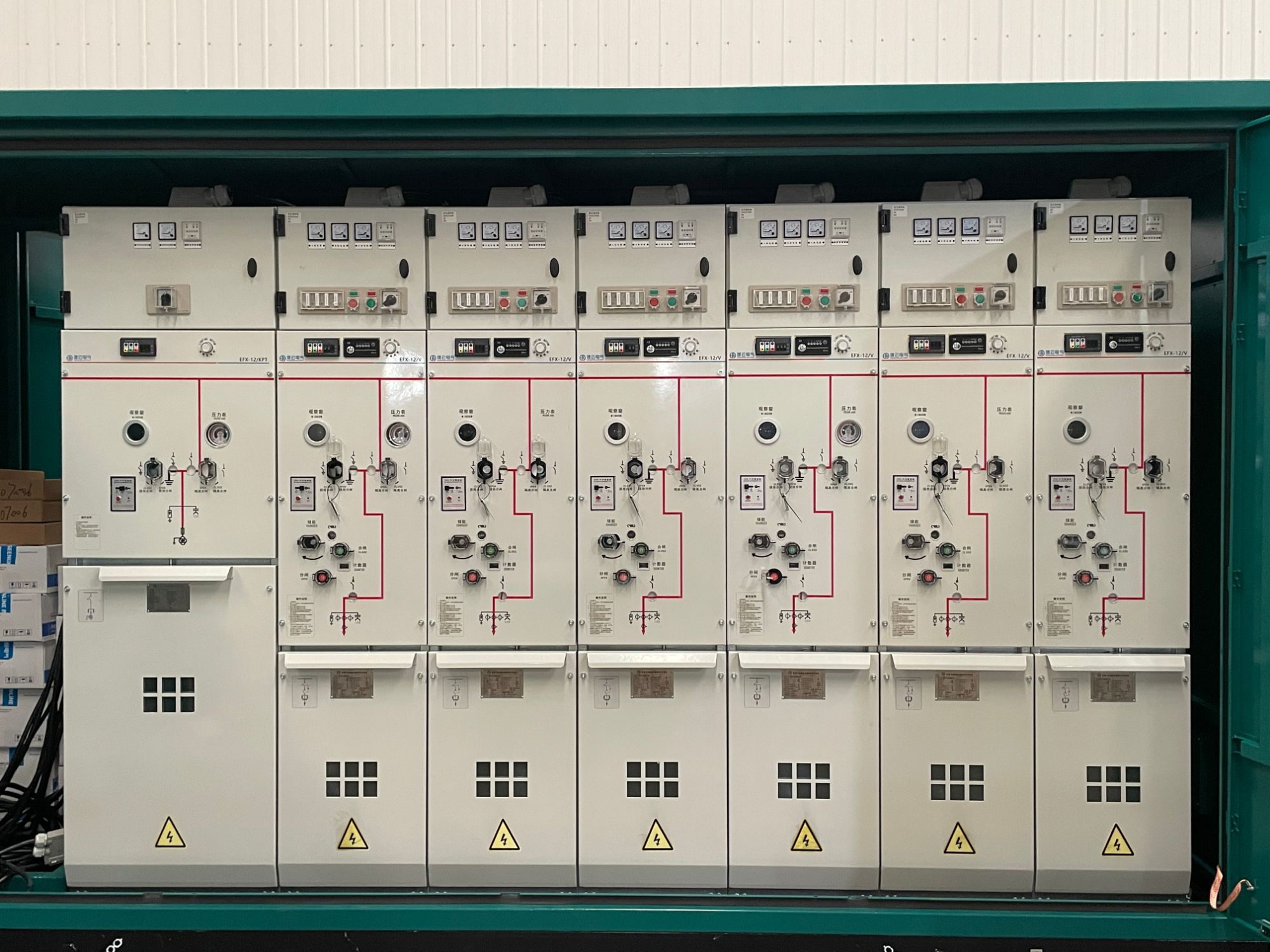
If you're shipping switchgear overseas for the first time, IEC 62271-200 is the document that will either open doors or stop your shipment at customs. Unlike older national standards that focus mostly on electrical ratings, this IEC standard puts heavy emphasis on safety under internal arc conditions. Buyers in Europe, the Middle East, and parts of Asia routinely ask for an IAC (Internal Arc Classification) certificate before they'll even look at your drawings. The standard defines accessibility types A, B, and C—where A is accessible to authorized personnel only, B to the general public, and C is pole-mounted equipment—so you need to know which one matches your end-use environment. Getting this wrong means expensive retrofits or lost bids.
The other piece that trips up new exporters is the Loss of Service Continuity (LSC) rating. IEC 62271-200 groups switchgear into LSC1, LSC2A, and LSC2B based on what remains energized when you have a compartment open for maintenance. LSC2B is the most demanding because it keeps all other high-voltage compartments fully operational while you work on one. Many first-time exporters assume their domestic design will automatically qualify, but partition class and interlocking details often fall short. A quick review of the clause on partitions and shutters can save you months of redesign after the first factory inspection.
Don't overlook the routine and type tests. While type tests like internal arc and short-circuit are done once on a representative unit, routine tests on every panel—such as power-frequency voltage withstand and mechanical operation—are what convince a third-party inspector that your production line can repeat the tested performance. Also, make sure your user documentation clearly states the rated values, LSC class, IAC class, and any restrictions. Exporters who simply translate their local manual usually fail the documentation review. The standard isn't just a technical hurdle; it's a set of expectations your overseas customer already knows by heart, and you should too.
The Paperwork Trap: Avoiding Costly Customs Holds
Customs holds rarely start with a glaring error. More often, it's a quiet mismatch buried in the fine print of a commercial invoice—a unit price that doesn't reconcile with the packing list, or a country of origin listed differently on the bill of lading and the certificate of origin. Once flagged, even a trivial discrepancy can trigger a manual review, and that's where the clock starts ticking. Storage fees accrue daily, and perishable or time-sensitive cargo loses value by the hour. Shippers who treat paperwork as an afterthought discover that customs brokers can't fix what they can't see, and the original document is already locked in a courier pouch somewhere over the Atlantic.
The more insidious trap is the "almost right" HS code. A six-digit classification may look close enough, but a single digit off can shift the duty rate by double digits—or worse, land the shipment in a restricted category that requires an import license you never applied for. Add to that the growing number of free trade agreements with their own rules of origin, and a generic certificate is worse than useless; it's a red flag. Savvy shippers build a paperwork checklist per destination country, not per product line, because what passes in Rotterdam can stall for a week in Santos. And they treat the customs broker not as a last-minute form filer but as a pre-shipment auditor, sending drafts before the container is even sealed.
Prevention is mundane but brutal: reconcile every field across all documents before the vessel sails, not after the arrival notice pings. Keep a running log of past holds—most repeat offenders are the same three forms misaligned in slightly different ways. For high-frequency lanes, invest in a compliance clerk who does nothing but cross-check invoices against the purchase order and the actual packing slip, because the person who packed the box and the person who typed the invoice rarely spoke to each other. A one-hour internal review costs a fraction of a single day of port demurrage, and it keeps your shipment off the list of "frequent flyers" that customs officers learn to scrutinize by habit.
Shock, Vibration, and Salt: Testing Beyond the Factory Floor
Most products get a quick functional check on the line and then head out the door, but that tells you almost nothing about how they'll survive a decade of real-world abuse. A drop onto concrete from waist height, constant rattling in a truck bed, or a winter of salted roads can tear apart a device that passed its factory bench test with flying colors. We've learned to stop trusting the clean, climate-controlled production floor as any measure of durability.
Instead, we run our own gauntlet: repeated impacts on steel and plywood, vibration sweeps from low rumble to high-frequency buzz, and full immersion in a salt fog chamber followed by a rinse cycle that mimics coastal humidity and road spray. The failures we see aren't pretty—corroded contacts, cracked solder joints, seals that quietly gave up—but finding them early means the customer never has to. And when a unit survives all that without a hiccup, we know the factory pass wasn't a fluke.
This kind of testing isn't about meeting a spec sheet; it's about respecting how people actually use their gear. A radio that works on the bench but dies on a fishing boat, or a sensor that shrugs off heat but can't handle the rumble of a semi, isn't really a finished product. So we beat on prototypes until they break, then we make them stronger. That's the only way to be sure the thing you ship can handle the world it's about to live in.
Destination Grid Codes: The Compliance Layer No One Talks About
Most equipment makers put enormous effort into IEC or UL certifications, assuming that covers them globally. But destination grid codes are a different animal entirely. These are the local technical rules—voltage ride-through, frequency response, harmonic limits, even communication protocols—that vary from one utility to the next. A solar inverter that hums along fine in Munich can get rejected outright in Sydney, not because it's unsafe, but because it doesn't speak the local grid's language. That mismatch rarely shows up on a datasheet.
The problem is that grid codes are living documents, revised every few years and written by engineers who assume everyone knows the local acronyms. A manufacturer might ship a container of battery storage units to a new market, only to have them stalled at customs while a regional utility demands a test report from a lab they've never heard of. By then, the contract penalties have already started.
Ignoring this layer isn't just a technical oversight; it's a commercial risk. Some firms have learned to treat destination grid codes as a design input from day one, not a final hurdle. They pull in local consultants early, run pre-compliance simulations, and build in headroom for frequency and voltage variations. It costs a bit more upfront, but it beats watching your product sit in a warehouse while your competitor's already-connected system sends invoices.
How Top Exporters Handle Post-Shipment Compliance Queries
Once a shipment leaves the loading dock, many exporters assume the compliance work is finished. The ones who avoid customs headaches know better. They keep a single, searchable archive that links every commercial invoice, certificate of origin, and export declaration to the original purchase order. That way, when a foreign buyer's broker asks for a missing document three weeks after arrival, the file can be retrieved in minutes—not days—because the naming rules never change.
Experienced export managers also assign a clear owner to each post-shipment query. A routine request for an extra copy of a packing list is handled by the shipping clerk the same day. A notice about a possible tariff code dispute is escalated to the compliance officer before anyone drafts a reply. This quiet triage prevents both overreaction and dangerous delay. For the rare case that turns into a formal customs inquiry, they keep a short list of trusted local attorneys and in-country consultants rather than improvising under pressure.
FAQ
Check the frame’s corrosion protection. A unit that looks fine indoors can rust within weeks near a coast if the steel isn’t galvanized or coated to match the destination climate. Ask for salt spray test reports, not just a material spec sheet.
Don’t assume a standard plug will pass. The destination market may run on a different voltage, frequency, or plug type, and outdoor use adds requirements for weatherproof enclosures. Pre-wire the unit for a certified local assembly, or build in a switchable power supply and request a test certificate from a recognized lab.
An outdoor RMU isn’t a static indoor kiosk. A gust can tip it or tear off panels if the engineering doesn’t account for exposure, height, and surrounding buildings. Insist on a stamped wind load calculation for the specific site category, and include ballast or anchor points that match local building codes.
Suppliers sometimes hand over a material safety sheet but not the performance rating. For outdoor structures, you may need test results to EN 13501-1 or NFPA 701 for canopies and cladding. Without that, customs can hold the entire unit, and the buyer may refuse delivery if a local inspector asks for proof.
Bundle everything into a single compliance pack before the container leaves: bill of materials, coating thickness reports, electrical test certificates, welding logs, and a clear set of assembly drawings. If the inspector can find the answer in one folder, they’re less likely to flag the shipment for a random teardown.
A shiny finish doesn’t mean durable. Ask for cross-hatch adhesion test results and accelerated weathering data, not just a color swatch. Poor adhesion causes peeling after one season, and repainting on site is far more expensive than fixing it at the factory.
The manufacturer often labels the unit in their own language and uses symbols that aren’t recognized at the destination. Every safety warning, load limit, and operating instruction should be translated into the buyer’s language, with pictograms that follow ISO 7010. Missing this can mean a failed site inspection even if the structure is fine.
Randomly sample the critical joints and request ultrasonic or dye penetrant test reports from an independent inspector. Also ask for the welder’s qualification certificates and a welding procedure specification. If the factory can’t produce those, treat the structure as unproven, regardless of how neat the beads look.
Conclusion
A durable outdoor RMU depends on far more than a cosmetic coat of paint. Exporters who succeed look at the enclosure as a system: galvanized steel substrates, sealed gaskets, UV-stable powder coatings, and drainage that prevents water pooling in coastal or high-humidity climates. First-time exporters often underestimate IEC 62271-200, treating it as a mere certificate to collect. In practice, the standard's internal arc classification, partition class, and loss of service continuity categories determine how the unit will be accepted by local inspectors. Misreading a requirement or assuming a generic test report covers all configurations leads to expensive rework. Alongside the hardware, paperwork can be just as hazardous. Customs holds frequently stem from incomplete declarations, mismatched HS codes, or missing certificates of origin and test documentation. A single missing page can park a container for weeks at port, eroding margins and delivery credibility.
Beyond factory acceptance, the real test starts once the RMU leaves the loading dock. Shock, vibration, and salt spray testing should replicate actual shipping routes, not just standard lab conditions. Units bound for island grids or coastal substations need extra attention to corrosion creep, connector fretting, and humidity cycling. Destination grid codes add another layer rarely discussed in export seminars: protection settings, communication protocols, and earthing practices can vary sharply even within the same region. A unit that passed type tests in one country may fail a utility witness test elsewhere because the local fault-clearing times or SCADA interface expectations differ. Top exporters manage this by building a post-shipment query file for every serial number—photos, test waveforms, torque logs, and revision-controlled drawings—so that when a compliance question arrives months later, the answer takes hours, not weeks. That responsiveness, not just the initial build, is what separates repeat exporters from one-off suppliers.
Contact Us
Contact Person: Julion
Email: [email protected]
Tel/WhatsApp: 8617351370631
Website: https://www.deyunelectric.com