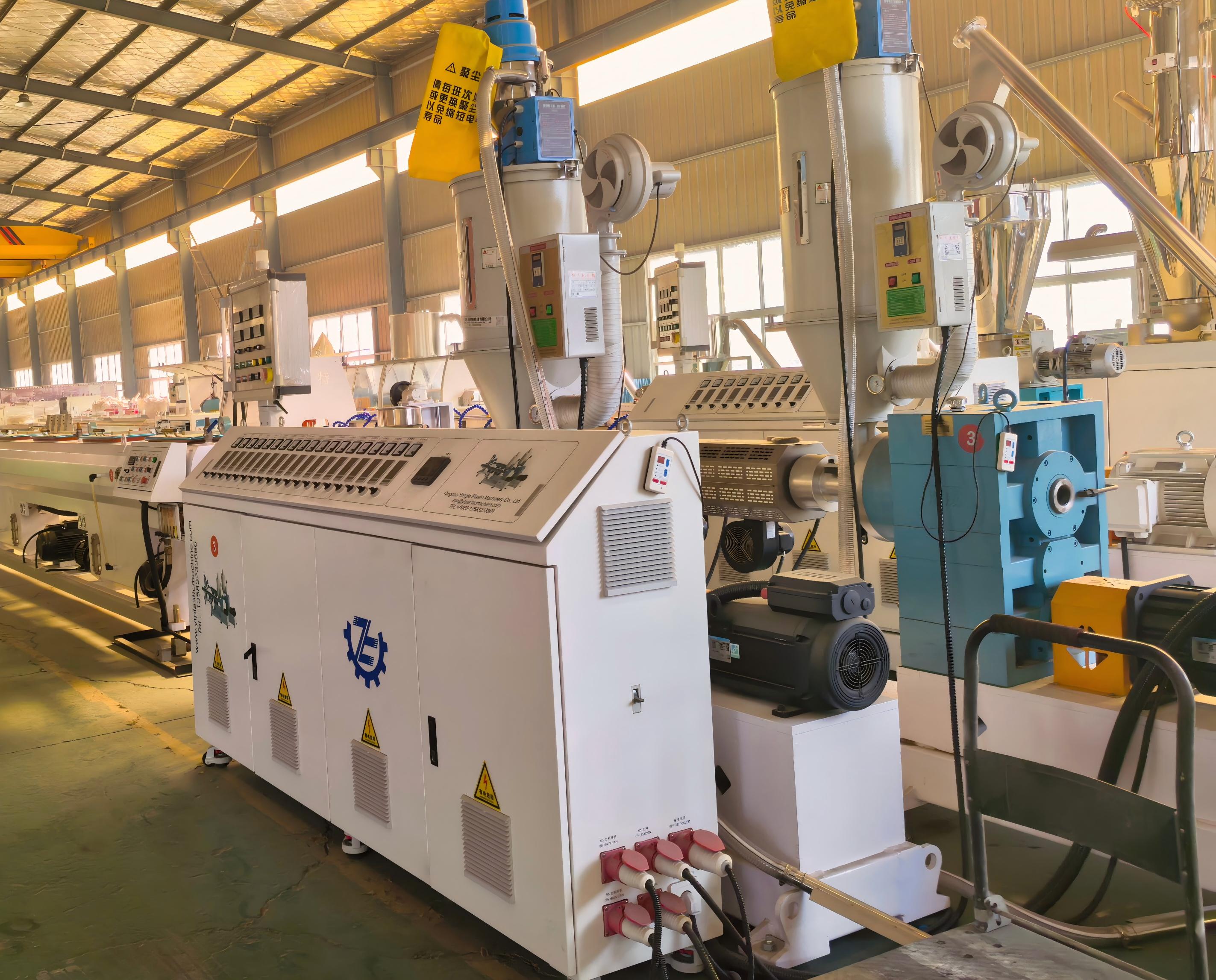

Plastic Pipe Machine Factory: Driving Efficiency in Modern Manufacturing
2026-05-12
In a world where manufacturing speed and precision define competitive edges, plastic pipe production demands machinery that keeps pace. At the heart of this evolution is Yongte, a plastic pipe machine factory rethinking efficiency from the ground up. This post peels back the layers of modern extrusion technology, revealing how intelligent design and robust engineering converge to slash waste, boost output, and reshape what’s possible on the factory floor.
Precision Extrusion: Crafting Pipes That Outperform
The core of our manufacturing lies in a tightly controlled extrusion process that transforms raw polymer into pipe walls with exceptional consistency. By maintaining exact temperature gradients and pressure profiles, we eliminate microscopic voids and irregularities that plague standard products. This results in a homogeneous structure capable of withstanding higher burst pressures and resisting crack propagation far longer than conventional alternatives.
Tooling design plays an equally critical role—each die and mandrel set is engineered to optimize material flow, reducing internal stresses and ensuring a perfectly round cross-section. The precision alignment minimizes wall thickness variation around the circumference, which translates directly to more reliable joint integrity and better flow characteristics. Such attention to geometry gives installers confidence that every piece will fit and perform as intended, even in demanding conditions.
Beyond the machinery, we run continuous inline monitoring that captures dimensional data thousands of times per second. Any deviation triggers immediate automatic adjustments, so the entire production run stays within a tolerance band others consider aspirational. The outcome is a product that consistently surpasses industry benchmarks for longevity and durability—pipes that don’t just meet specifications, but redefine them.
Smart Control Systems Redefining Production Speed
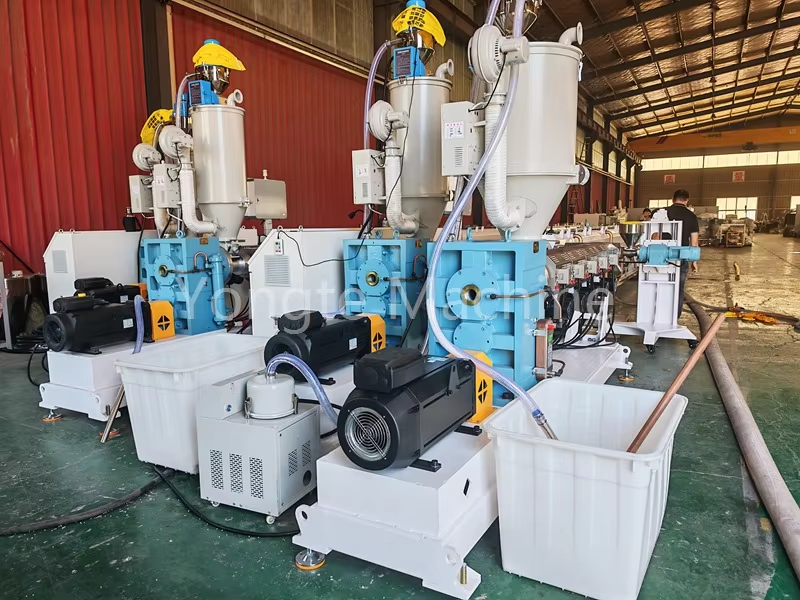
Smart control systems are transforming how factories approach speed. Instead of relying on fixed schedules, these systems adjust machine parameters on the fly, reacting instantly to sensor feedback. This dynamic adaptation slashes idle time and keeps lines humming at peak efficiency.
Operators now see production metrics shift in real time, with dashboards that highlight bottlenecks before they escalate. The intuitive interfaces make it easy to tweak workflows, turning what used to be a guessing game into data-driven precision. Machines learn from each cycle, gradually refining their movements for even tighter throughput.
Beyond raw acceleration, these systems bring a new level of coordination. Robots and conveyors sync seamlessly, eliminating the jerky stops and starts that wear down equipment. The result is a smoother, faster rhythm that feels almost organic, pushing production boundaries without sacrificing reliability.
Zero-Defect Manufacturing Through Advanced Monitoring
Achieving flawless production isn’t a distant dream—it’s the engine behind modern competitive manufacturing. Zero-defect manufacturing flips the script from reactive fixes to proactive prevention, where every part, every process step, and every tolerance is verified in real time. Advanced monitoring makes this possible by embedding sensors, vision systems, and analytics directly into production lines to catch deviations before they become defects.
This approach leans on continuous data streams rather than occasional checks. Vibration patterns, thermal signatures, and micro-alignment shifts are tracked against a living baseline, not just a static spec. When something drifts—even within traditional limits—the system flags it, allowing operators to tune equipment before scrap is produced. It’s about building a nervous system for the factory floor that feels anomalies instantly.
What sets advanced monitoring apart is its ability to learn. By coupling sensor data with machine learning models, the line grows smarter with every cycle, recognizing subtle precursors to defects that no human inspector could spot. The result isn’t just fewer rejects—it’s a self-regulating production flow where quality is inherent, not inspected in after the fact.
Energy-Efficient Machinery for Cost-Saving Operations
Shifting to energy-efficient machinery isn’t just about cutting electricity bills—it directly reshapes how operational costs accumulate over time. Modern equipment, from variable-speed compressors to smart HVAC systems, adapts power draw to actual demand rather than running at full throttle regardless of need. This avoids the hidden drain of constant cycling and peak-load charges, which often account for a surprising slice of monthly expenses. The result is a leaner, more predictable cost structure that keeps budgets in check without sacrificing output or comfort.
Beyond the utility meter, these machines tend to generate less waste heat and require fewer cooling adjustments, trimming auxiliary energy use. Motors designed with higher efficiency ratings also reduce maintenance frequency, since they run cooler and experience less wear. Over a few years, the combined effect of lower repair bills and longer service intervals frees up capital that would otherwise vanish into equipment upkeep. It’s a quiet shift—no dramatic overhauls, just smarter components doing the same work with less friction, literally and financially.
Tailoring Pipe Solutions to Complex Industrial Demands
Every industrial project presents a unique set of constraints—whether it’s extreme temperatures, corrosive chemicals, or high-pressure environments. Off-the-shelf piping systems rarely address these challenges effectively. Instead, a deep understanding of the specific operational context is essential to develop solutions that not only fit but excel. This means considering factors like material compatibility, installation space, and long-term maintenance right from the design phase.
Customization goes beyond selecting the right alloy or diameter. It involves engineering connections, bends, and supports that anticipate stress points and flow dynamics. For instance, a plant dealing with abrasive slurries demands reinforced elbows and wear-resistant linings, while a cryogenic facility needs alloys that retain toughness at sub-zero temperatures. By analyzing flow rates, pressure drops, and potential failure modes, we craft pipe systems that integrate seamlessly into the larger infrastructure, minimizing downtime and extending service life.
Collaboration with on-site engineers and maintenance teams is crucial to capture insights that a specification sheet can’t convey. This iterative approach refines the solution through prototyping and real-world testing, ensuring that the final delivery isn’t just a product but a reliable component of your operation. The result is a piping network that handles complexity with grace, turning demanding conditions into a predictable, manageable aspect of your daily processes.
Integrating Automation for Seamless Factory Workflows
Modern factories often juggle a mix of legacy equipment, newer smart machines, and manual processes. Without a clear integration strategy, these disjointed elements create data silos and workflow bottlenecks that slow everything down. The real power of automation comes not from adding more robots or software, but from weaving them together into a cohesive system where information flows as smoothly as materials. That means choosing platforms that speak the same language—or at least have robust translation layers—so a quality check on the line instantly updates inventory, scheduling, and maintenance logs without human handoffs.
A seamless workflow hinges on more than just technical compatibility; it requires rethinking how teams interact with the technology. Too often, automation is layered on top of outdated procedures, leading to confusion and workarounds. Smart integration invites operators, engineers, and managers to co-design the workflows, ensuring that automated steps match the real rhythm of production. For instance, instead of rigid, pre-set sequences, adaptive automation can adjust conveyor speeds or reroute tasks based on live sensor data, reducing downtime and keeping everyone in sync. The goal is to make the automation feel invisible, so people can focus on exceptions and improvements rather than routine coordination.
Ultimately, the payoff of integration is a factory that rarely stops to catch its breath. When every piece of equipment, from a CNC machine to a packaging arm, shares a common digital backbone, it becomes possible to spot patterns that prevent failures before they happen. One automotive plant, for example, linked its torque tools directly to the manufacturing execution system, allowing real-time traceability and automatically flagging deviations before a single faulty bolt left the station. That kind of quiet, continuous orchestration is what turns a collection of automated islands into a truly seamless operation, where the whole line moves with a single, intelligent pulse.
FAQ
These factories integrate advanced extrusion lines with precise control systems, enabling continuous production with minimal material waste. By optimizing cooling and calibration stages, they achieve higher output rates while maintaining strict dimensional accuracy, directly reducing per-unit costs and energy consumption.
They employ modular die heads and quick-change screw configurations, allowing rapid switches between pipe diameters and wall thicknesses without extended downtime. Programmable logic controllers store hundreds of recipe settings, making it possible to meet custom requirements with just a few adjustments.
Automated feeding, cutting, and stacking systems eliminate manual handling inconsistencies. Inline ultrasonic thickness measurement and camera-based surface inspection instantly flag defects, triggering automatic rejection before the pipe reaches packaging—this cuts scrap rates by over 40% compared to manual checks.
Modern twin-screw extruders are designed to process high shares of post-industrial or post-consumer regrind without sacrificing output quality. Advanced filtration systems and degassing units remove contaminants, enabling sustainable production loops that align with circular economy goals.
They perform finite element analysis on critical components like gearboxes and barrels to prevent premature fatigue. Factory acceptance tests simulate full production runs under accelerated load, and remote monitoring platforms provide predictive maintenance alerts based on real-time vibration and temperature data.
Servo-driven haul-offs and cutters replace hydraulic systems, cutting standby power by up to 60%. Bi-metallic barrels with enhanced insulation retain heat more efficiently, while heat recovery systems preheat raw materials using captured thermal energy from cooling lines.
A U-shaped or linear layout with dedicated raw material staging, extrusion, cooling, and finishing zones minimizes fork truck traffic and material crossovers. Gravity-fed material hoppers and elevated cooling troughs use natural forces to reduce reliance on powered conveyors, smoothing the production flow.
Conclusion
In the competitive landscape of industrial production, a plastic pipe machine factory stands as a pivotal force in reshaping operational efficiency. The core of its innovation lies in precision extrusion, where advanced screw designs and temperature controls yield pipes with exceptional consistency and strength, outperforming conventional alternatives. This precision is amplified by smart control systems that dynamically adjust production parameters in real time, slashing cycle times without compromising quality. As a result, factories can meet tight deadlines while maintaining superior output, setting a new benchmark for speed and reliability.
Driving this transformation further is a commitment to zero-defect manufacturing, achieved through integrated sensors and machine vision that detect flaws the moment they occur, enabling instant corrections. Simultaneously, energy-efficient machinery cuts operational costs by optimizing power usage during both peak and idle phases, aligning economic and environmental goals. The factory’s ability to tailor pipe solutions—from chemical-resistant materials to custom diameters—addresses complex industrial demands with remarkable flexibility. Underpinning it all is seamless automation: robotic handling and interconnected systems link every stage from raw material feeding to final packaging, creating a smooth, uninterrupted workflow. Together, these advances not only enhance productivity but also offer a responsive, sustainable manufacturing model that adapts swiftly to evolving market needs.
Contact Us
Contact Person: Ms Qin
Email: [email protected]
Tel/WhatsApp: 8613583233866
Website: https://www.yongteplast.com