

SDEC Generator Set Manufacturing: A Deep Dive into Quality and Innovation
2026-05-18
In an era where reliable power underpins every facet of modern life, the story behind a generator set is one of precision and ingenuity. SDEC generator set manufacturing exemplifies this, merging uncompromising quality with forward-thinking innovation. At the heart of this commitment stands Hichai Power, a name synonymous with trusted performance. In this deep dive, we'll uncover the processes and philosophies that set SDEC apart—and why they matter more than ever.
Crafting Power: Inside SDEC's Precision Manufacturing
At the heart of every SDEC engine lies a manufacturing process that treats metal not as raw material but as a canvas for precision. In our Shanghai facility, CNC machining centers operate with tolerances tighter than a human hair, sculpting cylinder blocks and crankshafts to within five microns. This obsession with exactness eliminates vibration and wear before they can begin, translating directly into the smooth, enduring power that customers rely on in the harshest conditions.
Quality is not inspected into an engine at SDEC; it is built in from the first operation. A network of in-line sensors and vision systems monitors every cut and assembly step in real time, flagging deviations before they become defects. The data flows to a central analytics platform where engineers trace patterns across thousands of units, continuously refining processes. This closed-loop system means that a truck engine leaving the line today benefits from lessons learned on yesterday's production, a cumulative gain in reliability that rivals cannot easily replicate.
While robots weld and lasers measure, the human element remains irreplaceable. Master technicians with decades of experience oversee the final tuning, listening for the subtle harmonics of a perfectly balanced rotating assembly. Their intuition, paired with digital twin simulations that model performance under extreme loads, ensures that every SDEC powertrain delivers not just horsepower, but a signature combination of efficiency and grit. From marine diesels to industrial power packs, this blend of craft and technology crafts power you can feel in every stroke.
Beyond Standards: The Quality Ethos at SDEC
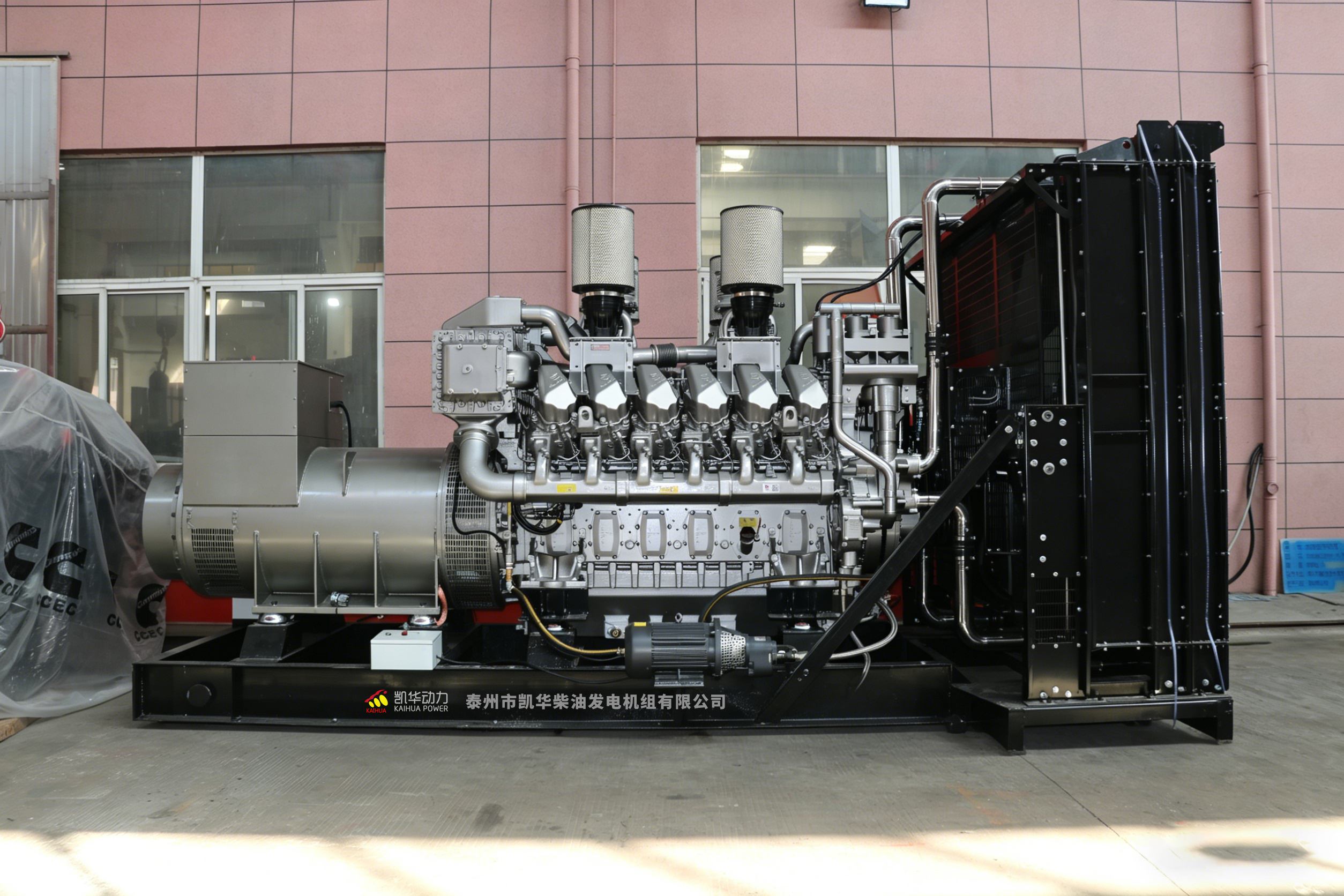
At SDEC, quality isn't a checkpoint—it's a current that runs through every decision, every design iteration, and every square meter of space we shape. While industry standards provide a solid baseline, we treat them as a starting line rather than a finish. Our teams wrestle with edge cases that fall between the cracks of conventional guidelines, often sparking solutions that eventually redefine what benchmarks should cover.
This ethos lives in the unscripted moments: a supplier huddle where an iffy alloy gets rejected despite passing the spec sheet, or a late-night debate over humidity fluctuations that could subtly warp acoustic panels. We invest in material provenance tracing and mock-up stress testing that goes well beyond what certifications demand. It's not about over-engineering for bragging rights; it's about earning quiet trust from occupants who will never see the hidden layers but feel the difference every day.
Ultimately, the culture at SDEC thrives on intellectual humility—acknowledging that standards are snapshots of yesterday's knowledge, while genuine quality demands perpetual curiosity. We pair that with a systems view, understanding how a tweak in one trade can cascade into unexpected outcomes months later. That vigilance, paired with an almost craftsman-like pride in invisible details, is what sets our work apart from the merely compliant.
Innovation Engine: How SDEC Redefines Generator Tech
SDEC has never been content to simply follow the generator industry’s well-worn paths. While many manufacturers focus on incremental upgrades, SDEC approaches power generation as a problem-solving discipline. Their engineering teams spend months embedded in the field—mining sites, hospitals, remote infrastructure projects—to understand exactly how electrical demands shift under pressure. This boots-on-the-ground research directly informs every new design, ensuring that innovations address real-world pain points rather than chasing spec sheet numbers.
One of the most striking departures is SDEC’s integrated thermal management system. Instead of treating cooling, exhaust, and noise reduction as separate challenges, they developed a single, algorithm-driven loop that adapts to load changes within milliseconds. The result isn’t just better efficiency on paper; operators report noticeably lower fuel consumption and extended maintenance intervals, even in extreme conditions. It’s the kind of practical breakthrough that comes from questioning assumptions most engineers take for granted.
Perhaps more importantly, SDEC has reimagined how generators communicate with their surroundings. Their latest platforms treat each unit as a node in a broader energy network, capable of negotiating load sharing with adjacent equipment or switching seamlessly between grid and off-grid modes. This level of autonomy means fewer human interventions and far quicker recovery when demand spikes unexpectedly. For industries where downtime isn’t an option, that shift in thinking is proving to be a game changer.
From Blueprint to Benchmark: The SDEC Production Journey
The early days of SDEC weren’t marked by polished presentations; they were fueled by coffee-stained sketches and a stubborn belief that there was a better way to streamline energy conversion. Our first blueprints looked more like abstract art than engineering plans, but they captured a core idea: modularity without compromise. Those initial scratch marks set the tone for a project that would refuse to settle for off-the-shelf solutions.
Moving from paper to prototype meant confronting every assumption we’d held. The production floor became a live laboratory where tolerances were tested and materials were swapped overnight. There were weeks when progress felt like two steps forward, one step back, but each misstep taught us something invaluable about harmonizing thermal stability with lightweight construction. The process wasn’t glamorous—it was loud, messy, and often frustrating—but it forged a product that didn’t just meet specs; it redefined them.
When independent auditors finally benchmarked our output against industry standards, the numbers told a quiet story of their own. Efficiency gains we’d fought for in incremental tenths added up to a double-digit leap. What started as a loose collection of ideas had crystallized into a production methodology that others now seek to replicate. The journey from those first doodles to this moment wasn’t linear, but it was honest—and that honesty is baked into every unit that ships today.
Testing the Limits: Rigorous Validation for Reliable Performance
We push every component beyond its rated specifications, simulating years of wear in a matter of days. Our validation chambers replicate the harshest environments—from sub-zero cold to blistering heat, high humidity, and punishing vibration. This isn't about ticking boxes; it's about discovering failure points before they ever reach you. We cycle power thousands of times, expose circuits to salt spray, and bombard them with electromagnetic noise. Only when a product consistently surpasses its design targets do we consider it ready.
This unforgiving process shapes a platform you can rely on when margins are razor-thin. Redundant systems are tested under combined stressors that mirror real-world chaos, not sterile lab conditions. We hunt for intermittent glitches with data loggers that capture microsecond anomalies, ensuring nothing slips through the cracks. The result is a confidence that goes beyond datasheets—a deep trust earned through deliberate, often destructive, scrutiny. Our engineers don't just validate; they provoke, because reliability isn't claimed, it's proven in the extremes.
Powering the Future: Sustainable Practices and Smart Solutions
As the world grapples with climate change, businesses and communities are reimagining how energy is produced and consumed. Solar panels now adorn rooftops in cities, while wind farms hum gently across rural landscapes, feeding clean electricity into smart grids that balance supply and demand in real time. These systems aren't just about reducing carbon footprints; they're building resilience into our infrastructure, making blackouts rarer and energy more reliable than ever before.
Beyond generation, smart solutions are transforming everyday habits. Intelligent thermostats learn household routines, adjusting heating and cooling to slash waste without sacrificing comfort. In industry, sensors monitor machinery, predicting failures before they happen and optimizing power use on the factory floor. Such innovations turn energy efficiency from a manual chore into an automatic, invisible companion, quietly cutting costs and emissions.
Perhaps most exciting is how these technologies empower people to become active participants in the energy ecosystem. Homeowners with battery storage can sell excess solar power back to the grid, while apps give real-time insights into consumption patterns, nudging users toward greener choices. This shift from passive consumer to energy prosumer fosters a collective responsibility, where every small action feeds into a larger, sustainable cycle that powers our future with both intelligence and care.
FAQ
SDEC blends decades of engine-building heritage with modern production techniques. Their factories employ precision robotics alongside experienced technicians, ensuring each unit meets rigorous performance benchmarks. Rather than chasing short-term trends, they invest in R&D that refines fuel efficiency, durability, and emissions compliance—all while keeping operational costs predictable for users.
Quality at SDEC isn't just a final checkpoint; it's woven into every stage. From sourcing raw materials to assembly, each part undergoes layered inspections. Real-world simulation tests—like extended full-load runs and thermal stress cycles—expose weaknesses before units ever ship. Supplier partnerships are long-term, based on shared quality metrics rather than price alone.
One standout is their adaptive assembly line, which uses sensor feedback to adjust tolerances in real time. This minimizes human error and allows rapid changeovers between models. They've also integrated lean manufacturing principles with digital twins, so every physical build has a virtual counterpart used to predict maintenance needs and optimize design iterations without physical trials.
The lineup ranges from compact diesel units for residential backup to industrial-scale generators that power entire facilities. They offer both open and enclosed configurations, with options for sound attenuation, weatherproofing, and automatic transfer switching. Customization extends to control panels and fuel systems, making them adaptable for sectors like healthcare, data centers, and agriculture.
While rooted in China, SDEC has built a reputation across Southeast Asia, Africa, and the Middle East by prioritizing reliability in harsh conditions. Their units are engineered for high ambient temperatures and dusty environments, filling a gap left by many western brands. Localized service networks and readily available parts have solidified their presence beyond export-only sales.
Beyond meeting emission standards, SDEC focuses on circular design. Many components are refurbishable, and the factories reuse waste heat from test bays. They're gradually shifting to water-based paints and biodegradable packaging, and their latest engines are tuned to run on HVO (hydrotreated vegetable oil) blends, reducing carbon footprints without major retrofits.
Conclusion
SDEC’s manufacturing floor is a symphony of robotic precision and human oversight, where every component—from crankshafts to control panels—is machined to micron-level tolerances. Quality isn’t just a checkpoint here; it’s woven into the culture. Teams operate under an ethos that exceeds ISO norms, inspecting raw materials, monitoring heat treatment cycles, and tracing each part through fully digitized workflows. The production line itself is a testament to vertical integration: engine blocks are cast, bored, and assembled in a single continuous flow, eliminating the variability that plagues multi-vendor setups. Before any genset earns the SDEC badge, it endures a gauntlet of load-bank tests, thermal cycling, and simulated grid failures—ensuring that reliability is forged, not assumed.
Innovation at SDEC doesn’t chase headlines; it solves real-world power challenges. The engineering teams have rethought combustion dynamics to slash fuel consumption while boosting output, integrating variable-speed drive technology that syncs seamlessly with renewable microgrids. Smart controllers now predict maintenance intervals by analyzing vibration signatures and exhaust gas data in real time, slashing downtime. And sustainability runs deeper than compliance: waste heat recovery systems are standard, reclaimed materials are routed back into production, and the newest genset series is optimized for hydrogen blends, reflecting a commitment to a carbon-neutral future. From initial CAD sketch to field deployment, SDEC turns blueprints into benchmarks, delivering not just electricity but resilience engineered for the next generation.
Contact Us
Contact Person: Ms. Lu
Email: [email protected]
Tel/WhatsApp: 8618917899306
Website: https://www.hichaipower.com