Selling Autonomous Handling Where There Is Growing Demand
2026-08-14
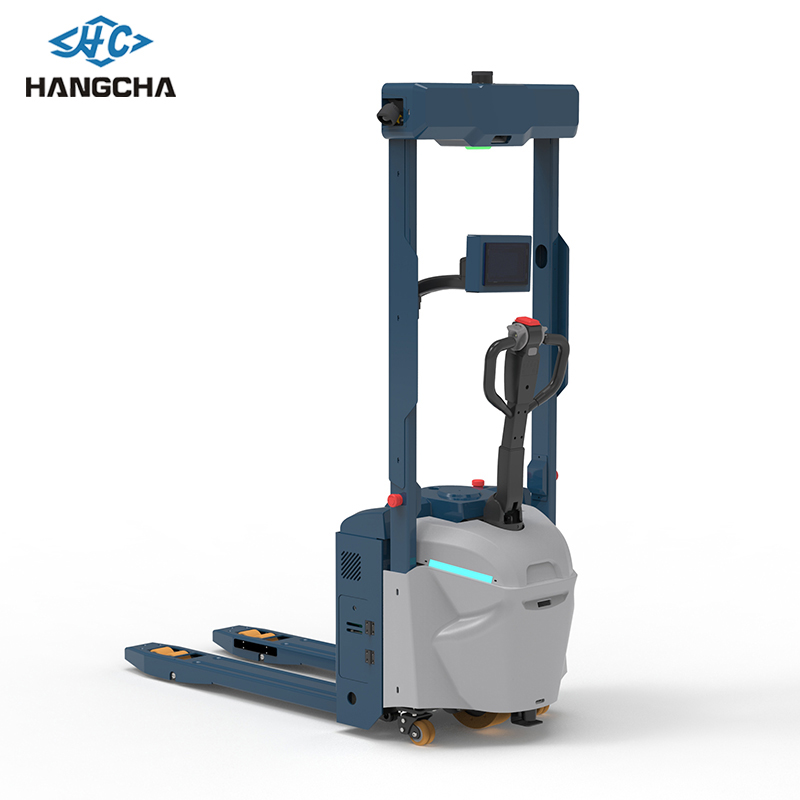
The push for autonomous handling has moved past the pilot phase. It's now coming from warehouses, distribution centers, and factories that need to move more product with fewer people—and they're ready to buy. Sellers who recognize this shift are having very different conversations than those still pitching traditional equipment. HANGCHA has been building autonomous forklifts and mobile robots that don't just demo well; they hold up in daily operations. In this post, we'll explore where demand is growing fastest and how to sell autonomous handling without falling into overhyped claims.
Identifying Industries Ready for Autonomous Handling
Not all sectors are equally suited to autonomous handling right now. The ones that make sense share a few traits: repetitive material flow, high labor turnover, and a tolerance for standardized containers. Warehousing and distribution centers often lead because their workflows are already structured around predictable movement patterns. In contrast, job shops or highly customized manufacturing settings rarely see the same immediate payback.
A practical way to assess readiness is to look at the physical environment. Fixed layouts, consistent lighting, and clean floors allow mobile robots and automated guided vehicles to operate without constant human intervention. If a facility spends more time managing exceptions than moving goods, autonomous handling will struggle. The sweet spot is an operation where 80% of the tasks follow a known sequence and the remaining 20% can be isolated or redesigned.
Beyond the floor, financial and organizational readiness matter. Industries with thin margins but high volume, such as grocery distribution or parcel sorting, often find that autonomous handling shifts costs from variable labor to depreciable assets. Yet the real signal is whether management can commit to data-driven process changes. Without that, even the most "ready" industry will stall.
Reading the Signs of Real Buyer Demand
Most sellers mistake polite browsing for genuine interest. They watch visitors nod at the right moments, ask a question or two, and assume a deal is close. But real demand leaves a different trail—one that rarely shows up in casual conversation. It appears in the speed of follow-up emails, the specificity of requests for custom pricing, or the way a prospect starts referencing your product in their own internal planning. These are the unforced signals that separate a maybe from a must-have.
Watch how urgency changes the rhythm of communication. A buyer with true demand stops asking about features and starts asking about availability, lead times, and contract terms. They want to know what happens after they say yes. Their questions become more logistical, more concrete. You might notice them looping in a colleague without being prompted, or asking for a reference call with a current customer in the same industry. That’s not curiosity—that’s a decision process gathering momentum.
One of the clearest signs is how they handle your price. A buyer with weak demand will push back on the number or go silent after hearing it. A buyer with real demand might still negotiate, but they negotiate as if they’re already inside the deal, not outside it. They ask for annual terms instead of monthly, or they ask how quickly you can onboard their team. That shift from “is this worth it?” to “how do we make this work?” is the moment you know the demand is real, not just polite.
Tailoring Pitches to Operational Pain Points
Most sales conversations stall because the pitch starts with what the product does, not which operational mess it cleans up. A warehouse manager drowning in misplaced inventory doesn't care about your dashboard's color scheme; they care that orders ship before the 2 p.m. cutoff. Start by identifying the friction that eats their day: manual data entry, unplanned downtime, duplicate approvals, or slow handoffs between shifts. Name those moments explicitly and tie your solution to the hours and errors they eliminate.
Tailoring the pitch means reading the team's workflow before the meeting. If you sell to a logistics lead, reference dock scheduling conflicts or carrier no-shows instead of generic ROI charts. For a hospital ops director, talk about bed turnover delays and shift-change documentation gaps. Then show your product as a fix for one narrow bottleneck first, not a suite of fifty features. That specificity makes the pitch feel less like a demo and more like a colleague who already understands the floor.
Turning Labor Pressures into Automation Conversations
For years, automation was treated as a distant capital project—something to revisit once budgets eased or next quarter’s targets were met. But when open shifts go unfilled week after week and overtime costs start eating into margins, the conversation changes. Managers once fixated on hiring numbers now ask which steps in a process actually deserve human attention. That shift reframes automation not as a workforce replacement, but as a way to stop burning out the people you already have.
A more productive approach ties automation directly to the pain labor shortages create. Instead of leading with machinery specs, start with data: hours lost to repetitive picking, onboarding time for roles that turn over every few months, injury reports from ergonomically hostile tasks. When a proposed automated cell can be shown to eliminate the two most physically demanding jobs on a line, the discussion stops being about headcount reduction and starts being about how existing operators can be redeployed to quality checks or machine tending.
Eventually, the best automation conversations begin within the team itself. A line lead who has spent three months covering for an unfilled position will be the first to suggest a cobot for the packing station. At that point, labor pressure has done something valuable—it has made automation feel less like a boardroom mandate and more like a frontline solution. The goal isn’t to replace the conversation about people with one about machines; it’s to make sure both conversations happen in the same room.
Starting Small to Win Larger Autonomous Deployments
Many teams assume that a large autonomous deployment requires a large initial rollout. That assumption often leads to costly failures. Instead, the most reliable path is to begin with a single, well-defined task or a small geographic area. This lets you observe real-world failure modes without risking the entire operation.
A small pilot gives your team the chance to refine sensor calibration, exception handling, and human override protocols. It also builds trust with operators who will eventually supervise the larger system. Once the small deployment runs continuously for weeks without major intervention, you have concrete evidence to justify scaling up.
Scaling then becomes a matter of replication rather than invention. You move from one vehicle to five, from one warehouse aisle to ten, from one city block to a neighborhood. Each step adds complexity, but the foundation has already been tested under real conditions. That is how small beginnings turn into large, dependable autonomous operations.
Educating Buyers Beyond the Initial Hype
Initial excitement usually fades once the demo glow wears off. Buyers start poking at the edges: how does this slot into a real workday, what does it cost when things go wrong, and where are the actual numbers? Education at this stage means ditching the feature parade and showing unpolished, everyday scenarios. A straightforward walk-through of a messy Monday morning often lands harder than a scripted success story.
Candor becomes the real differentiator. Instead of chasing another polished webinar, connect potential buyers with current users who can speak about the rough patches, the workarounds, and the point where the tool stopped feeling like a novelty. Those unfiltered conversations create a kind of trust that no launch campaign can replicate.
FAQ
E-commerce fulfillment centers, third-party logistics providers, and food and beverage plants are leading the charge. They're dealing with tight labor pools and unpredictable order volumes, so they see autonomous handling less as a futuristic upgrade and more as a way to keep shifts moving when hiring stalls.
Start by walking the floor with them and pointing out where manual moves create bottlenecks or safety risks. Instead of talking about autonomy as a concept, anchor the conversation around a specific pain point—like pallet jams at the dock or injuries from repetitive lifting—and show how a small fleet of autonomous units can relieve that pressure without a rip-and-replace overhaul.
The best teams avoid selling robots as a novelty. They map the customer's actual material flow first, then recommend only the autonomy level that makes financial sense. That consultative angle, paired with a clear path from pilot to scale, builds trust in markets where buyers are still figuring out what works.
The big three are cost, integration complexity, and fear of displacing workers. For cost, break down the total per-move expense over three years rather than quoting a sticker price. For integration, bring in a technical sales engineer early and show a staged rollout plan. For labor concerns, reframe the narrative: autonomous handling takes over the dull, dangerous moves and lets staff shift to higher-value tasks like quality checks or exception handling.
It tends to be longer and more collaborative. You're not just selling a forklift or conveyor; you're selling a change in daily workflow. Expect multiple stakeholder touchpoints—operations, IT, safety, finance—and a pilot phase that can run for weeks or months before a full order is placed.
ROI is usually the door opener, but it's not the whole story. Buyers want to see payback in labor savings, fewer damaged goods, and better throughput. However, the deals that close often hinge on softer wins too: more predictable staffing, the ability to run a third shift without hiring, or faster onboarding during seasonal peaks.
Look at regions with booming warehouse construction, ports experiencing congestion, or manufacturing hubs facing tight labor markets. Also pay attention to verticals like cold storage and pharmaceuticals, where the environment is tough on human workers and autonomous units can operate reliably in conditions people would rather avoid.
For smaller operations, keep the entry point modest—one or two autonomous pallet movers with a simple mapping interface and a subscription model can work. For large enterprises, design around fleet management, data integration with warehouse management systems, and the ability to scale across multiple sites without retraining operators from scratch.
Conclusion
Sellers who track warehouse throughput data, labor attendance, and order accuracy are finding that autonomous handling is no longer a speculative pitch. Industries like cold storage, parcel sortation, and automotive inbound logistics show repeated signs of real demand: operations managers ask about slip-sheet handling, maintenance intervals, and safety-rated LiDAR, not just whether the robot can move a pallet. The teams closing deals read those signals carefully. They do not chase every trade show lead, but focus on facilities where manual pallet jacks cause recurring injuries or where second and third shifts cannot be staffed. Then they tailor the pitch. Instead of leading with autonomy as a concept, they map specific workflows—unloading trailers, replenishing pick faces, staging outbound freight—and attach a dollar figure to rejects, dwell time, and missed cutoff penalties. That shift from technology fascination to operational pain makes the conversation feel like an audit, not a sales demo.
Labor pressure is the strongest entry point, but only when it is tied to a concrete operational cost. High turnover among lift truck operators, plus overtime premiums, creates a budget line that automation can offset. Sellers who frame the discussion around covering the 2 a.m. shift rather than showing an AMR earn longer attention. Starting small works because a single autonomous tugger route or a semi-automated case picking cell gives the buyer proof without a capital committee fight. Once that first deployment logs a few months of runtime data—uptime, pallets moved per hour, injury reduction—the path to a larger fleet becomes easier to justify. Yet the sellers who sustain growth are the ones who deliberately educate buyers beyond the hype. They explain edge cases, integration limitations, and the human oversight still required for exceptions. That honesty keeps expectations aligned and protects the relationship when the pilot hits a snag.
Contact Us
Contact Person: Liuxue
Email: [email protected]
Tel/WhatsApp: +86-19084200370
Website: https://www.hf-ec.com/