Smart Street Furniture OEM Solutions for Connected Urban Spaces
2026-10-02
Street furniture is having a quiet identity crisis—what used to be just a bench or a bollard is now expected to collect data, light up, and talk to the cloud. That shift is pushing cities and tech providers to look beyond off-the-shelf products. zemso steps in here with OEM solutions that make connected urban hardware less of a pipe dream and more of a practical build. If you've ever wondered who actually turns smart city concepts into durable, deployable street assets, keep reading.
Designing Street Furniture Your City Can Call Its Own
Most cities end up with benches, bollards, and bike racks that look like they were ordered from the same catalog. But when street furniture draws from local materials, construction techniques, or even the rhythm of a neighborhood, it stops being generic hardware. A bench made from reclaimed wharf timber in a port town, or a bus shelter whose roof echoes the pitch of nearby historic houses, instantly grounds the street in a particular place. This isn't about nostalgia; it's about giving residents something they can point to and say, 'That belongs here.'
The most successful designs usually come out of conversations with the people who actually use the space. Instead of a top-down decision to install standardized seating, ask commuters where they wait, where shadows fall at midday, or which corner feels unsafe. Small adjustments—a wider armrest for older adults, a lower bike rail for kids, a planter that also blocks wind—turn furniture into a shared infrastructure that works for daily life. When people see their suggestions reflected in the final product, the street becomes less anonymous.
Durability matters, but so does the ability to change. A city grows, demographics shift, and a plaza that worked ten years ago may need different kinds of seating or lighting now. Designing furniture as modular components, or choosing materials that age well and can be repaired locally, avoids the cycle of constant replacement. The goal isn't just to fill the street with objects, but to create a layer of the city that evolves alongside the people who call it their own.
Benches, Lights, and Shelters That Share One Quiet Network
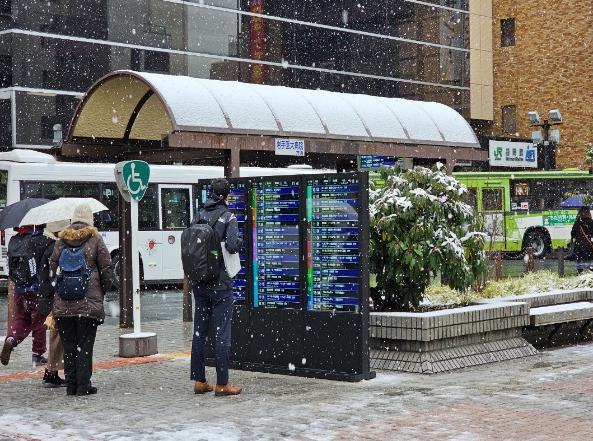
A bench that knows when you sit, a streetlight that dims just enough for the hour, a shelter that tightens its windbreak before the first gust—these objects rarely draw attention, yet each one is quietly exchanging signals with the others. The network they share has no visible dashboard, no humming server room, only a patient rhythm of small adjustments. It learns that the bench near the bus stop is occupied longer on rainy afternoons, so the shelter overhead warms its panels early. It notices that the light on the corner flickers when the temperature drops, so the nearest bench sends a subtle nudge to the maintenance log. Nothing announces itself.
What makes this network feel different is its refusal to interrupt. There are no pings, no pulsing LEDs, no voice telling you that the path ahead has been optimized. Instead, the bench simply feels drier, the light falls a little softer on tired eyes, the shelter blocks the wind without you ever hearing a motor. The infrastructure behaves less like a system and more like a kind of collective instinct—one that has been tuned over months of ordinary use. People sit, walk, wait, and the objects around them adjust in near silence, sharing only what matters for the next few minutes.
Modular OEM Platforms That Grow With Your Neighborhood
A modular OEM platform shouldn’t demand a one-size-fits-all city. Instead, it lets a compact delivery van share its battery floor and crash structure with a neighborhood shuttle or a small utility truck. When a district adds housing or a new commercial strip, the same base can be re-bodied, re-geared, or lengthened without waiting for a clean-sheet redesign.
The real advantage shows up at the curb. Shortened wheelbases fit narrow alleys, while extended versions handle school runs or weekend markets. Local shops can lease a chassis and swap the top hat as their needs shift, so the hardware never outgrows the block it serves.
Over time, these platforms accept quieter electric drivetrains, updated sensor packages, and different cabin layouts without forcing the whole neighborhood through a disruptive overhaul. Growth happens in small, deliberate steps instead of one oversized leap.
Street Tech That Blends In While Collecting What Matters
Walk through a modern neighborhood and you'll likely pass a dozen small devices without noticing them: sensor packs tucked into lamp posts, air quality monitors shaped like decorative nodes on benches, or traffic counters embedded in curb cuts. These aren't showpieces. They're designed to disappear into the visual clutter of the street, their casings matched to municipal fixtures and their wiring routed through existing conduit. The goal is an information layer that never announces itself.
What they gather tends to be surprisingly practical. Footfall patterns help adjust crosswalk timing, noise levels trigger real-time alerts for enforcement teams, and microclimate readings inform everything from tree watering schedules to emergency cooling centers. Because the hardware doesn't scream "technology," residents go about their day without that sense of being watched, while city staff get a stream of data that is both granular and grounded in the actual rhythms of the block.
This quiet approach also solves a maintenance problem. When sensors look like standard street furniture, they can be serviced by the same crews that fix lights and signs, reducing the need for specialized tech visits. And if a unit fails, it doesn't leave an obvious electronic scar; it simply becomes another unremarkable object until it's swapped out. The result is a sensing network that earns its keep without dominating the public space it's meant to serve.
From Power Outlets to Air Quality: Packing Utility Into Every Panel
Most panels treat power as an afterthought—one or two outlets tucked near the floor, often hidden behind furniture. This one takes a different route. Each panel includes integrated power outlets and USB-C ports positioned exactly where you need them, whether you're working at a desk or charging devices in a hallway. No more crawling under tables or unplugging the lamp to free up a socket.
Air quality is usually invisible until it becomes a problem. That's why the same panel quietly tracks particulate matter, humidity, and CO₂ levels throughout the day. The readings feed into a subtle LED indicator on the panel's edge, shifting from green to amber when ventilation drops. You don't need a separate monitor or a phone app—just glance at the wall.
The real trick is how all this fits without bulking up the wall. The internals are packed behind a slim faceplate that sits nearly flush, leaving room for insulation and wiring. Because the sensors and outlets share a single backplane, installation stays simple for electricians, while occupants get a cleaner space with fewer gadgets cluttering the room.
Why Durable Doesn't Have to Look Industrial Anymore
For a long time, choosing durable materials meant accepting a certain visual bluntness: exposed fasteners, thick metal edges, and the kind of gray-on-gray palette that belongs in a warehouse. That trade-off no longer holds. Advances in powder coating, precision forming, and mixed-material construction have allowed toughness to slip into softer silhouettes and warmer finishes. A table that can survive a decade of daily use now arrives with a matte, almost textile-like surface. The strength is still there—it just doesn't need to announce itself with rivets and raw steel.
The shift is partly cultural. As homes and workplaces blend, people expect the objects around them to be both resilient and emotionally easy to live with. Manufacturers have responded by hiding reinforcement inside slim profiles, using engineered polymers that mimic plaster or oak but resist scratches better than either. Even outdoor furniture, once a parade of heavy wrought iron, now gets upholstered in solution-dyed fabrics that hold their color through sun and rain while feeling closer to linen than vinyl.
What makes this new generation of durable design convincing is that it doesn't treat softness and strength as opposites. Rounded corners can be cast from aluminum that won't dent. A pale oak finish can sit on a core of marine-grade plywood. The industrial look wasn't the only way to signal longevity—it was simply the most obvious one. Now that designers have learned to make long-lasting things look calm and considered, there's less reason to live with anything that feels like factory equipment.
FAQ
We handle the full product lifecycle from industrial design and engineering to firmware, sensor integration, and final assembly. Your branding goes on the outside, but the inside is built around your specific urban deployment needs.
Most projects start with a mixed approach. We can retrofit existing benches, poles, and kiosks with connected modules, or design new units that match your current street furniture family. It depends on what's already in the ground and how much data throughput you actually need.
We don't lock you into one radio or protocol. Our enclosures support cellular, LoRaWAN, NB-IoT, Wi-Fi, and even private mesh. Before production, we run a quick site survey to see which networks are reliable in the target district, then match the antenna and modem layout to that reality.
Beyond just colour and logo, you can change the material mix, seating ergonomics, charging port placement, sensor bays, and the types of displays or indicators. We keep the structural core modular so custom panels don't force a full retooling every time you tweak one feature.
The housings use tamper-resistant fasteners, impact-rated composites or powder-coated steel, and gasketed seams for heavy rain and dust. Internal electronics are potted or conformally coated. We also test for thermal cycling from -20°C to 60°C and simulate common vandal attacks before any pilot deployment.
A small pilot of 10 to 20 units usually takes about 10 to 14 weeks from design freeze to delivery, assuming no major custom tooling. A full district rollout of several hundred units can run 20 to 26 weeks depending on the mix of configurations and your approval cycles.
Yes. The sensor bays, battery packs, and communication modules sit behind a service panel that field technicians can open without special rigging. When a new modem or sensor generation comes out, you swap that module instead of replacing the whole bench or pole.
We focus on environmental and operational data: footfall counting via low-resolution thermal sensors, air quality, noise levels, bin fill status, lighting energy use, and equipment health. No facial recognition and no persistent individual tracking. The data streams go directly to your city platform or third-party dashboard, not through our own cloud unless you ask for it.
Conclusion
Cities often end up with street furniture that looks borrowed from a catalogue, but the point of an OEM approach is to give planners a blank enough canvas. Benches, bike racks, and shelters can carry local materials, subtle municipal colors, or neighborhood-specific engraving without forcing a redesign from scratch. That kind of flexibility matters when a district wants its public space to feel like part of a longer story, not a one-off procurement decision. The hardware should read as quiet background: a bench that offers charging, a lamp housing a small environmental sensor, a shelter panel that reports footfall. None of it needs to announce itself. By keeping the connected layer unobtrusive, the furniture remains approachable, and the data it gathers starts to feel like a side effect of good urban design rather than surveillance.
Under the surface, these components share one low-maintenance network, which means adding a new bus shelter or swapping a lighting module does not require a separate IT project. Modular OEM platforms let a city start with twenty smart benches and expand as budgets allow, while the physical enclosures stay weather-tight and easy to service. Utility can be packed into almost any panel: USB-C points, air quality intakes, acoustic sensors, or even small green walls on the back of a shelter. Durability has also shifted. Powder-coated aluminum, recycled composites, and textured finishes hold up to salt, sun, and vandalism without looking like prison-grade equipment. The result is street furniture that feels less like an appliance and more like a native part of the street.
Contact Us
Contact Person: Leo
Email: [email protected]
Tel/WhatsApp: +86 18901905138
Website: https://www.zemsogroup.com/