Spiral Freezer Solutions for Maximizing Throughput and Product Quality
2026-08-17
Freezing is easy. Freezing well at scale is not. Spiral freezers promise high throughput, but too many operations learn the hard way that speed without precision wrecks texture, flavor, and moisture retention. That’s where Worldbase changes the equation. Our spiral freezer solutions are engineered to squeeze more product through your line without squeezing the life out of it. In this article, we’ll unpack how the right airflow, belt design, and control systems can help you hit ambitious production targets while keeping every batch as good as the first.
How Spiral Freezer Airflow Design Impacts Freeze Time and Yield
In a spiral freezer, uneven air distribution quietly adds minutes to freeze time. The blast of cold air often follows the path of least resistance, hitting trays near the fan outlet hard while barely skimming the inner rows. That temperature spread forces operators to run the belt slower than the theoretical freeze time would suggest, and every extra minute in the freezer pulls more moisture out of the product. The result is a longer cycle and lower yield, even if the thermostat reads right.
The direction of airflow matters as much as its speed. Vertical impingement jets deliver a sharper surface heat transfer than air moving parallel to the trays, but they can also lift lightweight items or blow frost into open gaps. A well-designed spiral enclosure uses baffles and varying slot sizes to keep the cold stream hugging the product surface, rather than short-circuiting through the space between stacked belt tiers. When that short-circuiting is ignored, a fraction of the fan energy chills empty air while the core of a dense product load stays soft.
Practical fixes like adjustable deflectors, zoned fan speeds, and pressure sensors between each spiral tier let technicians reshape the air map for a specific product load. Instead of accepting a one-size-fits-all blast, the airflow can be tuned to push harder where the product mass is thickest and ease back where overcooling would only cause freezer burn. Plants that invest in this kind of airflow balancing commonly see freeze times drop by 5 to 15 percent without raising energy use, and the payoff on yield is direct: less weeping, fewer cracked coatings, and more saleable kilograms at the end of the shift.
Sanitary Welds, Easy Access, and Other Build Details That Protect Product Quality
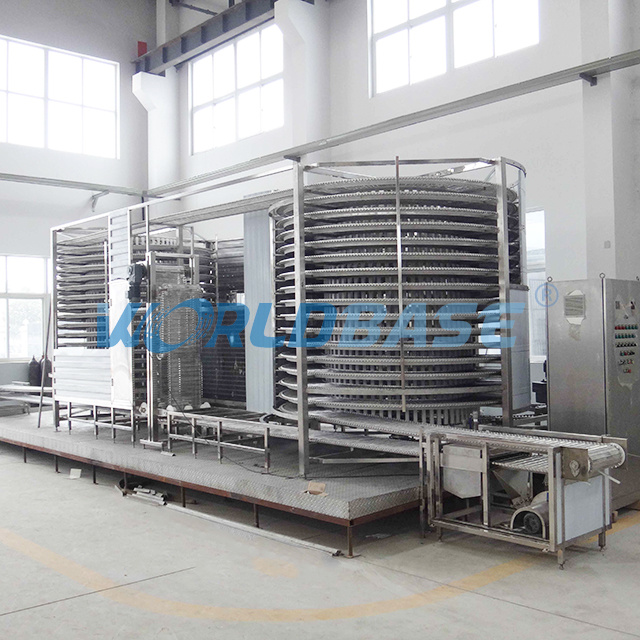
In food and pharmaceutical equipment, a weld is never just a weld. Sanitary welds are ground flush and polished to a mirror finish so that nothing—bacteria, residue, or cleaning chemicals—can collect in crevices. The goal is a continuous, uninterrupted surface where the metal flows as if it were one piece. Even the inside of tubing gets purged with argon during welding to prevent oxidation and leave a bright, passive surface that resists corrosion.
Easy access matters more than it looks on a spec sheet. If a machine takes an extra ten minutes to open for inspection, that step gets skipped. Smart designs use quick-release guards, hinged doors that stay open on their own, and sloping internal floors that drain by gravity. Every corner you can see and touch means one less place for product to hide.
Other build details quietly protect quality: polished radii instead of sharp corners, sealed control cabinets with positive pressure, and materials that handle both product and aggressive washdowns. These aren't flashy features, but they change how equipment behaves over years of daily use. The difference shows up in longer runs between cleanings and fewer contamination scares.
Belt and Drum Configurations That Fit High-Mix Food Production
High-mix food lines rarely reward a one-size-fits-all approach. The real leverage comes from matching belt and drum geometry to the product's behavior, not just its dimensions. A gentle incline with a textured belt can hold delicate pastries in place, while a drum with wider spacing lets sticky dough release without tearing. These adjustments sound minor, but they determine whether a changeover takes ten minutes or forty.
Practical setups often combine a modular plastic belt with quick-release drum hubs, allowing operators to swap contact surfaces without realigning the entire line. For wet or oily products, a drum with a slight crown helps keep the belt tracking straight even as residue builds up. The goal is not perfection on day one, but a configuration that tolerates variation and lets the line breathe between recipes.
Some plants push this further by keeping two or three pre-set belt and drum pairs on carts near the line. Each pair is tuned for a product family—crumbly, fluid, or film-wrapped. When the schedule shifts, the crew rolls in a matched set, snaps the tension, and is back to production before the next batch is staged. That kind of deliberate simplicity is what separates a flexible line from a merely complicated one.
Reducing Defrost Cycles to Keep Lines Moving Through Peak Shifts
Frequent defrost cycles can throttle throughput during the busiest parts of a shift. Instead of letting frost buildup dictate the schedule, many plants now tie defrost triggers to actual coil temperature and air pressure readings rather than a fixed timer. This keeps the line running longer between interruptions, especially when order volumes spike.
Small changes to airflow and door management often cut defrost frequency more than any timer adjustment. Stripping curtains, quick-close doors, and scheduled loading windows reduce warm, humid air from entering the freezer. When the evaporator sees less moisture, the frost layer grows slower, so you can push defrosts further apart without risking coil freeze-up.
During peak shifts, the goal is to delay defrosts until a natural break or shift change. Some teams pre-cool the room slightly before the rush, then allow a brief hot-gas defrost only after the line stops. This approach keeps product moving when it matters and moves the downtime to a window with less impact on daily output.
Recovering Waste Heat to Cut Energy Bills Without Extra Footprint
Many facilities already vent hot exhaust from boilers, ovens, or air compressors straight outside. A compact heat recovery unit can sit right in that exhaust path—often mounted on the wall or in the duct itself—so there's no need to clear floor space for extra equipment. It captures the thermal energy that would otherwise disappear and uses it to preheat incoming water or air.
The savings show up gradually month after month. Because the recovered heat does part of the job that a boiler or furnace would normally handle, fuel consumption drops. In a commercial kitchen, for example, the hot air leaving a dishwasher or oven can warm the cold feed water going into the water heater, cutting gas use by double digits without changing the kitchen layout.
Retrofits are usually straightforward: a heat exchanger, a small pump, and some insulated piping. Everything fits into existing mechanical spaces or tight ceiling cavities. That low-footprint approach makes waste heat recovery practical for buildings where every square foot is already spoken for.
Fine-Tuning Dwell Time and Temperature for Tough Products Like Sauces and Dough
Getting sauces and doughs to behave predictably often comes down to how long they spend under heat and how evenly that heat reaches every part of the batch. Sauces with high starch or tomato solids can thicken unevenly if the dwell time is too short; the outer layer near the heat exchange surface may set while the core remains thin. Extending the hold at a slightly lower temperature gives viscosity time to develop without scorching the contact layer.
Doughs are trickier because their gluten network and starch granules respond to temperature at different rates. A short, hot dwell can set the exterior before leavening gases have fully expanded, while a long, gentle hold allows the dough to relax and hydrate evenly. Fine-tuning often means adjusting the temperature curve rather than picking a single set point—ramping up slowly through the 40–60°C range, then holding briefly at the final target to stabilize the structure.
For both product types, small changes in dwell time can shift texture from pourable to spoonable or from extensible to tough. Rather than relying on fixed recipes, many processors use a combination of in-line viscosity checks and time-temperature integrators to track cumulative heat exposure. This approach makes it possible to match the actual thermal history to the product’s rheological needs, batch after batch.
FAQ
Their compact vertical design keeps a long belt inside a small footprint, so product stays in the freezing zone longer without demanding more floor space. That naturally supports higher throughput.
Controlled, evenly distributed airflow prevents surface ice crystal formation and reduces dehydration. When air hits product from the right angles, items freeze quickly and retain texture, moisture, and appearance.
Items that need gentle handling or run at high volumes, like poultry, seafood, bakery goods, ready meals, and formed meat products, typically see the best results since the conveyor can be configured for delicate or coated products.
Yes, with proper belt separation, washdown options, and zoning within the enclosure you can run different product types sequentially. Many designs also include sanitation-friendly features to simplify cleaning between runs.
It starts with your target throughput, product size, and available ceiling height. Calculate the retention time needed at your target temperature, then match belt length and tier spacing so the freezer fits both your process and building constraints.
Regular inspection of belt tension, lubrication of drive components, coil defrost cycles, and checking door seals all help. Keeping evaporator coils clean is crucial because frost buildup reduces airflow and forces the system to work harder.
Automated controls can adjust fan speed, belt speed, and temperature setpoints based on real-time product load. That reduces energy waste during partial loads and ensures consistent freezing even when incoming product temperature varies.
They can be more efficient per kilogram of product because the compact structure minimizes exposed surface area and cold air loss. Using variable-speed fans and demand-based defrost further lowers energy use without compromising freeze quality.
Conclusion
A spiral freezer is only as good as the way air moves through it. Even slight imbalances in airflow can create warm spots that extend freeze time, drive up moisture loss, and cut yield, so the best lines treat air distribution as a primary design target, not an afterthought. That same design discipline extends to the surfaces product touches. Sanitary welds, sloped drip pans, and tool-less access panels do more than satisfy inspection checklists—they prevent condensate and debris from compromising food safety and make sanitation a faster, more reliable part of the shift. For plants running multiple SKUs, belt and drum choices matter just as much. A wider belt with a tight turning radius or a drum sized for gentle handling lets you switch between delicate items and dense, heavy products without constant reconfiguration.
Keeping the line moving during peak shifts often hinges on how rarely the coil needs defrosting. Better air management, lower coil face velocities, and demand-based defrost logic can stretch run times between cycles, so throughput doesn't collapse right when orders peak. The heat pulled out of product is not a waste product; capturing it for pre-heating wash water or space heating trims energy bills without adding a separate mechanical room. For hard-to-freeze items like sauces, fillings, and dough, dwell time and air temperature have to be tuned together. A lower temperature with excessive airflow dries the surface, while a gentler profile can leave cores under-frozen. The practical sweet spot usually comes from testing narrow time-temperature windows under real production loads, then locking in those setpoints so operators are not guessing shift to shift.
Contact Us
Contact Person: Mr Yang
Email: [email protected]
Tel/WhatsApp: +8613809083091
Website: https://en.worldbase.cn