

Stainless Steel Casting Recommendations You Can Trust for Durable Parts
2026-10-19
When you're sourcing metal components for demanding applications, stainless steel casting advice can be all over the map—some recommendations hold up, others crumble under real-world stress. That's why we've put together a set of stainless steel casting recommendations you can actually trust for durable parts, cutting through the noise so you don't have to gamble on guesswork. Whether you're an engineer fine-tuning a critical assembly or a buyer tired of premature failures, the insights ahead will help you choose with confidence. And if your project also involves iron castings, check out Zhaoyuqi for equally dependable options.
Match the Alloy to the Environment—Not Just the Datasheet
Choosing an alloy based solely on its datasheet is like packing for a trip by only checking the temperature—you might get the general idea, but you'll miss the humidity, the wind, and the salt spray. A stainless steel that performs flawlessly in a dry indoor setting can corrode within months on a coastal balcony, not because the alloy is defective, but because the environment was never part of the decision. The real question isn't just what the metal is made of, but what it will be up against: airborne chlorides, acid rain, industrial fallout, or even the cleaning agents used on it every week.
Every environment has its own chemical fingerprint, and matching an alloy to it means looking beyond generic labels like "marine grade" or "food safe." For example, 304 stainless handles most urban interiors well, but move within a few miles of breaking surf and you'd be wiser to step up to 316L, where the added molybdenum resists pitting from salt-laden mist. Yet even 316L can struggle in a closed tunnel with poor drainage and de-icing salts—there, a duplex alloy like 2205 might be the only sensible choice. The datasheet tells you tensile strength and chromium content; it doesn't tell you that the alloy will sit in standing brine or face constant UV on a rooftop.
The best material decisions come from walking the site, not just the spec sheet. Look at what has failed there before, if anything. Check the microclimate: is it shaded and damp, or sun-baked with occasional fog? Ask how often the surface gets rinsed by rain—or never. A little field observation can save you from the expensive cycle of replacing a "perfectly good" alloy that was simply in the wrong place. After all, the goal isn't to buy the strongest metal on paper; it's to install the one that will still look and function like itself five or ten years down the line.
Eliminate Stress Risers Before They Turn into Fractures
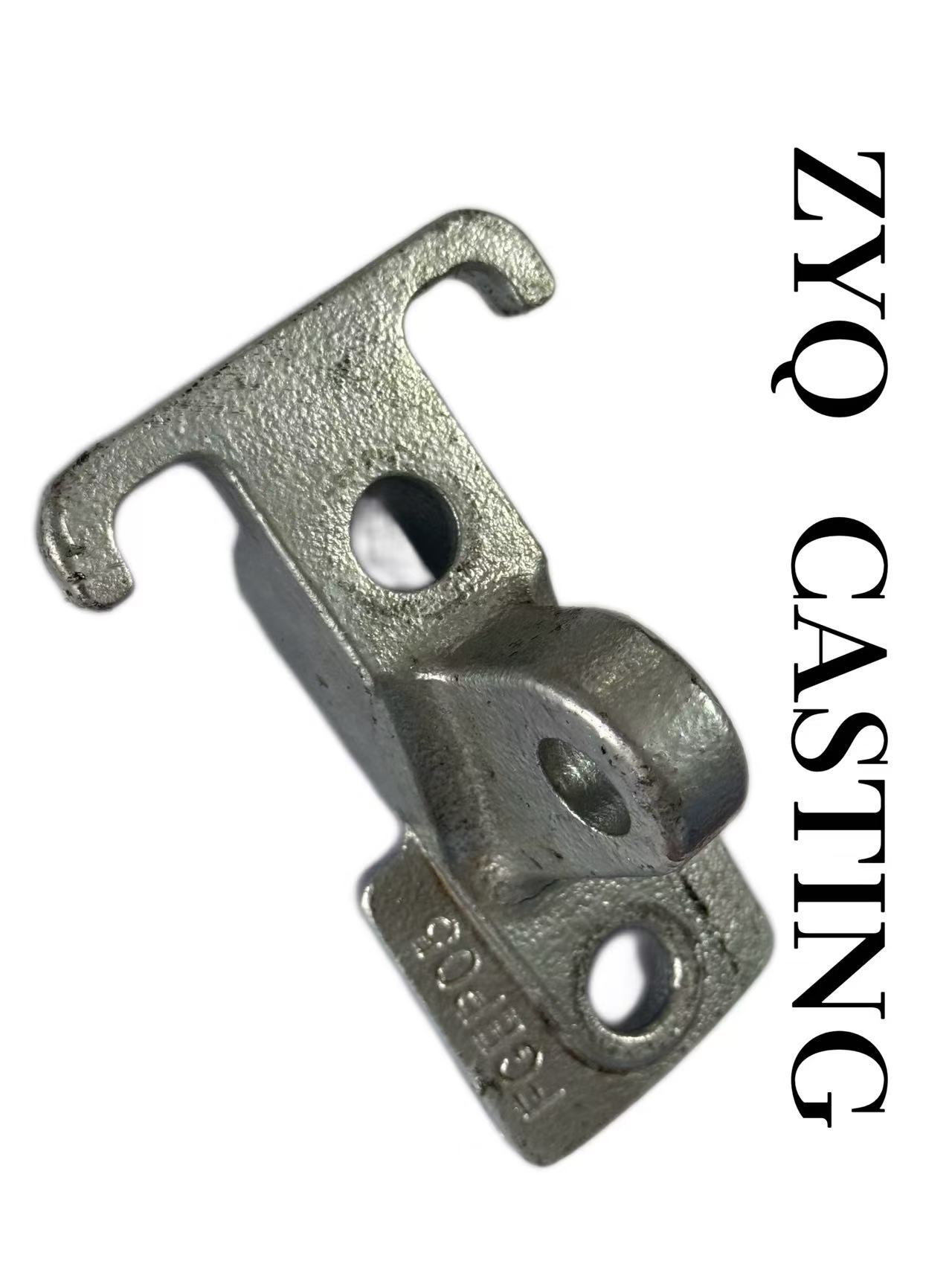
A scratch on a shaft, a sharp corner at a keyway, a weld toe left rough—these are the quiet beginnings of most mechanical failures. They don't look like much, but each one concentrates stress into a tiny region, forcing the material to carry far more than its fair share. Over time, under repeated loading, that spot starts to whisper. Then it cracks. The fix is rarely complicated, but it demands a change in how you see the part: not as a finished product, but as a collection of stress paths begging to be interrupted.
The best time to deal with a stress riser is before the part ever leaves the drawing board. Generous fillets, blended transitions, polished surfaces—these aren't cosmetic choices. They're structural decisions that spread load over a larger area, lowering the peak stress by half or more in many cases. Even in service, you can hunt for trouble: run a finger over the surface, use dye penetrant on suspect areas, and replace anything that shows a sharp notch or a line of corrosion pitting. The part that fails tomorrow is usually the one that was already telling you about it last month.
Some engineers get away with ignoring small stress risers for years, and that's exactly the trap. A design that survives a static test can still die young under vibration or thermal cycling. The difference between a long service life and a sudden failure often comes down to whether someone took ten minutes to radius a corner or polish out a tool mark. Don't wait for the fracture to teach you the lesson—look for the riser, and remove it while it's still just a scratch.
Rethink Heat Treatment to Unlock Hidden Durability
Most manufacturers treat heat treatment as a fixed recipe—same temperatures, same soak times, same quench. But the real gains in fatigue life and wear resistance often come from questioning those defaults. Small shifts in austenitizing temperature or a tweak to tempering duration can rearrange microstructures in ways standard specs never capture.
Hidden durability rarely shows up on a hardness tester. It lives in residual stress balance, grain boundary chemistry, and the subtle elimination of brittle phases. Rethinking your thermal profile means mapping those variables for each alloy and part geometry, then adjusting cycles until the failure mode moves from sudden fracture to slow, predictable wear.
That kind of revision demands more than a better oven. It asks for interrupted quench trials, selective cooling, and sometimes a second tempering step that costs minutes but adds years of service. The payoff is a component that survives loads the original specification never anticipated—without changing the alloy or adding weight.
Specify Surface Finish with Wear Conditions in Mind
Surface finish specifications rarely work in isolation. When engineers mark an Ra or Rz value on a drawing, they often default to common industry numbers without considering the actual friction and contact stresses during operation. A truly useful specification must start from the wear mechanism—whether it's abrasive, adhesive, or fatigue wear—because each case places very different demands on the surface texture.
For sliding contacts, a roughness that's too low can prevent the lubricant film from forming, actually promoting micro-welding between asperities, while a value that's too high will score the mating surface. A practical approach is to first identify the hardness difference between the paired materials and the load level, then select a finish grade slightly more conservative than the rule-of-thumb value, leaving room for field feedback adjustments. For surfaces subjected to impact or alternating stress, also pay attention to waviness and lay direction, since a single roughness parameter cannot capture these influences.
Remember that wear is a progressive process. The initial finish only guarantees performance during the early running-in stage. If possible, record the evolution of wear marks during prototype testing and fine-tune the surface specification accordingly—this delivers far more value than relying on a fixed number from a handbook.
Build a Pre-Shipment Inspection Routine That Catches Defects
Most defects slip through because inspectors rely on memory rather than a fixed sequence. Build a routine around three gates: a carton drop test before opening, a surface scan under consistent side lighting, and a functional check using the same fixture the buyer will use. This eliminates the "I looked but didn't see" problem and makes each step repeatable across inspectors.
Make the routine self-correcting by embedding a defect decision tree. When you find a scratch, don't just label it minor; ask whether the same scratch in a different location would change the call. Keep a physical defect board with tagged samples from past shipments and update it weekly. This turns subjective judgment into a standard that a new inspector can follow without asking for clarification.
Finally, run a five-minute post-inspection review before leaving the floor. Compare your defect count against the last three orders from the same factory, and if the pattern shifts—same defect, different product line—stop and recheck. A routine that catches defects isn't just thorough; it actively hunts for why the process failed, not just what failed.
Calculate Total Cost of Ownership, Not Just Purchase Price
The sticker price on a piece of equipment rarely tells the whole story. Once you factor in energy consumption, routine maintenance, spare parts, downtime, and eventual disposal, a “cheap” machine can quietly drain your budget for years. Smart buyers look past the upfront number and map out every expense expected over the machine’s realistic lifespan — from installation and operator training to software updates and unexpected repair bills. Only then does the true cost become visible.
Consider two seemingly similar models: one costs $5,000 less at checkout but burns 30% more electricity and requires specialized technicians twice a year. Within three years, that initial savings evaporates. A proper total cost of ownership (TCO) analysis puts all these variables on the same page, letting you compare options on equal footing. It shifts the conversation from “what can I afford now?” to “what will serve me best over the next decade?” — a far more useful question for any serious investment.
FAQ
For most damp or mildly corrosive settings, 316 and 316L are the workhorses. The molybdenum content makes a real difference against pitting. If the part faces chlorides or salt spray, consider duplex grades like 2205 for extra strength and resistance.
Look at the part geometry, required tolerances, and order volume. Investment casting shines when you need fine details, thin walls, or a smooth surface straight from the mold. Sand casting is more economical for large, simple shapes where some extra machining is already planned.
Yes, and it is often overlooked. Solution annealing restores corrosion resistance after welding or heavy machining and relieves internal stress. For precipitation-hardening grades like 17-4, a specific aging cycle can boost hardness and tensile strength without sacrificing toughness.
Electropolishing is the top choice for sanitary or food-contact surfaces because it smooths microscopic peaks where bacteria can hide. Passivation after any mechanical finishing also helps rebuild the protective oxide layer. If the part just needs a uniform look, glass bead blasting followed by passivation works well.
Usually it is surface contamination or carbide precipitation. Iron particles from tooling can embed in the surface and rust, or slow cooling can cause chromium carbides to form at grain boundaries. A proper pickling and passivation step after casting removes free iron and restores the passive layer.
Keep wall thickness as uniform as possible and use generous radii instead of sharp corners. Sudden section changes create hot spots and stress risers during solidification. Also work with the foundry on gate placement so molten metal fills the mold evenly rather than racing through one thin rib.
Ask for material test reports that trace the heat number, not just a generic certificate. Request sample castings and have them checked with dye penetrant or X-ray if internal soundness matters. A foundry that openly shares its process control data and invites a pre-production audit is usually more reliable than one that promises quick results without documentation.
Conclusion
Durability in stainless steel castings rarely comes from a single impressive material spec. It starts with matching the actual service environment, not just what the datasheet promises. A 316 alloy might handle marine exposure beautifully but fail quickly in a high-chloride, low-flow crevice where 2205 duplex would have been the better call. Once the alloy is right, look at the geometry. Sharp internal corners, abrupt section changes, and poorly placed gates create stress concentrations that turn normal cyclic loads into crack initiation points. Smoothing those transitions and relocating parting lines away from high-stress zones are simple moves that prevent fractures long before they happen.
Heat treatment is another lever people often leave untouched. A well-designed solution anneal or precipitation hardening cycle can relieve residual stresses and refine grain structure, adding years to fatigue life without changing the casting's shape. Surface finish matters just as much: in abrasive or sliding conditions, a specified Ra value alone won't save you—think about directionality, hardness, and whether a passivation or nitriding step makes sense. Before parts ship, inspect beyond dimensional checks. Dye penetrant testing, radiography on critical sections, and a documented visual standard catch porosity, cracks, and inclusions that later cause field failures. Finally, don't buy on price. A cheaper casting that requires rework, early replacement, or unplanned downtime costs far more over its life. Compare total cost of ownership, including maintenance intervals and failure risk, and the so-called expensive option often ends up being the most economical choice.
Contact Us
Contact Person: Nico Yin
Email: [email protected]
Tel/WhatsApp: 8618561567088
Website: https://www.ductileironparts.com/