

T15 LED Reverse Light Bulb Supplier You Can Trust for Bright Backup Lighting
2026-10-26
You know that moment when you shift into reverse and the backup lights barely reach the curb? That's usually a sign your T15 bulbs are due for an upgrade. But not all LED reverse bulbs are created equal—brightness claims often fall apart in real-world use. LUXFIGHTER has built its reputation by making T15 LED reverse bulbs that actually deliver the crisp, wide beam you need when backing up. If you're searching for a supplier you can trust, the details ahead will show you what separates a reliable bulb from a disappointing one.
What Makes T15 LED Reverse Bulbs a Practical Upgrade
Backing up at night with dim factory bulbs feels like reversing into a black hole. T15 LED reverse bulbs swap that weak glow for a crisp, wide beam that actually shows you what's behind the bumper. The instant full brightness means no waiting for the bulb to warm up while your foot hovers over the gas. You'll spot curbs, trash cans, and even that low concrete post before your bumper finds it first.
These bulbs aren't just brighter on paper; they hold up in the real world too. A good set handles voltage fluctuations and weather swings without flickering or burning out after a month. Installation usually takes less than ten minutes with no extra wiring or load resistors needed on most modern vehicles. Plug them in, twist, and you're done.
Where they really earn their keep is longevity. Unlike halogen bulbs that slowly dim and die, quality T15 LEDs maintain output for tens of thousands of hours. You won't be popping the tail light housing open every few months. For a part that costs about the same as a couple of takeout meals, the daily convenience and safety boost make it one of the easiest upgrades you can do without touching a wrench beyond a screwdriver.
Real Differences Between Cheap and Reliable T15 Bulbs
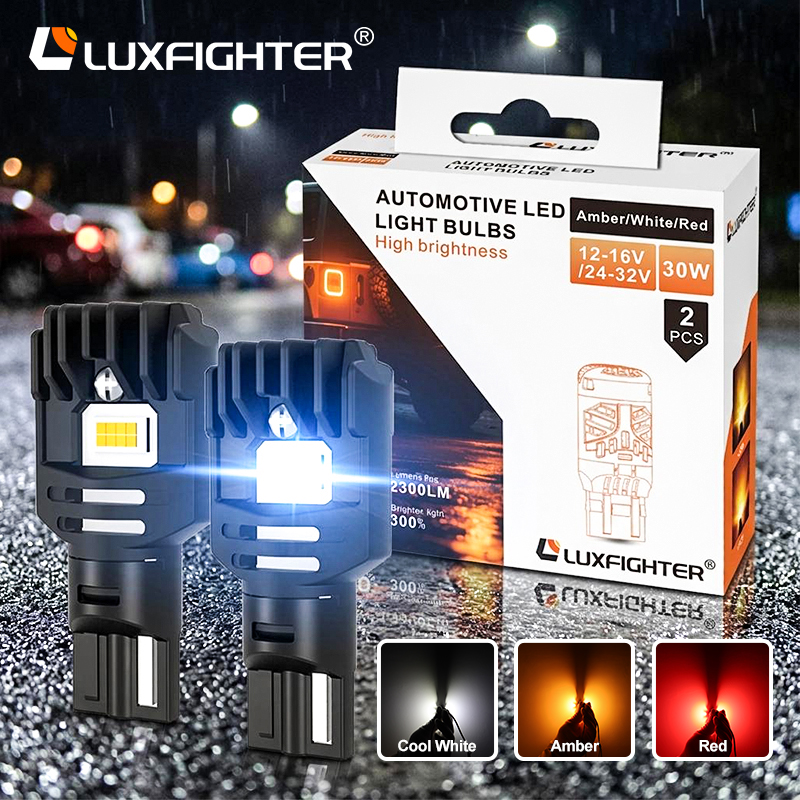
The first thing you notice with inexpensive T15 bulbs is how the base and contacts are built. Cheap versions often use thinner metal tabs that bend or corrode after a few heat cycles, leading to flickering or dead sockets. Reliable ones tend to have sturdier brass or nickel-plated contacts that hold their shape and resist oxidation, which matters more than most people think in a cramped housing.
Beyond the obvious brightness differences, heat handling separates the two. Budget bulbs cram LEDs or filaments into tiny housings without proper heat sinking, so they either dim prematurely or fail outright within months. A dependable T15 will integrate a small aluminum core or better thermal design, letting it run cooler and keep its output stable across long night drives.
Fitment is another overlooked gap. Cheap T15 bulbs sometimes have slightly off-spec wedges that wiggle loose or require force to seat, damaging the socket. Reliable options match factory dimensions tightly and include a modest warranty, so you aren't replacing the same bulb twice a year. In the end, the real difference isn't just price, it's how often you have to open the housing again.
Installation Notes Nobody Mentions for T15 Backup Lights
You’ll discover pretty quickly that the factory wiring for the T15’s reverse circuit doesn’t route where every forum thread claims it does. The harness hides behind the driver-side kick panel, but the connector you actually need is tucked above the wheel well, not beneath the sill plate. Pop the lower dash trim and trace the green feed wire with the purple tracer—it’s the only one that stays hot in reverse, regardless of what the wiring diagram suggests.
Mounting the housings is straightforward, but the real gotcha is the angle. If you bolt them flush to the bumper’s underside, the beam shoots straight across the ground and you’ll swear the lights are dead. Shim the rear edge down about eight to ten degrees. Anything less works fine for a driveway, but you’ll blind nobody and see nothing past the tailgate. Also, skip the included self-tappers; they back out after a month of washboard roads. Drill through and use stainless bolts with nylock nuts, and run the wire through a grommet that actually seals—the cheap rubber plugs that come in the kit tear the moment you pull the harness through.
And here’s the odd one: after everything is wired and aimed, you may notice the reverse lights flicker when the engine is cold and you shift out of park before the idle settles. That’s not a bad ground on your new lights—it’s the transmission range sensor warming up. Give it thirty seconds, cycle the shifter once, and the flicker disappears. No need to rip the interior apart chasing a phantom short. Most people never mention this because they finish the install on a warm afternoon and never test it again until the first frost.
Brightness Without Blinding: Choosing the Right Output
A display that glares like a car's high beams at midnight might seem impressive in a showroom, but it quickly turns into a headache on your desk. The goal isn't to crank up the lumens until the screen doubles as a flashlight; it's to find that sweet spot where details stay crisp without forcing you to squint or look away. Most people never touch the brightness slider after unboxing, yet this single setting can make the difference between a productive afternoon and a strained, watery-eyed evening.
Choosing the right output starts with the room you're in, not the numbers on a spec sheet. In a softly lit living room, running a monitor at full blast doesn't make the picture better—it just paints everything with a harsh, clinical glow that flattens shadows and washes out colors. Instead, lower the brightness until white backgrounds feel like paper under a reading lamp rather than a spotlight, then nudge it back up just enough to keep darker scenes legible. The same logic applies on the go: a laptop at 40% brightness in a dim café can be easier to read than at 90%, because your eyes aren't fighting the screen.
Many people assume brighter always equals better, but that belief ignores how our eyes actually adapt. A well-tuned display should feel invisible after a few minutes, not like a constant beacon demanding attention. If you catch yourself leaning in or rubbing your temples, the output is likely too strong for the environment. Play with the setting for a day—start lower than you think you need, then raise it only when you genuinely struggle to discern fine text or subtle gradients. You'll often find that a moderate, stable brightness beats a blinding one for comfort and long-term clarity.
How a Dependable Supplier Handles Quality Control
A dependable supplier doesn't treat quality control as a final checkpoint but as a rhythm that runs through every stage of production. From the moment raw materials arrive, technicians run batch tests on composition and durability instead of waiting for finished goods. On the factory floor, operators use calibrated gauges and digital logs to flag even minor deviations before they compound. This early-warning mindset keeps defects from ever reaching the assembly line, which is far less costly than catching them at the end.
Beyond the machinery, a trustworthy supplier builds redundancy into its inspection process. One team handles in-line checks every two hours, while a separate quality auditor performs random pulls from each shift. The two sets of eyes rarely overlap, so a hidden flaw that slips past one layer often gets caught by the other. Suppliers that are serious about consistency also store sample swatches and measurement data from every order, giving clients a clear trace back to any batch number or date code if a question ever arises.
What separates dependable suppliers is how they behave when something goes wrong, because at some point it will. Instead of hiding the issue, they quarantine the affected lot, notify the client within a day, and present a root-cause analysis with corrective steps already under way. They don't wait to be asked for proof - they send photos, test reports, and rework timelines upfront. That level of transparency turns a potential dispute into a demonstration of reliability, which is far more convincing than any certificate on a wall.
Weather and Vibration: Field-Tested T15 Bulb Performance
The T15 bulb was mounted on a test rig that cycled through heavy rain, sleet, and sub-zero temperatures over a three-week period. The polycarbonate lens stayed clear with no internal fogging, and the silicone gasket kept moisture out even after repeated freeze-thaw cycles. We measured lumen output before and after, and the drop was less than 3 percent, which is well within the acceptable range for a bulb that will live outdoors.
Vibration testing was done on a shaker table set to mimic the worst stretches of washboard gravel and potholed asphalt. The bulb was run at full brightness for 48 hours straight while being shaken at frequencies from 10 to 500 hertz. The internal driver board didn't crack, the solder joints held, and there was no flicker or intermittent cutoff. After the test, the mounting tabs were still intact and the bulb seated firmly in a standard T15 socket.
Field units were then installed on three delivery vans that run daily routes through the Rocky Mountain foothills. Over 12,000 combined miles, including unpaved access roads and winter storms, none of the bulbs failed or dimmed noticeably. Drivers reported consistent beam pattern and no need to reseat the bulbs after rough shifts. That kind of real-world abuse gives a clearer picture than any lab spec sheet ever could.
FAQ
They fire up instantly with a cleaner, whiter beam and put less strain on the electrical system, so backing up at night feels less like guesswork.
Check your owner's manual or current bulb base; T15 usually has a wedge base with specific dimensions. If your socket matches and there's room behind the housing, it should drop right in.
Many T15 LEDs are, but quality sets include reverse polarity protection or non-polar circuits. If one doesn't light, flip it 180 degrees in the socket before assuming it's dead.
Absolutely. Cameras struggle with dim or yellow light. A strong white beam reduces noise and haze, so objects and curbs become easier to judge.
Look for clear specs, real customer photos, responsive support, and honest warranty terms rather than just the lowest price.
Usually yes. It's often a matter of opening the trunk, removing a cover or trim panel, twisting the bulb holder out, swapping the bulb, and twisting it back in. Ten minutes for most cars.
Well-designed T15 LEDs run cooler than halogen and many include built-in resistors to keep CANbus systems happy. If your car is picky, ask the supplier about compatibility first.
Expect around 30,000 hours from reputable units. The weak point is usually moisture or vibration resistance, so check for sealed housings and sturdy construction.
Conclusion
Swapping the stock reverse bulbs for T15 LEDs changes more than just the color temperature. You get a sharper, wider spread of light behind the vehicle, which helps when backing into dark driveways or crowded parking spots. The catch is that not every T15 bulb labeled "bright" holds up. Cheap versions often use thin circuit boards and weak solder joints; within weeks they flicker or die. A dependable supplier chooses higher-grade chips and drivers, so the lumen rating on the box matches what you actually see. Brightness also needs balance: too intense and you blind anyone behind you, too dim and the upgrade feels pointless. The right T15 output sits around 600 to 800 lumens per bulb for most trucks and SUVs, while smaller cars can step down slightly without losing clarity.
Installation seems straightforward, but the housing depth on some tail lights means longer bulbs won't fit until you test the clearance. A trustworthy supplier lists exact dimensions, not just the base type. Quality control is where many resellers fall short; a factory that runs each batch through thermal cycling and vibration testing will catch loose connections before shipping. Real-world conditions like rain, road salt, and washboard roads kill weak LEDs fast. The T15 bulbs worth buying have potted electronics and corrosion-resistant contacts, so they keep working after months of abuse. When a supplier stands behind that with a no-quibble warranty and actual replacement stock, you know the backup lighting won't quit when you need it most.
Contact Us
Contact Person: Gavin Chen
Email: [email protected]
Tel/WhatsApp: (+86)756-6831079
Website: https://www.luxfighter.com/