
Top 10 Halogenated Aromatic Intermediates: Essential Compounds for Advanced Synthesis
2026-09-06
Perhaps the most underrated building blocks in modern synthesis are also the most versatile: halogenated aromatic intermediates. They sit quietly in nearly every advanced route—waiting for the right palladium catalyst or nucleophile to unlock new complexity. But with a sea of brominated, chlorinated, and fluorinated arenes on the market, chemists waste precious time sorting through data sheets. Our top 10 list fixes that. We have ranked the halogenated aromatics that consistently deliver in pharmaceutical, agrochemical, and polymer labs, based on reactivity, cost, and availability. No filler, no obscure exotica—just the compounds your next synthesis should not start without. Need a dependable source for these essentials? DSL Chemicals stocks them at production scale with tight purity specs, so your route scales without surprises.
The Structural Logic Behind Halogenated Aromatic Intermediates
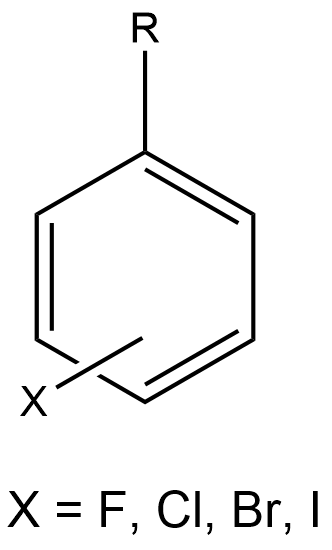
Halogenated aromatic intermediates occupy a peculiar niche in synthesis because the halogen does more than block a position—it perturbs the ring’s electron density in ways that can be tuned almost like a dial. When bromine or iodine sits ortho or para to an electron-donating group, the intermediate is stabilized through resonance, but the same halogen para to a nitro group behaves as an electron sink, making the ring reluctant to undergo further electrophilic attack. This push-pull behavior is why experienced chemists treat halogen placement less as a static substituent and more as a kinetic handle: the intermediate’s lifetime, its tendency to rearrange, and its susceptibility to metalation all trace back to how the carbon-halogen bond interacts with adjacent π systems.
The regiochemical logic becomes sharper when you compare different halogens. Fluorine, despite its strong inductive pull, rarely serves as a leaving group in these intermediates; instead, it alters the acidity of neighboring protons and can direct lithiation to unexpected sites. Chlorine occupies a middle ground, often stable enough to survive several steps but occasionally participating in SNAr when activated by an ortho or para nitro group. Bromine and iodine, by contrast, are superb at oxidative addition and halogen-metal exchange, which is why aryllithiums and Grignards are typically generated from bromo- or iodoarenes rather than their lighter counterparts. This hierarchy is not arbitrary—it mirrors the polarizability of the carbon-halogen bond and the energy required to break it.
One underappreciated structural feature is the halogen’s ability to engage in noncovalent interactions that subtly steer the course of a reaction. In crowded ortho-substituted arenes, a neighboring halogen can coordinate to an incoming metal catalyst, lowering the barrier for C–H activation and enabling selective functionalization at a position that would otherwise be overlooked. Likewise, halogen bonding between an electron-poor iodine and a Lewis base in the reaction medium can preorganize the transition state, giving rise to selectivities that defy simple steric predictions. Recognizing these weak forces turns halogenated aromatic intermediates from passive building blocks into active participants in the design of new transformations.
Chlorinated vs. Brominated: Balancing Cost and Catalyst Turnover
In many catalytic processes, the choice between chlorinated and brominated substrates often comes down to a simple trade-off: the brominated versions react more readily but cost more, while the chlorinated ones are cheaper but demand harsher conditions. This difference shows up most clearly in cross-coupling chemistry, where aryl bromides typically undergo oxidative addition at room temperature or with mild heating, but aryl chlorides often require specialized, expensive ligands and temperatures above 100°C. As a result, a catalyst that can complete hundreds of turnovers with a brominated substrate may only manage a few dozen with the chlorinated analogue before deactivating or losing selectivity.
The real economic picture is more nuanced than comparing price per mole of substrate. A low-cost chlorinated compound can end up costing more overall if it forces you to use a high catalyst loading, replace the catalyst more frequently, or spend extra on heating and purification. On the other hand, brominated substrates can sometimes be so reactive that they cause side reactions or catalyst poisoning, which also shortens turnover. The key is to look at the total cost per kilogram of product, including both the halogenated starting material and the catalyst turnover number. In some processes, switching from a brominated to a chlorinated substrate has been justified only after a ligand was discovered that boosts catalyst lifetime enough to offset the lower inherent reactivity.
Another factor that gets overlooked is waste handling. Brominated byproducts are often more expensive to treat and dispose of than chlorinated ones, which can tip the balance even when the catalyst turnover is similar. So the choice is rarely just about reactivity or just about purchase price. It is about matching the substrate to the catalyst system you already have, and being willing to revisit that choice when a better ligand or a more robust metal complex comes along. Sometimes the cheaper starting material is the more expensive option in the end.
Fluorine’s Quiet Influence on Aromatic Reactivity
Fluorine sits at an odd crossroads on an aromatic ring. Its unmatched electronegativity pulls electron density away through the sigma framework, yet its lone pairs quietly feed that density back through the pi system. The net result is a substituent that deactivates the ring toward electrophilic attack far less than chlorine or bromine would, while still steering incoming groups to the ortho and para positions with remarkable fidelity.
That push-pull behavior reshapes the usual rules of aromatic substitution. Where nitro or cyano groups shut down reactivity almost entirely, fluorine keeps the ring awake enough for further functionalization, though at a slower pace than benzene itself. This makes fluorinated arenes useful synthetic handles: they tolerate conditions that would destroy more electron-rich rings, yet they remain open to selective modification when the right electrophile appears.
Beyond classical electrophilic substitution, fluorine's influence shows up in less obvious places. The altered electron distribution changes the acidity of adjacent protons, the stability of radical intermediates, and the preferred geometry of metal-arene complexes. Medicinal chemists exploit this quiet tuning, swapping a hydrogen for fluorine to block metabolic hotspots or adjust binding without steric disruption. What looks like a small change in the periodic table can quietly redirect an entire reaction pathway.
Iodine as a Leaving Group: When Reactivity Needs a Boost
Iodine rarely gets the spotlight when chemists discuss leaving groups, yet its peculiar blend of size, polarizability, and weak basicity makes it a quiet workhorse in substitution chemistry. Unlike lighter halides, iodide departs with a reluctance that can be tuned by solvent and counterion, often turning sluggish reactions into clean, high-yielding transformations. This nuance is easy to miss if you treat all halogens as interchangeable.
The real advantage shows up in SN2 pathways where a soft, bulky leaving group stabilizes the transition state through dispersion and reduces solvation penalties. In practice, swapping chloride for iodide can shift a reaction from hours of reflux to minutes at room temperature, especially in polar aprotic media. The iodine atom acts less like a passive passenger and more like a reactivity dial, giving chemists a handle when standard leaving groups stall.
Practical applications range from Finkelstein halide exchange to the activation of inert alkyl chlorides toward nucleophilic attack. The trade-off, of course, is cost and occasional side reactions from iodide's redox activity, but when a synthesis demands a gentle nudge toward product, iodine often delivers exactly the boost the mechanism needs.
Position Matters: Ortho, Meta, and Para Effects in Real Reactions
Benzene rings rarely react the same way twice once a substituent is already in place. An existing group nudges an incoming electrophile toward specific ring positions, and this steering can be traced to a blend of resonance and inductive effects. Hydroxyl, amino, and alkoxy groups are classic ortho/para directors because their lone pairs stabilize the cationic intermediate when attack occurs at those positions. Nitro, carbonyl, and sulfonic acid groups pull electron density away from the ring, deactivating it and leaving the meta position as the least disfavored option. Recognizing these patterns turns a flat hexagon into a predictable reaction map.
Real syntheses lean heavily on these positional preferences. Nitrating phenol gives a mixture of ortho and para nitrophenol, and the two isomers are separable because the ortho form can steam-distill while the para form remains behind—an industrial detail that hinges entirely on hydrogen bonding differences. In contrast, nitrating nitrobenzene demands fuming nitric acid and concentrated sulfuric acid, yet still yields mostly meta-dinitrobenzene because the existing nitro group deactivates the ring and directs incoming electrophiles away from itself. Toluene, with its weakly activating methyl group, undergoes chlorination or nitration mainly at the ortho and para carbons, though steric bulk around the methyl group often tilts the product ratio toward para.
Position effects also force chemists to adjust strategy. Aniline cannot be nitrated directly because the amino group is too reactive and prone to oxidation, so the amine is first protected as an amide, which moderates its directing power and improves para selectivity. In Friedel-Crafts acylations, amino substituents poison the Lewis acid catalyst, so alternative routes or protecting groups become necessary. Even solvent and temperature can shift ortho/para ratios, as seen in sulfonation of toluene, where the para isomer dominates at higher temperatures due to reversible sulfonation and thermodynamic control. These practical twists keep aromatic substitution from being a simple memorization exercise.
Storage, Stability, and Safe Handling of Reactive Aryl Halides
Reactive aryl halides demand a storage strategy that respects their tendency to degrade through light, moisture, or thermal stress. Keep them in amber glass bottles under an inert atmosphere, typically argon or nitrogen, and store at low temperatures, often in a dedicated refrigerator or freezer set below 0°C. Adding a radical inhibitor such as BHT can extend shelf life, but regular checks for discoloration or precipitate are more reliable than assuming stabilizers will hold indefinitely.
Stability varies widely across this class; electron-poor aryl iodides may darken within weeks at room temperature, while certain aryl bromides remain usable for months if kept dry and cold. Never rely on a single published stability claim for a new batch—small-scale stress tests, like exposing a sample to ambient light for 24 hours, reveal more than a datasheet. Quenching reactive intermediates immediately after generation, rather than storing them, is often the safest route when working with highly unstable species.
Safe handling starts with engineering controls: use a fume hood with adequate face velocity, and have dry sand or a class D extinguisher nearby since water can accelerate decomposition of certain aryl halides. Wear nitrile gloves doubled with silver shield liners, and never handle opened containers outside a glovebox if the compound is known to be lachrymatory or vesicant. Dispose of waste through segregated halogenated solvent streams, and label all secondary containers with the date of opening to track degradation risk.
FAQ
These are aromatic rings carrying one or more halogen atoms such as fluorine, chlorine, bromine, or iodine. The carbon-halogen bond can undergo oxidative addition with transition metals, nucleophilic aromatic substitution, or conversion to organometallic reagents, giving chemists a reliable handle for building complexity. Their bench stability, predictable reactivity, and compatibility with many functional groups make them workhorse intermediates in medicinal chemistry, agrochemical development, and materials synthesis.
A typical list might include bromobenzene, 4-bromotoluene, 2-bromoanisole, 4-bromoacetophenone, iodobenzene, 4-iodotoluene, 2-chloropyridine, 2-bromopyridine, 1-bromo-4-nitrobenzene, and 4-chlorobenzaldehyde. These examples illustrate the range of electronic demands and leaving group abilities available, allowing chemists to select a substrate that matches the desired transformation and downstream chemistry.
The C–Br and C–I bonds are weaker and more polarizable than C–Cl, so oxidative addition to palladium or nickel catalysts occurs more readily. This allows reactions to proceed under milder temperatures, with lower catalyst loadings, and often in shorter times. Aryl chlorides usually need specially designed ligands or harsher conditions, although they are sometimes chosen for cost or because they can provide better selectivity in certain sequences.
Electron-withdrawing groups such as nitro, cyano, or ester lower the electron density of the aromatic ring and make the carbon-halogen bond more susceptible to nucleophilic aromatic substitution and faster in oxidative addition. Electron-donating groups like methoxy or amino can deactivate the same bond, demanding stronger catalysts, higher temperatures, or alternative activation strategies. Understanding these effects helps predict whether a given intermediate will perform well under planned conditions.
They serve as platforms for constructing biaryl motifs, aryl amines, ethers, and alkynes that appear frequently in drug candidates. In process chemistry, their availability in bulk, crystalline or stable liquid form, and ease of purification make them attractive for scale-up. They also enable late-stage diversification of a core scaffold, allowing medicinal chemists to explore structure-activity relationships without rebuilding the whole molecule each time.
Many of these compounds are irritants or sensitizers and some brominated aromatics have noticeable odors, so they should be handled in a fume hood with appropriate personal protective equipment. Iodinated aromatics may degrade upon prolonged light exposure and need amber glass storage. Polyhalogenated derivatives can raise environmental persistence concerns, so waste should be segregated and disposed of according to local regulations.
The decision usually balances reactivity, cost, and functional group tolerance. Iodides are the most reactive but often the most expensive and least stable. Bromides offer a practical middle ground. Chlorides are cheapest but may require vigorous conditions or specialized catalysts. If a molecule contains sensitive functionality, a bromide or iodide may allow lower temperatures. For large-scale work, cost and supply chain considerations can push the choice toward a chloride despite its lower intrinsic reactivity.
They act as electrophilic partners in Buchwald-Hartwig amination, Ullmann-type coupling, and related etherification or thioetherification reactions. Under palladium or copper catalysis, the aryl halide undergoes oxidative addition and then couples with nitrogen, oxygen, or sulfur nucleophiles. This provides access to aryl C–N, C–O, and C–S bonds that are ubiquitous in pharmaceuticals, agrochemicals, and functional materials.
Conclusion
Halogenated aromatic intermediates occupy a unique position in advanced synthesis, not because any single compound is universally superior, but because their reactivity can be tuned with remarkable precision. The structural logic behind these building blocks starts with the halogen itself: chlorine offers a cost-effective handle that tolerates a wide range of conditions, while bromine pushes catalyst turnover in cross-coupling reactions such as Suzuki or Buchwald-Hartwig aminations. Fluorine, despite its small size, quietly alters electron density and metabolic stability, making fluorinated aryl halides indispensable in pharmaceutical candidates. Iodine, the heaviest of the common halogens, serves as an exceptional leaving group when sluggish oxidative addition demands a reactivity boost. Yet the position of the halogen on the ring—ortho, meta, or para—can completely redirect the outcome of a reaction, influencing steric hindrance, electronic effects, and even regioselective metalation. The interplay of these factors means that choosing among the top ten halogenated aromatic intermediates is rarely a simple preference; it is a calculated decision shaped by the target molecule and the step that follows.
Beyond reactivity, practical concerns such as storage, stability, and safe handling often dictate which aryl halide survives from bench to pilot scale. Light-sensitive iodides and moisture-prone bromides demand careful packaging, while certain chlorinated aromatics remain robust for years under ambient conditions. The best intermediates balance shelf life with synthetic flexibility: for example, 4-bromofluorobenzene offers dual halogen handles for sequential functionalization, and 2-chloro-5-iodopyridine exploits the leaving-group hierarchy for chemoselective couplings. Real-world applications in agrochemicals, materials science, and late-stage drug modification reveal that the leading compounds are not exotic novelties but workhorses—versatile, well-characterized, and forgiving enough for routine use in modern laboratories. Ultimately, the top ten halogenated aromatic intermediates earn their rank not through isolated reactivity but through a synergy of electronic behavior, positional effects, and practical reliability, making them essential anchors for building complex molecular architectures.
Contact Us
Contact Person: Wei Zhang
Email: [email protected]
Tel/WhatsApp: 862163529955
Website: https://www.dslchem.com