

Top High-Class Cleanroom Standards: What You Need to Know
2026-09-04
Cleanroom standards aren't just guidelines—they're the difference between a product that works and one that fails when it matters most. From pharmaceutical manufacturing to microelectronics, high-class cleanrooms demand precision in every particle, every pressure differential, and every protocol. But what actually separates a Class 100 from a Class 10,000? And why do so many facilities struggle to maintain compliance over time? At GENO Pharmatech, we've seen firsthand how misunderstood standards lead to costly deviations—and how the right interpretation can turn a cleanroom into a competitive advantage. In this post, we break down the essential cleanroom classifications, the hidden factors that impact performance, and what you need to know before your next audit or build-out.
The ISO 14644 Framework No One Explains Simply
Most people assume ISO 14644 is just a particle count classification, but that's like calling a car just a steering wheel. The standard is actually a sprawling family of documents that covers everything from air cleanliness classes and monitoring methods to design principles and surface contamination. Because each part speaks to a different audience—facility designers, cleanroom operators, quality engineers—the full picture rarely gets explained in one place. That fragmented nature is exactly why so many explanations feel incomplete or overly technical.
A common trap is treating ISO 14644-1 as the entire framework. Yes, it defines the nine cleanroom classes based on airborne particle concentrations, but it deliberately leaves out how to test, how often to monitor, or what to do when limits are exceeded. Those details live in other parts, like -2 for monitoring and -3 for test methods. And then there's the confusion around occupancy states: an empty cleanroom meeting ISO Class 5 means nothing if it falls apart the moment people start working inside it. The framework requires you to specify whether you're measuring at rest, in operation, or both, and that distinction trips up even experienced teams.
What makes this framework genuinely useful is understanding it as a system, not a checklist. You don't just pick a class and install some HEPA filters. You need to consider airflow patterns, pressure differentials, gowning protocols, and a monitoring plan that reflects actual risk rather than arbitrary intervals. Many facilities over-monitor because they're afraid of nonconformity, while others ignore critical locations entirely. The smart approach is to map your process risks first, then apply the relevant ISO 14644 parts as tools—not as a one-size-fits-all rulebook.
Particle Counts Aren't the Whole Story
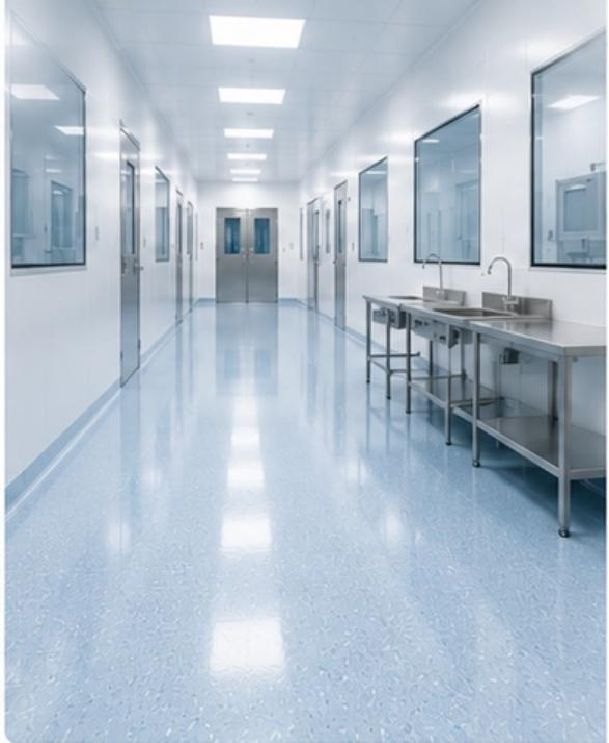
Numbers on a datasheet often miss what actually matters in real-world conditions. A filter might claim to stop a certain percentage of particles at a given size, yet that doesn’t account for how quickly it loads, how pressure drop rises, or whether its efficiency collapses once fibers get coated with dust. In a working system, the particle count upstream versus downstream tells only a sliver of the story.
Different particle types behave in unexpected ways. Soot, oil mist, and fine road dust don’t simply bounce off media in tidy categories. Some slip through under high humidity; others agglomerate and change size midstream. Counting particles at a single moment, under laboratory air, can create a false sense of security that crumbles when the airflow shifts or temperatures swing.
A more honest evaluation looks at how the entire system breathes over time. That includes the energy cost of pushing air through a loaded filter, the risk of bypass around seals, and how the media handles wet or sticky contaminants. Focusing only on raw particle counts overlooks these operational realities, leaving you with a number that sounds impressive but may mean little on the factory floor or in a hospital ward.
Airflow Patterns That Separate Elite Facilities from Average Ones
Observing how air moves through a facility often reveals more than any equipment list. Average sites settle for the feeling of moving air, while elite operations treat airflow as a precisely managed resource. In critical zones, for instance, top-tier teams establish a stable pressure cascade from clean areas toward less clean ones, with live differential pressure sensors at every boundary. Even a slight drift triggers automatic damper adjustments or fan speed changes. This insistence on directional control dramatically cuts the risk of cross-contamination, something that generic facilities rarely address beyond initial commissioning.
Another telling difference lies in return and exhaust placement. Typical buildings rely on ceiling supply and ceiling return, creating short-circuiting and dead zones where contaminants linger. Elite facilities, by contrast, run computational fluid dynamics models to map heat loads, worker movement, and particle sources. They then position low-wall returns, localized extraction, or even displacement ventilation systems that let fresh air rise slowly from floor level, sweeping pollutants toward ceiling exhaust. This approach is especially visible in advanced operating rooms and semiconductor cleanrooms, where the airflow pattern itself becomes a barrier against defects and infections.
What truly separates the best from the rest is the habit of continuous verification. Average facilities treat airflow as a set-and-forget parameter, rarely revisiting it after handover. Elite teams schedule smoke studies and particle counter traverses at regular intervals, comparing actual patterns against design intent. They adjust fan frequencies and damper positions based on seasonal shifts, production loads, or even occupancy density. This ongoing calibration turns airflow from a static specification into a living, measurable system that actively protects product quality and occupant safety.
The Hidden Costs of Maintaining High-Level Cleanroom Standards
Running a certified cleanroom rarely comes down to a single installation expense. The HVAC systems that keep particle counts low often operate around the clock, and the electricity draw for fan filter units, exhaust blowers, and precise humidity control can dwarf the initial build cost within a few years. Retrofitting older facilities to meet tighter ISO classifications adds another layer: upgraded lighting, sealed ceiling grids, and specialized pass-through chambers all carry price tags that are easy to overlook during planning.
Consumables form a quiet but relentless drain on operating budgets. Sterile wipes, tacky mats, disposable coveralls, gloves, and validated cleaning agents are used continuously, and each item must meet strict compatibility standards to avoid contaminating the environment. Beyond the supplies themselves, there is the recurring expense of microbial and particulate monitoring—sampling plates, calibration services for particle counters, and third-party lab fees add up month after month without any visible output.
Personnel costs also multiply in ways that spreadsheet projections often miss. Operators need repeated gowning training, annual re-certification, and time set aside for environmental monitoring walkthroughs. Every entry and exit cycle wears down garments and requires additional laundering or disposal. When equipment drifts out of specification, investigations, corrective actions, and temporary shutdowns can halt production for days, turning what looked like a minor deviation into a significant financial hit that never appears on the original budget sheet.
Material Selection Mistakes That Compromise Cleanroom Integrity
One of the quietest ways to ruin a cleanroom is to pick structural plastics and elastomers based on initial cost alone. Many PVC trims, neoprene gaskets, and off-the-shelf cable jackets slowly release plasticizers, unreacted monomers, and siloxane residues. Over time these volatiles condense on optical surfaces, wafer chucks, and sensor windows. The result is not an obvious failure but a stubborn yield drift that gets blamed on process variation instead of the material itself.
Porous or fibrous surfaces create a different kind of problem. Standard painted drywall, unfinished concrete, wood pallets, or conventional acoustic ceiling tiles shed particles, absorb cleaning agents, and give microbes a place to anchor. Even when these materials are outside the immediate production zone, maintenance traffic and pressure differences can drag their debris into the controlled area. Sealed, non-shedding alternatives often cost more upfront, but swapping them later means shutting down the line and re-validating the entire room.
Metal choices also trip up otherwise well-designed facilities. Aluminum fixtures may corrode under repeated exposure to hydrogen peroxide vapor or acidic disinfectants, while zinc-plated fasteners rust and flake. Mixing dissimilar metals without isolation can trigger galvanic corrosion, producing conductive dust that compromises sensitive electronics. The fix is rarely exotic; it usually means matching the alloy to the actual cleaning chemistry and keeping sacrificial materials out of the airstream.
How to Audit a Cleanroom Without Getting Lost in Jargon
Walking into a cleanroom audit and hearing “ISO 7, 0.45 microns, 60 ACH” can feel like you need a translator before you can ask a single useful question. The trick is not to memorize every term but to trace each one back to the risk it controls. When someone mentions air changes per hour, what they’re really saying is whether the room can flush out contamination quickly enough after a door opens or someone moves. Instead of nodding along, stop and ask: “What happens if that number drops for an hour?” That one question cuts through the jargon and gets straight to operational impact.
Another habit that helps is building your own plain-language audit sheet before you enter. Map each cleanroom parameter to a real-world failure. Viable particles? That’s about whether microbes are floating around and landing on product. Pressure differential? That’s about which way air flows when a door cracks open. HEPA filter integrity? That’s about whether the final filter is actually catching what it’s supposed to. When you walk in with that translation in your pocket, you spend less time decoding acronyms and more time watching how people actually behave in the space—where the real findings usually are.
FAQ
Most people think it's just about particle counts, but that's like judging a car by its paint job. A high-class cleanroom (ISO 5 or stricter) demands unidirectional airflow, full HEPA/ULPA ceiling coverage, tight pressure cascades, low off-gassing materials, and fast recovery times. For example, ISO 5 requires air velocity around 0.45 m/s ±20%, while ISO 7 can get away with turbulent mixing.
Because Grade A (EU GMP) adds microbial limits that ISO 14644 ignores. You need <1 CFU/m3 in settle plates, surface and glove monitoring, and ongoing particle counts during operation. Many companies hit ISO 5 static particle counts only to fail GMP audits because they overlooked viable contamination.
FED-STD-209E was cancelled in 2001, but legacy specs still reference it. Use ISO 14644-1 as the current classification basis. If you see old Class 100 or Class 10, map them to ISO 5 and ISO 4 respectively. For semiconductor fabs, also check SEMI standards for additional chemical and humidity controls.
For ISO 5 or Grade A, hardwall is almost always the right call. Softwall panels flex under pressure, leak at seams, and struggle to maintain stable differentials. You might save upfront with a softwall for ISO 7/8, but retrofitting to meet higher standards later costs far more than doing it right initially.
Facilities fixate on particle counts and forget that ISO 14644-2 mandates periodic airflow, pressure, and recovery testing. Sensors drift, filters load, and dampers shift. A cleanroom that passed three years ago can be out of spec today. Classification is a snapshot, not a permanent badge.
Technically yes, since ISO 14644 only requires periodic testing. But in aseptic processing or semiconductor lithography, an unnoticed particle excursion can ruin entire batches before your next scheduled test. Continuous monitoring isn't always written into the standard, but it's cheap insurance compared to a recall.
Standards control the environment, not the people. Electronics fabs worry about skin flakes and static, so they use coveralls, gloves, and ESD footwear. Pharma Grade A adds sterile garments, goggles, and double gloves to stop bacteria. The ISO class might match, but the contamination vector is different.
At minimum during initial qualification and after any major change—equipment moves, filter replacements, or layout modifications. ISO 14644 doesn't set a fixed schedule, but most auditors expect smoke studies roughly every two to three years or at each requalification. If dampers drift or filters clog, airflow patterns can change silently.
Conclusion
Most people equate a high-class cleanroom with a low particle count, but that's only a tiny slice of the picture. The ISO 14644 framework, while foundational, is often boiled down to a single classification number—yet it actually describes a whole system of measurement, sampling, and verification that many operators never fully grasp. Particle counts tell you what was in the air at one moment; they don't reveal how quickly a room recovers after a door opens or a technician moves. That's where airflow patterns become the real differentiator. Elite facilities use carefully designed unidirectional or turbulent flow, with precise pressure cascades and air change rates, to keep contaminants from lingering. The hidden costs follow from this: maintaining those patterns means constant filter monitoring, HVAC energy, gowning discipline, and retraining—expenses that dwarf the initial build-out.
Material selection is another quiet failure point. A bench top or sealant that outgasses, sheds particles, or reacts with cleaning agents can undo months of validation, even if the air counts stay perfect. Auditing a cleanroom without drowning in jargon means ignoring the alphabet soup and instead asking three things: where are the risks, what does the real-time data show, and how do people actually behave inside? Look for gaps in documentation, but also watch whether operators touch their faces, how often wipes are replaced, and whether pressure differentials drift at night. Ultimately, a high-class cleanroom is not a static certificate on a wall—it's a living, breathing environment where standards only mean something if the airflow, materials, and human habits all align.
Contact Us
Contact Person: Amy Yang
Email: [email protected]
Tel/WhatsApp: 008619330882686
Website: https://www.genopharmatech.com/