

Top Moss Decorative Ideas for a Fresh Natural Home Look
2026-09-14
Maybe you've noticed how a touch of moss instantly makes a room feel calmer—like a window cracked open to a damp forest floor. But beyond the usual terrarium, moss can be shaped, framed, and layered into decor that looks collected, not store-bought. From preserved moss wall panels to understated tabletop accents, these top ideas will help you build that fresh natural home look without constant upkeep. For preserved moss that keeps its color and softness, PHLEEYA is a smart place to start. Here's how to bring the outdoors in, one mossy detail at a time.
Living Moss Wall Panels That Double as Art
Moss wall panels have quietly shifted from interior trend to lived-in sculpture. Unlike framed prints or static canvases, these pieces change week to week—drying at the edges, deepening in color after a misting, catching light on their uneven surfaces. You stop seeing a "green wall" and start noticing how the patches of sheet moss, cushion moss, and reindeer moss create their own topography.
The appeal isn't just visual. A preserved moss panel asks nothing of you: no grow lights, no soil, no watering schedule beyond an occasional spritz if the air gets dry. That low-maintenance quality makes it feel less like a plant and more like a natural material—somewhere between velvet and stone. Mounted in a slim frame or arranged as a grid of tiles, the panels read as modern art with a soft, organic texture that flat paint or wallpaper can't mimic.
What makes them work as art is their ability to break up hard architectural lines. A hallway that felt like a tunnel suddenly has a breathing, tactile surface. An office corner becomes a quiet focal point. Because no two panels are identical—the moss density, the subtle color shifts from sage to deep forest—each installation feels collected rather than manufactured. That's the difference between decorating and curating a space with something alive in its stillness.
Mini Tabletop Moss Gardens in Glass Cloches
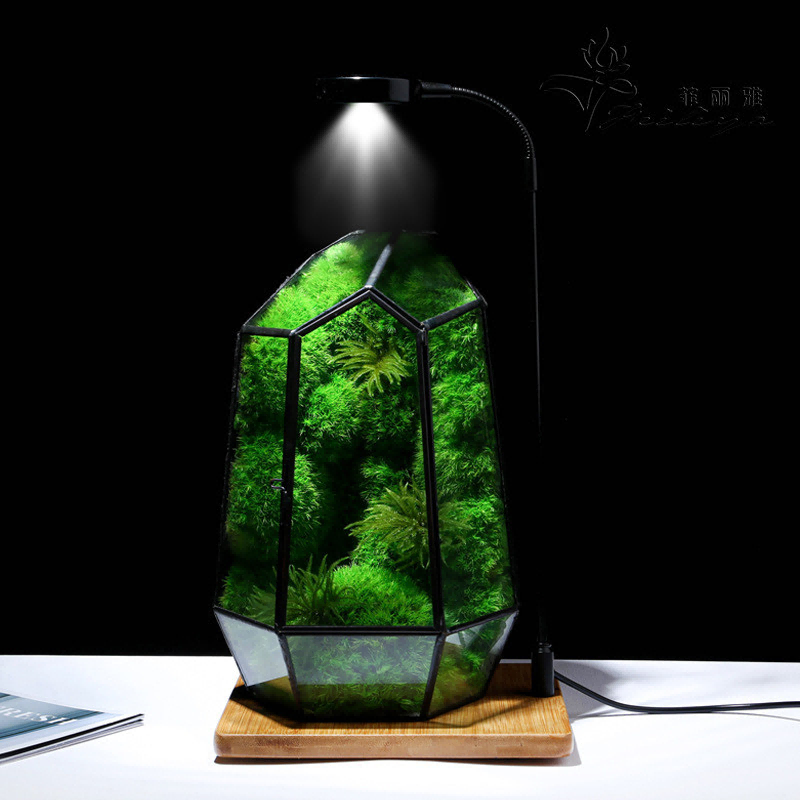
Tiny worlds of velvety green thrive under glass, turning ordinary desks and shelves into quiet woodland scenes. A mini tabletop moss garden tucked inside a glass cloche does more than just decorate—it creates a self-contained pocket of humidity where pillowy cushion moss, sheet moss, or fern moss stays fresh with barely any fuss. Choose a shallow dish or piece of bark as the base, press down a layer of fine soil or sphagnum, then arrange moss patches like a living quilt. The clear dome traps moisture from a light misting, so the moss rarely needs daily attention.
What makes these tiny terrariums so appealing is how forgiving they are. Unlike fussy houseplants, moss doesn't demand bright sun or a strict watering schedule. A north-facing windowsill or a spot a few feet from a desk lamp works fine. Add a small pebble, a twig, or a single fern frond for scale, and suddenly the cloche becomes a miniature landscape you can study while sipping coffee. Rotate the glass every week so growth stays even, and lift the dome for an hour if condensation builds up too heavily—otherwise the moss may turn slimy. A pair of long tweezers helps with arranging and removing any stray bits.
Beyond their charm, these moss gardens lend a sense of calm to busy spaces. Because they require so little upkeep, they're ideal for anyone who wants greenery without the guilt of forgetting to water. Try mixing textures—a dark green mood moss next to a brighter, fern-like species—to keep the eye moving. Reuse an old cheese dome, a bell jar, or even a large glass mug turned upside down over a saucer. The result feels personal, not mass-produced, like a tiny forest floor you gathered yourself and sealed under glass to enjoy year-round.
Framed Preserved Moss for a No-Water Green Wall
Real moss doesn't have to mean a messy, high-maintenance living wall. These framed panels use natural moss that has been carefully preserved to hold its softness and color for years without soil, water, or sunlight. The result is a quiet, textured green surface that feels far more organic than any faux plant, yet asks almost nothing of you in return.
The practical side is just as appealing. There's no irrigation to plan, no grow lights to hide, and no worry about leaves dropping. Hang a single frame in a dim hallway or group several together to break up a blank office wall. The moss also helps soften sound a little, which is a welcome bonus in rooms with hard floors and bare walls.
Because each panel is assembled by hand, small variations in moss density and shape are normal—and they're what make the finished piece feel less like a product and more like a slice of forest floor. A light dusting with a can of compressed air every few months is all the upkeep it needs. Keep it away from direct water spray and constant high humidity, and it will sit quietly for years.
Hanging Moss Orbs to Soften Entryways
Entryways tend to be all sharp corners and hard echoes. Hanging a few moss orbs near the door changes that instantly. The rounded forms and deep, matted green pull the eye upward and slow down the first impression, almost like a quiet exhale before stepping inside. They work especially well in covered porches or bright mudrooms where natural light can pick out the tiny variations in the moss.
You don't need a lot of them to get the effect. Try clusters of three at slightly different heights beside the door, or a single larger orb above a bench. Preserved moss holds its color without misting, so you won't add another chore to your entry routine. Use clear monofilament to hang them, and if the space allows, place a small warm bulb nearby—the soft glow against the moss makes the whole entry feel more settled.
Moss-Covered Planters That Hide the Pot Entirely
Some planters are designed to disappear under a living layer of moss, looking less like containers and more like small patches of forest floor lifted into the garden. The moss creeps over the sides, covering every trace of clay, plastic, or metal, so the pot itself becomes invisible. Only the plant rises from the top, as if sprouting from a soft green mound.
To achieve this look, damp sphagnum or sheet moss is pressed against the outside of the pot and held in place with fine thread or mesh until it takes hold. It works especially well for shade-loving plants such as ferns or compact orchids that appreciate steady moisture. The moss layer also keeps the root zone cooler and slows evaporation, so you end up watering a little less often.
Driftwood and Moss Centerpieces for Rustic Tables
A walk along the shore often ends with pockets full of worn, salt-bleached wood, each piece carrying its own quiet history. Paired with soft cushions of moss, these fragments become something more than leftovers from the tide. On a farmhouse table or a weathered wooden board, the combination speaks of forests meeting the sea, a contrast of gray driftwood grain against the deep, living green of moss. It is a centerpiece that never shouts, but rather invites guests to lean in and notice the small curves and textures nature spent years refining.
The beauty of this arrangement lies in its forgiving nature. Unlike fresh florals that wilt by evening, driftwood and moss hold their shape for weeks, even months, needing only the occasional mist to keep the moss from turning brittle. You might lay a single long branch down the table's center, tucking tufts of reindeer moss and sheet moss into its nooks, then scatter a few smooth pebbles or tiny pinecones nearby. There is no need for perfect symmetry; the most compelling tables often feel like a found landscape rather than a constructed one.
For those who want a hint of softness without losing the rustic edge, try weaving in a few dried seed heads or a single strand of fairy lights hidden beneath the moss. The glow will catch the driftwood's pale ridges, casting tiny shadows that shift as the evening moves. It works just as well for a simple weeknight dinner as for a long, candlelit gathering, proving that the most memorable centerpieces are often the ones that feel pulled from the outside world and set down with care.
FAQ
You can place a few small preserved moss balls in a ceramic dish on a coffee table or nestle sheet moss around the base of potted plants. A hanging glass orb with a pinch of live moss and a tiny fern also works without taking up counter space.
Use a low, wide bowl with an organic edge and fill it with mixed textures of reindeer moss, sheet moss, and a few smooth river stones. Keep the palette limited to two or three greens, and avoid adding fake flowers or glitter. Let the natural lumps and hollows show.
Preserved moss is usually the better choice for humid rooms because it’s no longer alive and won’t spread spores the way live moss might. Mount it on a sealed backing or place it inside a closed terrarium, and make sure the room has decent ventilation.
Try a slim vertical strip of preserved moss framed in a minimalist black or white shadow box. Hang it above a desk or on an empty wall. The clean frame keeps it modern, while the moss adds a soft, quiet green texture.
Pair a shallow tray of cushion moss with a few pieces of driftwood and a small air plant tucked into a crevice. Place it on a console table near the door. The mix of wood, moss, and air plant gives a calm, layered welcome without being fussy.
Live moss needs consistent humidity, so it can be tricky. But a closed terrarium made from a large jar with a lid can keep moisture in and only needs occasional misting. If you want zero care, preserved moss is the easier route.
Inside a glass cloche on a stack of books or on a bedside table. A small dome with a piece of bark, a few pebbles, and some bright green moss becomes a tiny landscape. It draws the eye and brings a living, earthy note to spots people usually leave bare.
Keep it out of direct sunlight, which can fade the color, and avoid touching it too often. If it gets dusty, use a hair dryer on a cool, low setting or a soft brush. No water is needed, but a light spritz of glycerin once a year can help it stay slightly pliable.
Conclusion
When you want that fresh, natural home look without turning your living space into a greenhouse, moss offers an understated way to add life. Living moss wall panels are the boldest move—they double as abstract art while cleaning the air and softening hard surfaces. If a full wall feels like too much, try mini tabletop moss gardens tucked inside glass cloches. These tiny scenes bring a quiet woodland feel to a desk, shelf, or bedside table, and they invite guests to pause and look closer. Framed preserved moss fills the gap for anyone who loves green but hates maintenance. It needs no watering, no trimming, no special light—just a spot on the wall where its natural color can settle into the room. These three choices show that moss can be as sculptural or as subtle as you like.
Entryways and dining rooms benefit from moss accents that feel handmade rather than store-bought. Hanging moss orbs, suspended at staggered heights near a door or window, soften harsh lines and give the eye something organic to follow. For plants that already live in your home, moss-covered planters hide the pot completely under a layer of living green, turning a basic container into a lush, garden-like mound. On rustic tables, driftwood and moss centerpieces combine silvery wood with dense patches of moss to create a centerpiece that feels pulled from a forest floor. The best part is that these ideas don't demand a major overhaul. One or two moss elements—a frame, an orb, a covered planter—can shift the entire mood of a room. Mix them slowly, and the house starts to feel fresher, calmer, and more connected to the outdoors.
Contact Us
Contact Person: Mr. Luo
Email: [email protected]
Tel/WhatsApp: 86 18100895505
Website: https://www.feiliyaflowers.com/en/