

Top Prefabricated Substation Suppliers: Finding the Best Partner for Your Power Needs
2026-06-11
In today’s fast-evolving energy landscape, securing a reliable prefabricated substation supplier is more than just a procurement decision—it’s a strategic move that can make or break your project’s efficiency, scalability, and long‐term performance. Whether you’re expanding a utility grid or powering a remote industrial site, the right partner brings engineering expertise, swift deployment, and tailored solutions to the table. Among the names that consistently surface in global supply chains, CNKEEYA has carved out a reputation for blending advanced modular designs with rigorous quality control—prompting many industry players to ask: what sets a truly top‐tier supplier apart? In this post, we’ll peel back the layers of what to look for and how to identify a partner that aligns perfectly with your power needs.
Beyond the Basics: Why Module Flexibility Matters in Prefab Substations
When infrastructure demands evolve, the capacity to reconfigure electrical systems without starting from scratch separates a good investment from a costly misstep. Prefabricated substations built with genuinely adaptable modules allow utilities and industrial operators to expand, relocate, or upgrade components with minimal downtime. Instead of being locked into a fixed configuration, teams can add new bays, swap out switchgear, or integrate emerging technologies as operational needs shift — all while maintaining the original footprint and protective housing.
The real value of module flexibility often surfaces in environments where space is at a premium or access is difficult. A standard containerized substation might check the basic boxes, but a design that offers interchangeable functional units — think transformer compartments, ring main units, and control panels that slide in like drawers — turns a static asset into a dynamic power distribution hub. This approach shortens commissioning times and simplifies regulatory approvals, because pre-assembled and pretested modules reduce on-site labor and the margin for installation errors.
Looking beyond initial deployment, flexible modular setups also simplify long-term maintenance and disaster recovery. A malfunctioning section can be isolated and swapped without disrupting adjacent functions, and spare modules kept in inventory ensure rapid restoration of service. This level of adaptability proves especially critical in renewable energy interconnections, temporary power events, and remote mining operations, where system requirements can vary wildly across the project lifecycle. Ultimately, designing for change from day one is what future-proofs the substation against unpredictable grid demands.
From Factory to Field: Evaluating a Supplier’s Delivery Track Record
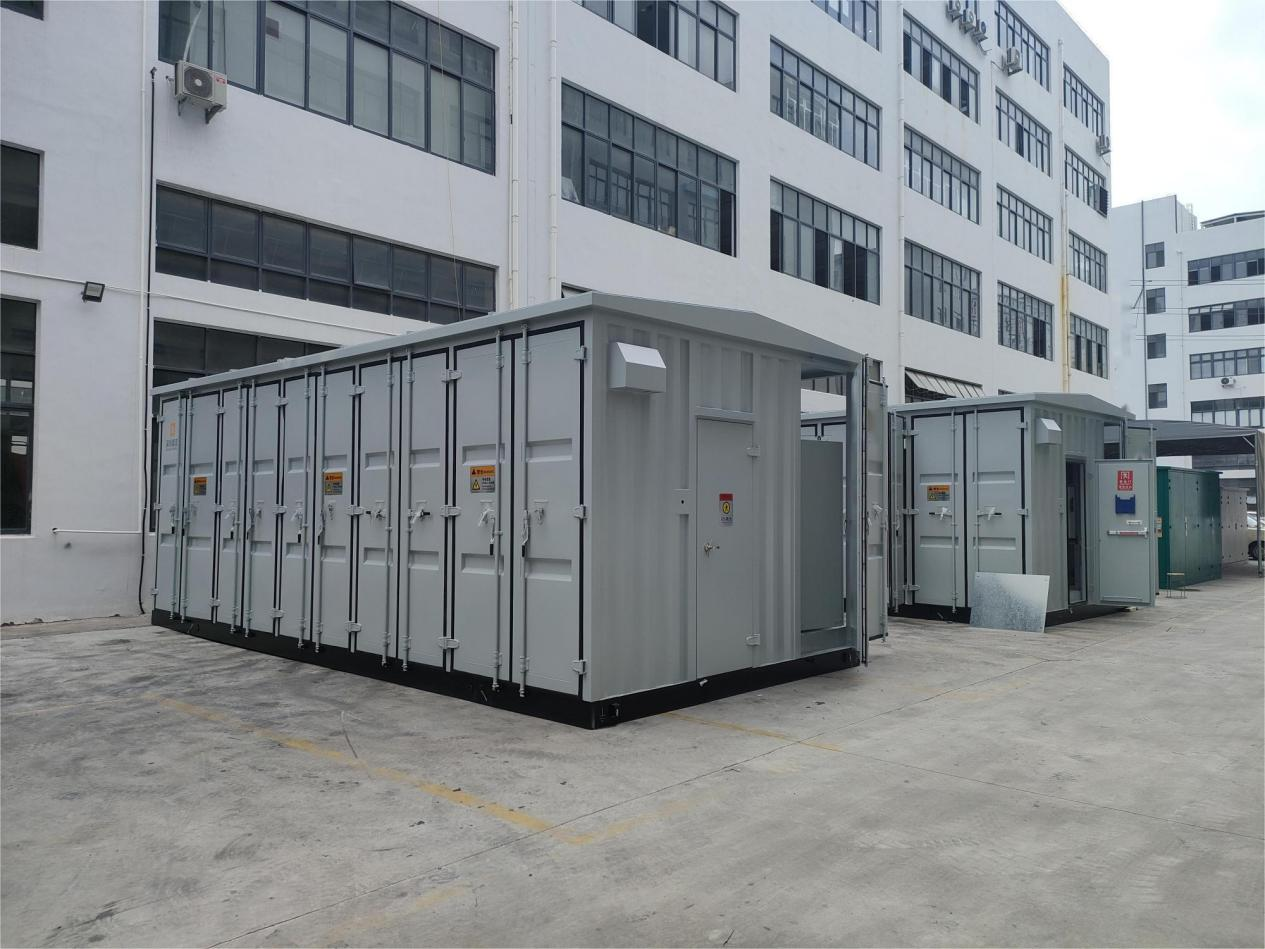
Assessing a supplier’s delivery performance goes far beyond scanning a spreadsheet of on-time percentages. It demands a gritty, on-the-ground understanding of how goods actually move from the production line to the point of use. A factory might boast a 98% punctuality rate, but if those numbers mask frequent last-minute air freight surcharges, damaged goods from rushed handling, or documentation errors that stall customs clearance, the real cost of “on-time delivery” can be devastating. The evaluation, therefore, must begin with a forensic look at the entire logistics chain—from packaging quality and carrier relationships to the flexibility of their shipping routes during disruptive events.
One of the most revealing ways to gauge a supplier’s track record is to review not just the aggregated data but the specific instances where things went wrong. Ask for case studies of delayed shipments, not as a punitive measure, but to see how they diagnosed the root cause and implemented lasting fixes. Did a weather-related port closure expose a lack of alternative routing? Did a spike in demand lead to production bottlenecks that could have been averted with better capacity planning? A supplier that openly shares these lessons and has measurable improvements in place—such as dual-sourcing of raw materials or regional warehousing—demonstrates a mature, proactive approach that spreadsheets alone can’t capture.
Finally, field-level verification closes the loop. This means talking to the warehouse teams who receive the pallets, the line operators who depend on just-in-time parts, and even the end users if possible. Were there recurring issues with packaging that caused damage in transit? Did partial shipments arrive without the proper paperwork, causing hours of rework? Such granular feedback often reveals patterns that formal KPIs miss, and it gives you the leverage to work with the supplier on targeted solutions—whether that’s redesigning pallets for better stability or embedding RFID tracking to gain real-time visibility from factory to field.
Custom Engineering, Not Just Catalog Choices
We don’t hand you a catalog and ask you to pick. Every project begins with a conversation—about load requirements, environmental stressors, installation constraints, and long-term performance. Our engineering team then designs a solution that addresses those exact conditions. This means components are often tailored in geometry, material grade, surface treatment, and integration features to work seamlessly within your larger assembly, not just bolted on as an afterthought.
Off-the-shelf parts force you to adapt your design around their limitations. We flip that equation. By controlling the entire development cycle—from material selection to finite element analysis and in-house prototyping—we can push beyond standard dimensions and alloy recipes. The result is a part that feels native to your machine, not a compromise sourced from a dozen different suppliers.
That approach also opens up possibilities for lifecycle engineering. Custom doesn’t mean expensive re-tooling charges every time; we build modular tooling systems that allow families of parts to evolve without starting from scratch. So when your product line expands or your operating conditions shift, the engineered solution adapts with it—saving you redesign time and keeping costs predictable over the long run.
Long-Term Reliability: What Post-Installation Support Looks Like
Once the installation wraps up, the real test of reliability begins. It’s not about the initial setup going smoothly—it’s about knowing that months or years down the line, there’s a team ready to respond when something acts up. For any system, unexpected hiccups are just part of long-term use. What matters is having a support crew that treats your issues like their own, not just another ticket in the queue.
Good post-installation care shows up in the details: proactive check-ins, rapid troubleshooting without the runaround, and genuine interest in how the system holds up under your daily demands. It’s the difference between a vendor who vanishes after the final invoice and one who sticks around to make sure you’re never left stranded.
Ultimately, reliability isn’t a promise made during a sales pitch—it’s measured in the quiet moments when everything works as it should, and the quick response when it doesn’t. That kind of dependability reshapes how you view the whole investment, turning a one-time purchase into a lasting partnership.
Global Expertise, Local Execution: The Best of Both Worlds
Bringing global expertise to local markets isn’t just about translating a strategy—it’s about reshaping it through the lens of regional nuance. Our teams span continents, but they’re grounded in the communities they serve. This means we don’t just import ideas; we adapt them, ensuring that every campaign resonates with the cultural rhythms and unspoken expectations of its audience.
The real advantage lies in the details: a negotiator in São Paulo reads the room differently than one in Tokyo, and a product launch in Berlin demands an approach worlds apart from one in Mumbai. By pairing world-class strategic thinking with boots-on-the-ground insight, we catch subtleties that global-only firms miss and local-only shops can’t scale. The result? Initiatives that feel native yet carry the weight of international know-how.
Clients often tell us that this blend feels like having a partner who speaks both the universal language of business and the local dialects of their markets. It’s not about choosing between global scale and local relevance—it’s about refusing to believe they’re mutually exclusive. That’s how we deliver work that doesn’t just fit in, but stands out, wherever it lands.
Future-Ready Designs: Integrating Smart Grid Capabilities from Day One
Designing buildings and infrastructure with smart grid integration from the outset isn’t just about meeting future standards—it’s about unlocking immediate operational benefits. When we embed energy intelligence directly into the blueprint, we allow systems to communicate, self-regulate, and optimize consumption in real time. This means lower energy waste from day one, smoother load balancing, and a seamless handshake with renewable sources as they come online. It’s not a retrofit afterthought; it’s a foundational choice that pays dividends long before the grid itself evolves.
At the core of this approach is a shift in mindset: stop treating energy as a simple utility input and start viewing it as a dynamic, programmable resource. By incorporating sensors, submetering, and bidirectional communication protocols early, we give the building a nervous system that can sense, analyze, and react. Whether it’s deciding when to draw from the grid or when to rely on on-site storage, the design itself becomes an active participant in energy markets. And because it’s wired for flexibility, scaling up or adapting to new technologies feels natural rather than forced.
FAQ
A prefabricated substation is a compact, factory-built power distribution unit that integrates transformers, switchgear, and control systems into a single enclosure. They're gaining traction because they slash on-site construction time, reduce civil works, and offer reliable performance in harsh environments—making them ideal for utilities, renewables, and remote sites where speed and simplicity matter.
Look beyond glossy brochures. Start with their project track record in your specific sector—ask for case studies, not just client names. Dig into their engineering capability: can they provide detailed single-line diagrams and thermal simulations? A supplier that invests in factory testing with real load banks and shares third-party type-test certifications shows they're serious about quality, not just sales.
Many buyers focus on upfront price but neglect lifecycle costs. Watch for substations with proprietary parts that lock you into a single service provider. Evaluate how easily the design allows for future expansions without major rework. Also, check auxiliary power consumption of cooling and ventilation—poorly designed thermal management can silently bleed your operational budget over years.
Absolutely. A mining operation needs arc-fault containment and dust-tight sealing, while a solar farm requires precise synchronization and anti-islanding protection. Offshore wind demands corrosion resistance beyond standard coatings. The best suppliers don't just sell a box; they engineer for your real stress factors—ambient temperature extremes, harmonic loads, even seismic zones—and prove it through simulation reports.
It's the difference between a five-year headache and a thirty-year partnership. Leading suppliers provide more than a warranty card—they offer commissioning supervision, remote monitoring integration, and guaranteed spare parts availability for obsolete components. Ask if they maintain regional service hubs and how quickly they can deploy engineers during grid faults. Real support agreements include defined response KPIs, not vague promises.
Don't settle for 'green' labels. Request Life Cycle Assessment data covering material sourcing and end-of-life recyclability. Ask about their SF6-free switchgear options and how they manage waste during manufacturing. Suppliers genuinely committed to sustainability will open their factory audits and provide Environmental Product Declarations—documents that prove they measure what they claim.
Conclusion
Selecting a prefabricated substation partner demands more than a comparison of technical specs. The real differentiator lies in module flexibility—suppliers that offer adaptable, scalable designs can accommodate site-specific constraints and future expansion without costly rework. Equally critical is a proven delivery track record, where the journey from factory to field is seamless and punctual, avoiding project delays. Custom engineering elevates a supplier beyond a catalog vendor; it means they listen to unique requirements and design solutions that integrate with existing infrastructure. A future-ready design with smart grid integration—remote monitoring, automated load balancing, and seamless data connectivity—should be embedded from day one, not treated as an afterthought.
Long-term reliability hinges on post-installation support—responsive maintenance, spare parts availability, and technical guidance ensure the substation performs over its lifecycle. The best partners combine global engineering expertise with local execution, navigating regulatory landscapes and cultural differences while upholding international standards. They bring a nuanced understanding of local grid codes and site conditions, paired with the robustness of multinational best practices. This blend of global insight and on-the-ground agility ultimately determines whether a prefabricated substation becomes a lasting asset or a recurring headache.
Contact Us
Contact Person: Queenie
Email: [email protected]
Tel/WhatsApp: +86 15558806611
Website: https://www.cnkeeya.com