

White Label 5G Core Network: Unlocking Customizable Connectivity for the Future
2026-05-24
The race to deliver truly differentiated 5G services is no longer about who owns the infrastructure—it’s about who can reshape it. A white label 5G core network turns that ambition into reality, letting operators and enterprises build bespoke connectivity without reinventing the wheel. IPLOOK stands at the heart of this shift, offering a platform that puts branding, control, and innovation directly in your hands. What does it take to make a network truly your own? That story starts here.
A Core Network That Puts Your Brand First
Your brand isn’t just a logo—it’s a living promise to your customers. That’s why we’ve built a core network that bends around your identity, not the other way around. Every node, every route is calibrated to amplify what makes you distinct, ensuring your message reaches audiences with clarity and intention.
Forget one-size-fits-all infrastructure. Our architecture learns your traffic patterns, prioritizes your most critical data, and shields your reputation from latency or downtime. It’s a partnership that treats your brand’s voice as the priority, delivering experiences that feel seamless and unmistakably yours.
The result? A network that doesn’t just support your business—it embodies it. While others force you to adapt, we’ve created a foundation that adapts to you. Your brand evolves, and so does the network, quietly reinforcing the trust you’ve built with every interaction.
Ditching the Cookie-Cutter: Custom 5G That Stands Out
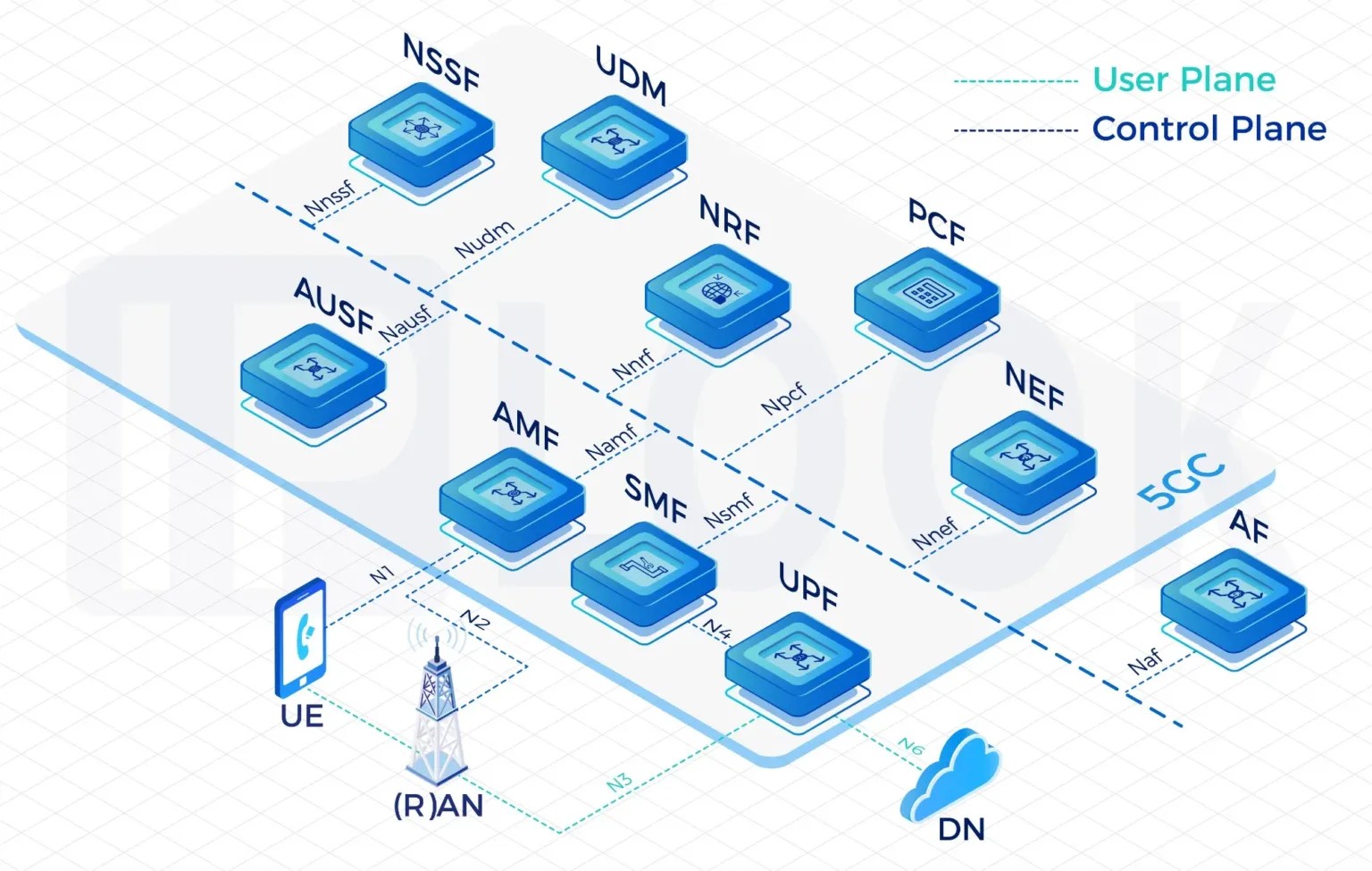
Off-the-shelf 5G networks often force businesses into a one-size-fits-all mold, cramping innovation and stifling unique operational needs. When you step away from that blueprint, you unlock a wireless architecture that mirrors your actual workflows—not the other way around. Imagine a manufacturing floor where latency-sensitive robots get their own dedicated slice, while employee devices run on a separate, optimized channel, all within the same private setup.
Custom builds let you rewrite the rules on coverage, capacity, and security from the ground up. Instead of paying for features you’ll never use, you decide which capabilities matter most: maybe it’s seamlessly integrating legacy industrial protocols, or prioritizing uplink-heavy video streams for remote inspections. The result feels less like a generic utility and more like a precision tool, shaped around your site’s physical layout, interference patterns, and even your team’s daily rhythms.
What truly separates a tailored 5G deployment is how it evolves alongside you. Need to dynamically shift bandwidth from an R&D lab to a pop-up event space? That’s a simple reconfiguration rather than a hardware overhaul. This kind of flexibility keeps you ahead of market shifts without being locked into a vendor’s rigid roadmap. Ultimately, standing out isn’t just about having 5G—it’s about having a network that amplifies exactly what makes your organization different.
The Infrastructure Secret Behind Agile Connectivity
Beneath the surface of every seamless digital experience lies a hidden framework that few pause to consider. Agile connectivity isn't just about faster routers or wider bandwidth—it depends on a deliberately underbuilt physical layer. Strategic redundancy, where critical paths are duplicated yet kept dormant, creates a self-healing nervous system for data. When one pathway strains under load or fails, traffic reroutes through these silent channels without a millisecond of user disruption. This quiet engineering choice, often invisible even to seasoned tech teams, is what separates brittle networks from those that dance gracefully through demand spikes.
Most assume network agility comes from intelligent software alone. The truth is more grounded: carefully placed edge nodes that do little more than listen and relay. These unglamorous devices sit in forgotten utility rooms, humming on the outskirts of metro areas, creating a mesh that shrinks distance for latency-sensitive applications. By pushing decision points closer to users while keeping the core intentionally lightweight, architects build an infrastructure that defies the typical trade-off between resilience and speed. It's a design philosophy borrowed from nature—think of how forests route nutrients through mycorrhizal networks, finding alternative paths when one route is compromised.
The final piece isn't technical at all, but organizational. Teams that treat infrastructure as living tissue rather than static plumbing maintain connectivity that evolves. They embed sensing capabilities directly into fiber strands and power lines, turning the physical plant into a self-reporting web. Maintenance stops being reactive; growth becomes preemptive. This shift from installing equipment to cultivating a responsive substrate lets companies scale not by adding more hardware, but by teaching existing assets to adapt. The secret, in the end, is that true agility lives not in what's connected, but in how the connections themselves are nurtured.
Why the Future of Mobile Networks Is White Label
The mobile industry has long been dominated by large carriers who own both the infrastructure and the customer relationship, leaving little room for agile newcomers. White-label mobile networks flip this model upside down by allowing businesses to offer connectivity under their own brand, without needing to build or operate the complex underlying systems. This shift is driven by a growing demand for tailored services and the realization that one-size-fits-all plans no longer meet the diverse needs of modern users. By decoupling the service layer from the infrastructure, companies can focus on what they do best—creating unique customer experiences—while leaning on wholesale networks for the heavy lifting.
Speed to market and cost efficiency are just the beginning. A white-label approach lets retailers, banks, and even utility companies become mobile providers almost overnight, tapping into new revenue streams and deepening customer loyalty. Instead of navigating years-long regulatory hurdles and billion-dollar network deployments, they can launch custom plans, manage digital branding, and bundle connectivity with existing products. This flexibility is particularly powerful in niche markets, where community-focused or industry-specific operators can thrive without being squeezed by legacy pricing structures.
Looking ahead, the proliferation of 5G and edge computing will only accelerate this trend. As smart factories, remote healthcare, and connected vehicles require specialized connectivity, white-label networks will provide the agility to deploy private networks or localized services on the fly. The future isn't about a handful of mega-carriers—it's about a rich ecosystem of branded mobile services, each finely tuned to different audiences, all running on shared, invisible infrastructure. In that sense, mobile connectivity is becoming like electricity: a utility that powers countless distinct brands, invisible but essential.
Building 5G Experiences That Feel Uniquely Yours
5G isn’t just about faster downloads on a generic network; it’s the doorway to experiences that adapt to your habits, preferences, and environment in real time. Imagine walking through a city where your augmented reality tour highlights points of interest based on your past travels, or a live concert stream that adjusts camera angles to follow your favorite band member. This shift from uniform service to tailored connectivity happens when networks learn from how you move, what you use, and even the time of day—all without you having to configure a thing.
Behind the scenes, edge computing and AI work together to process data closer to you, slashing delays and making personalization instantaneous. Instead of sending everything to a distant cloud, your device and nearby nodes collaborate to decide what matters in that moment: a gamer might get prioritized low latency, while a remote worker sees seamless handoff between home and mobile networks. The result feels invisible—like your connection just knows what you need before you ask. Developers can build apps that tap into this context-aware layer, offering custom overlays, adaptive security, and immersive mixed reality that evolves with each interaction.
What sets these experiences apart is that they’re not one-size-fits-all blueprints handed down by carriers. They’re shaped by open APIs and flexible network slices, giving third-party creators the freedom to design niche services that resonate with specific communities. From a smart museum tour that senses your gaze to linger longer on exhibits you love, to a fitness app that shifts to outdoor mode when you step into sunlight, the magic is that it all feels organic. 5G becomes an enabler of intuition—a platform where your digital world reshapes itself around you, not the other way around.
From Cost Center to Competitive Edge: The 5G Shift
For years, network infrastructure was viewed as a necessary expense—a cost center that kept operations running but rarely influenced strategic decisions. The arrival of 5G is rewriting that narrative, turning connectivity into a direct driver of business value. With ultra-low latency, massive device density, and network slicing, companies can now create experiences and services that were previously impossible, from real-time remote surgery to fully autonomous factory floors.
What makes 5G a competitive weapon isn’t just speed—it’s the ability to orchestrate resources dynamically. Instead of pouring capital into rigid, over-provisioned networks, enterprises can allocate bandwidth and compute power exactly where needed, when needed. This shift transforms IT from a budget line item into a profit engine, enabling new revenue streams through premium service tiers, IoT data monetization, and edge computing partnerships. The companies that embrace this mindset are already pulling ahead, using 5G not just to connect assets, but to reinvent how value is created and delivered.
FAQ
A white label 5G core lets you rebrand and resell a fully functional, cloud‑native mobile core without building it from scratch. Unlike traditional cores that tie you to a single vendor's hardware and software stack, it’s designed to be multi‑vendor, API‑first, and easily customized for specific verticals or enterprise needs—so you keep control of the customer relationship and service innovation.
It’s about flexibility and speed to market. With a white label core, you’re not locked into one vendor’s roadmap or pricing model. You can mix and match radio, edge, and application partners, launch branded services in weeks rather than months, and tailor network slicing and QoS policies to niche use cases—whether it’s smart manufacturing, private campuses, or IoT—without sharing revenue or customer data with a facilities‑based operator.
It exposes network functions and policies through open APIs and a modular architecture. That means you can dynamically create end‑to‑end slices with guaranteed latency and throughput for a specific factory line, integrate with existing IT systems via standard interfaces, and even let your customers self‑serve through a branded portal. The connectivity truly adapts to the application, not the other way around.
Absolutely. White label 5G cores are built cloud‑natively, so they deploy seamlessly on hyperscalers like AWS, Azure, or GCP, on private data centers using Kubernetes, or even on lightweight edge clusters for ultra‑low latency scenarios. This portability lets you start small with a single site and scale out globally while maintaining consistent branding and policy control.
It’s actually ideal for smaller innovators. System integrators, niche MVNOs, neutral host providers, and even large enterprises with private 5G aspirations can use it to build a compelling connectivity product without needing a nationwide spectrum license or a massive network operations team. The multi‑tenant design means you can serve multiple customers from one instance, turning CapEx into OpEx and lowering the barrier to entry significantly.
A well‑architected white label core supports seamless interworking with EPC for 4G fallback and non‑3GPP access like Wi‑Fi 6/6E. Subscribers can move between radio technologies without losing session continuity, and you can offer converged policies across access types. This backward compatibility is critical for brownfield deployments and gradual migration strategies.
Since you own the core instance and the associated data flows, you decide where data is processed and stored—on‑premises, in a local cloud region, or even on dedicated hardware. You can integrate national‑specific SIM authentication, implement quantum‑safe algorithms, and apply granular network‑level encryption that satisfies regulatory requirements like GDPR or sector‑specific standards. It’s not a black box; you get full auditability and control.
We’re already seeing features like AI‑driven network optimization, intent‑based slicing, and exposure of network analytics to third‑party applications. As 5G‑Advanced matures, white label cores will natively support ambient IoT, non‑terrestrial integration, and energy‑saving orchestration—all while maintaining the same open, rebrandable framework. The goal is to give solution providers a continuous innovation platform that evolves without vendor lock‑in.
Conclusion
A white label 5G core network represents a fundamental shift in how connectivity is packaged and delivered, moving away from rigid, one-size-fits-all infrastructure toward a model where the network itself becomes a flexible brand asset. Instead of operating behind the scenes as a generic utility, the core network can be fully rebranded and tailored, enabling operators and enterprises to put their own identity front and center while controlling every aspect of the service experience. This approach ditches the traditional cookie-cutter blueprint, allowing businesses to craft a 5G offering that truly stands out—whether through specialized slicing, unique policy controls, or integrated value-added services that align with their market positioning. The secret behind this agility lies in a cloud-native, modular architecture that decouples software from hardware, making it possible to rapidly deploy, iterate, and scale network functions. Such infrastructure ensures that connectivity is not only robust but also endlessly adaptable, responding to evolving demands without the long lead times and vendor lock-in that have historically frustrated innovation.
Looking ahead, it’s clear that the future of mobile networks is white label because it transforms connectivity from a cost center into a genuine competitive edge. Rather than pouring resources into maintaining a complex, monolithic core that offers little differentiation, organizations can now build 5G experiences that feel uniquely theirs—curated for specific industries, customer segments, or even individual enterprises. This ability to personalize the network layer enables entirely new business models, such as offering network-as-a-service with performance guarantees, private campus solutions that mirror a brand’s digital ambitions, or consumer services that seamlessly blend connectivity with content, all under a single, recognizable banner. As the demand for ultra-reliable, low-latency, and high-bandwidth applications grows, white label core networks empower providers to move faster and forge deeper relationships with their users. Ultimately, this shift is about more than technology; it’s about reclaiming control in an era where distinctiveness and speed to market determine success.
Contact Us
Contact Person: Shimmy
Email: [email protected]
Tel/WhatsApp: 85253392231
Website: https://www.iplook.com