

Why Is Indoor CPE Becoming the Smart Choice for Stable 4G and 5G Connectivity?
2026-03-12
Reliable internet access is no longer a luxury for homes and businesses. In recent years, I have watched more users shift from traditional wired networks to flexible wireless solutions. During this transition, companies such as Yaojin Technology (Shenzhen) Co., Ltd. gradually introduced practical networking devices that simplify deployment while maintaining strong signal performance. Among these solutions, the Indoor CPE has gained attention because it bridges the gap between cellular networks and indoor connectivity needs without requiring complex installation.
In this article, I want to share practical insights about how a modern Indoor CPE device works, what problems it solves, and why it has become a preferred option for offices, homes, and temporary network setups.
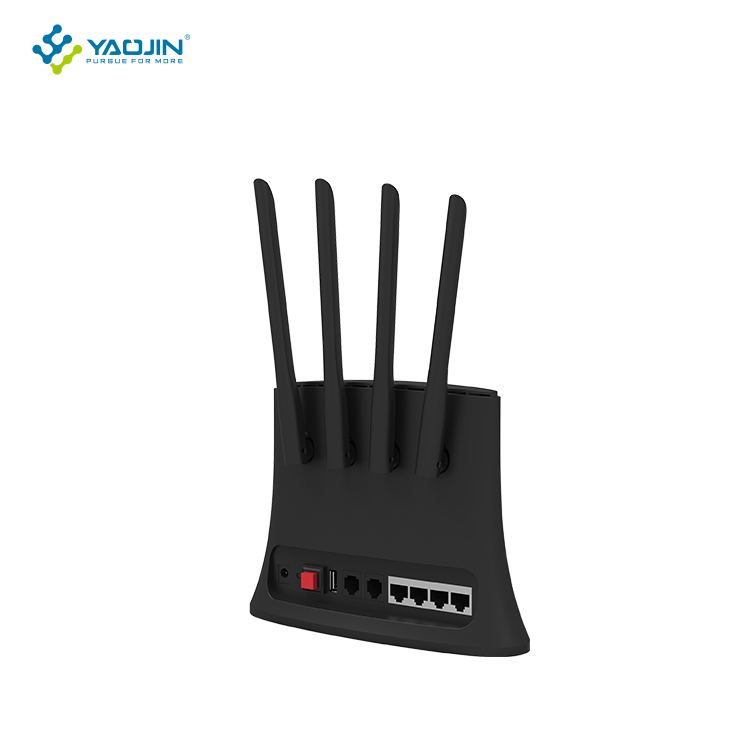
What Challenges Do Users Face When Deploying Reliable Indoor Internet?
Many users assume that traditional broadband or mobile hotspots will always meet their connectivity needs. However, in my experience working with wireless networking equipment, several issues frequently appear:
- Limited broadband availability in remote or newly developed areas
- Complex installation requirements for wired internet infrastructure
- Weak signal penetration inside buildings
- Unstable mobile hotspot performance when multiple devices connect
- Difficulty scaling networks for temporary offices or events
These challenges explain why network engineers and system integrators increasingly recommend deploying an Indoor CPE. Instead of relying solely on wired connections, this device receives cellular signals and redistributes them through WiFi or Ethernet to local devices.
How Does Indoor CPE Improve Indoor Network Performance?
From a technical standpoint, an Indoor CPE functions as a gateway between cellular networks and local devices. It receives signals from nearby LTE or 5G base stations and converts them into stable local connectivity.
I often compare this setup to installing a small indoor base station for your network environment. Instead of connecting every device to a weak mobile signal individually, the Indoor CPE centralizes signal reception and distributes a stronger and more stable connection.
The advantages become particularly noticeable in environments such as:
- Remote offices without wired broadband
- Retail stores that require quick network setup
- Temporary construction sites
- Smart home environments with many IoT devices
- Backup network solutions for business continuity
Why Are Businesses Turning to Indoor CPE for Flexible Connectivity?
When evaluating network infrastructure, businesses usually prioritize reliability, deployment speed, and scalability. In my observations, the Indoor CPE meets these expectations in several practical ways.
| Feature | How It Helps Users |
| Plug-and-play deployment | Reduces installation time and eliminates the need for complex wiring |
| Cellular network compatibility | Supports 4G LTE or 5G networks depending on the device model |
| Stable multi-device connectivity | Provides consistent internet access for laptops, phones, and IoT devices |
| Portable networking solution | Allows easy relocation between offices or temporary workspaces |
| Integrated WiFi distribution | Creates a local wireless network without requiring extra routers |
Because of these capabilities, the Indoor CPE has become an essential networking device in scenarios where traditional broadband deployment is slow or impractical.
Which Technical Advantages Make Indoor CPE a Long-Term Networking Solution?
Beyond convenience, modern Indoor CPE devices integrate advanced communication technologies designed for long-term performance. I have seen several features that significantly improve real-world network reliability.
- High-gain antennas that enhance signal reception indoors
- Support for carrier aggregation in LTE networks
- Dual-band WiFi capability for faster wireless connections
- Secure networking protocols for enterprise environments
- Flexible Ethernet interfaces for wired device integration
These features allow businesses and households to build a hybrid network environment that combines cellular connectivity with traditional local networking.
Another important factor is scalability. Once an Indoor CPE is installed, expanding the network typically requires only additional access points or connected devices, rather than new broadband infrastructure.
Where Can Indoor CPE Deliver the Most Value in Real Applications?
While reviewing deployment cases, I noticed that the Indoor CPE performs particularly well in environments where flexibility and fast connectivity matter the most.
- Small businesses launching new locations quickly
- Remote teams working outside traditional office networks
- Smart home systems requiring stable wireless coverage
- Retail stores needing uninterrupted payment and POS connectivity
- Backup network systems during broadband outages
Because the device relies on cellular infrastructure rather than physical cables, users gain the freedom to install networks in places that previously had limited connectivity options.
How Can the Right Indoor CPE Provider Improve Your Networking Experience?
Choosing the right networking equipment provider also makes a difference. Manufacturers that specialize in wireless communication technologies often design devices with stronger hardware integration and better compatibility with global telecom standards.
With ongoing product development and engineering experience, companies like Yaojin Technology (Shenzhen) Co., Ltd. continue expanding their wireless networking solutions to meet the increasing demand for flexible connectivity. Their approach focuses on combining stable cellular reception, efficient hardware design, and user-friendly deployment to ensure the Indoor CPE performs reliably across different environments.
Are You Ready to Upgrade Your Indoor Network Connectivity?
Stable internet connectivity has become essential for productivity, communication, and digital services. If traditional broadband options cannot meet your requirements, deploying a modern Indoor CPE could provide the flexibility and reliability your network needs.
If you want to explore professional wireless networking solutions or learn more about advanced Indoor CPE devices, the team at Yaojin Technology (Shenzhen) Co., Ltd. is ready to help. Whether you are building a smart home network or upgrading enterprise connectivity, their experts can recommend suitable solutions tailored to your environment.
If you would like detailed specifications, pricing information, or deployment guidance, feel free to contact us today and send your inquiry. Our team will respond quickly and help you choose the right connectivity solution for your project.